By Okoi Obono-Obla
Imo State is one of the heartlands of the South-East geopolitical zone and, in the estimation of pundits, is second only to Anambra State in the barometric analysis of how the South-East will react to political developments and voting patterns where identity and sentiments become ultimate determinants of electoral outcomes.
From 2015, however, Imo has demonstrated flashes of progressiveness and a tendency to align with the national mainstream political vehicle, while other parts of the South-East have remained mired in conservative and isolationist politics, nudged by a self-induced persecution complex.
The Okorocha Precedent

This trajectory began with former Governor Owelle Rochas Okorocha. Elected in 2011 on the platform of the All Progressives Grand Alliance (APGA), he led a faction of the party into the merger of the defunct Action Congress of Nigeria (ACN), All Nigeria Peoples Party (ANPP) and Congress for Progressive Change (CPC) to form the All Progressives Congress (APC) in 2013. It was a decisive break from the South-East’s regionalist posture.
Despite heavy anti-APC sentiment in 2015, Imo recorded the best APC performance in the zone. Official results showed the PDP polling 559,185 and the APC polling 133,253 – about 19% of valid votes. Although short of the 25% constitutional threshold, it was significantly higher than in other South-East states where the APC lost its deposit. The trend improved in 2019 when the APC crossed 25% in Imo, Abia and Ebonyi. The pattern was disrupted in 2023 by the Peter Obi factor and the rallying of Igbo voters around his Labour Party candidacy.
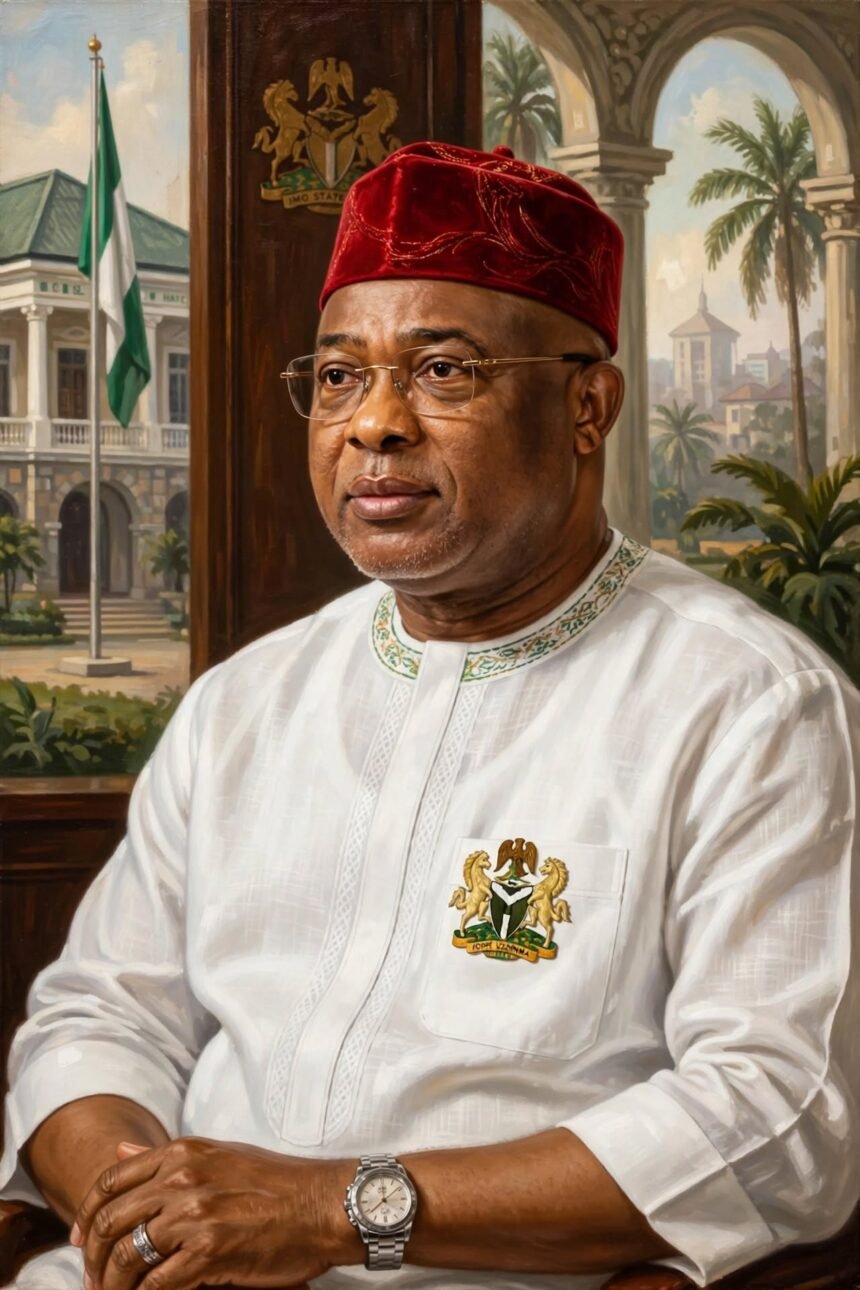
Governor Hope Uzodimma has continued in that trajectory, remaining a lone voice of reason in an environment otherwise dominated by isolationist and identity politics tinged with religious sentiment.
Tinubu’s Detente and the SEDC
President Bola Ahmed Tinubu has made a conscious effort to establish a rapprochement – a sort of détente – with the South-East. The centrepiece is the South-East Development Commission (SEDC), officially established on July 24, 2024 when the President signed its bill into law, with a mandate to address post-civil war infrastructural deficits. He has paired this with federal infrastructure investments, with Minister of Works David Umahi and Governor Uzodimma as arrowheads.
This strategy is designed to change the electoral math in 2027 and enable the APC to score more than 25% of votes cast in Imo and win more seats in the State and National Assembly elections. The governorship election will come later.
2027 Permutations: No Official List Yet, But Structure Matters
The presidential and National Assembly elections are scheduled for January 16, 2027. Media reports claim INEC has published a final list of 18 presidential candidates, naming Bola Ahmed Tinubu (APC) with Kashim Shettima, Atiku Abubakar (African Democratic Congress – ADC) with Rotimi Amaechi, and Peter Obi (Nigeria Democratic Congress – NDC) with Rabiu Musa Kwankwaso as running mate. This list remains subject to litigation.
The critical new factor in Imo is not just the candidates, but party structure.
Peter Obi is the presidential candidate of the NDC with Kwankwaso as running mate, but the NDC suffers from organizational disorderliness and lack of structure, which has hamstrung its ability to penetrate the Imo grassroots. It is doubtful whether the Peter Obi persona alone will be enough to overcome this handicap.
In 2023, Obi’s personality overrode Labour Party’s weak structure. In 2027, he will be on an even weaker platform. The NDC has no comparable LGA or ward executives in Imo. By contrast, the Imo APC controls all 27 House of Assembly members, 27 LGA chairmen and 305 ward councillors, has passed a vote of confidence endorsing Tinubu, and has inaugurated a State Campaign Council with a mandate to take operations to every ward and polling unit. It has also jettisoned consensus for direct primaries to avoid implosion.
Furthermore, while Kwankwaso brings the Kwankwasiyya structure in the North-West, his value addition in Owerri, Orlu and Okigwe zones is minimal. The Obi-Kwankwaso ticket may split northern votes with Atiku and Tinubu without adding canvassers in Imo.
National Assembly Permutations in Imo
The senatorial tickets illustrate the structural advantage:
Imo East: Uzodinma Ezebuihe Anayochukwu (APC) vs Onyeagocha Uche (NDC) vs Prince Eze Madumere (PDP)
Imo West: Hope Uzodimma (APC) – who has declared “I will be on the ballot as a senatorial candidate” – vs Vincent Iwuchukwu (ADC) vs Jones Onyereri (PDP), with a pending Federal High Court challenge by Rochas Okorocha who claims he won the May 18, 2026 primary.
Imo North: Patrick Ndubueze (APC) vs Michael Duru Ejiogu (PDP)
If Uzodimma’s candidacy stands, his incumbency delivers Imo West for APC. If the court disqualifies him, the Okorocha factional crisis could cost APC the zone to PDP’s Jones Onyereri.
For the House of Assembly, 27 candidates have emerged for APC. The APP, with two existing National Assembly members, is promising to match APC “force for force,” but analysts still describe Imo as a one-party state.
Three Likely Outcomes for Imo in 2027
1. Best Case for APC (Split Opposition): If NDC and ADC remain separate, the opposition vote splits. Tinubu crosses 30-45% in Imo, meeting the 25% threshold comfortably. APC sweeps 27/27 State Assembly seats, 8-9/10 House of Reps seats and 2-3/3 Senate seats. NDC’s lack of structure means Obi may win presidential votes in Imo but fails to deliver down-ballot Assembly candidates.
2. Mid Case (Personality vs Structure): Obi retains personal popularity and wins Imo presidential vote with 55-60%, but due to NDC’s lack of polling unit agents, Tinubu still holds 25-30% and APC retains 20-27 State Assembly seats, losing only Owerri Municipal and Mbaise federal seats to opposition.
3. Worst Case for APC (Consolidated Opposition): If Atiku and Obi collapse into a coalition, Imo reverts to 2023. Obi/coalition bloc takes 65%+, Tinubu struggles to hold 25%, and APC loses 2 Senate seats and 6-7 House of Reps seats.
In sum, Imo’s historical progressiveness – from 19% in 2015 to crossing 25% in 2019 – positions it as the only South-East state where Tinubu’s SEDC detente can plausibly translate into both presidential and legislative gains. The decisive variable will not be Peter Obi’s persona alone, but whether the NDC can build a ward-level machine in Imo to match an APC that has already institutionalized control of the grassroots.