by Ibrahim Bunu
A journey through Nigeria’s electoral prophecies — from Goodluck Jonathan to Bola Ahmed Tinubu — and the uncomfortable question: When prophecy fails, who carries the burden of accountability?
At times in a nation’s history, politics enters the church.
At other times, the church enters politics.

And then there are moments when something even more complicated happens: political predictions are presented as divine revelation.
That is where the line becomes dangerously thin.
Nigeria has witnessed this phenomenon repeatedly — particularly around presidential elections.
From Goodluck Jonathan in 2015 to Muhammadu Buhari’s succession in 2023, and from Peter Obi’s supporters to Bola Ahmed Tinubu’s eventual emergence, Nigerian pulpits have sometimes become stages from which men and women of God announced what they believed heaven had revealed about the nation’s political future.
Some were right.
Some were wrong.
Some spoke in generalities.
Some made extraordinarily specific predictions.
Some offered political opinions but presented them as personal convictions.
Others explicitly attached their declarations to God.
And there lies the real issue.
The question is not whether a pastor should have a political opinion.
The question is:
When does political conviction become prophecy?
And when a prophecy fails, who takes responsibility for having spoken in the name of God?
THE QUESTION THAT HAS RETURNED AGAIN
Recent comments by Pastor Abel Damina have reopened an old Nigerian debate.
While discussing failed political prophecies, Damina referred to the extraordinary declaration attributed to a Nigerian prophet during the 2023 election season:
“If Tinubu becomes president of Nigeria, there is no God in heaven.”
That statement has circulated widely in recordings and social-media discussions, and Damina used it as an example of the danger of attaching absolute spiritual certainty to political predictions.
But the statement is deeply revealing.
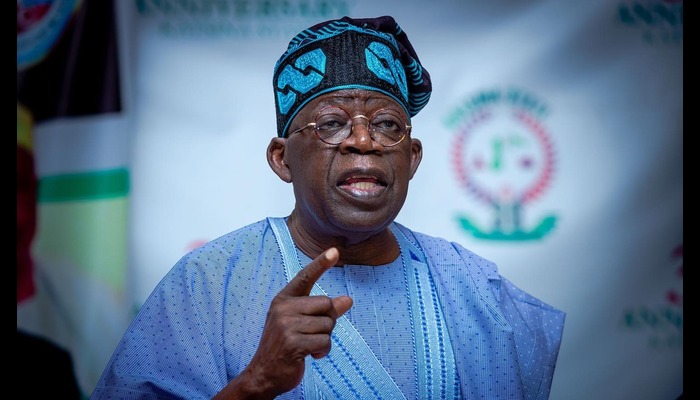
Bola Ahmed Tinubu became President of Nigeria.
The heavens did not collapse.
God did not disappear.
Nigeria did not cease to exist.
What collapsed was the certainty of the prediction.
And that distinction is important.
Because when a human being says, “God told me,” the statement carries an authority far greater than ordinary political commentary.
If the prediction subsequently fails, the issue is no longer merely political.
It becomes a question of spiritual accountability.
THE 2015 ELECTION: WHEN PROPHECIES COLLIDED WITH REALITY
To understand the controversy surrounding 2023, we must return to 2015.
President Goodluck Jonathan was seeking re-election.
Muhammadu Buhari was challenging him.
The country was deeply divided.
Religion was heavily involved in the political atmosphere.
From churches, prayer grounds, television programs, and prophetic ministries came competing declarations about who would emerge as President.
Some said, Jonathan.
Some said Buhari.
Some warned of catastrophe.
Some predicted divine intervention.
Some said Buhari would never become president.
Others believed Jonathan had lost divine favor.
The problem was simple:
They could not all have been speaking for the same God.
1. FR. EJIKE MBAKA — DECEMBER 31, 2014, ENUGU
One of the most famous religious interventions before the 2015 election came from Rev. Fr. Ejike Mbaka of Adoration Ministry, Enugu.
During the ministry’s New Year’s Eve service on 31 December 2014, Mbaka delivered a blistering assessment of the Jonathan administration and called for political change.
Contemporary reports said he advised Jonathan to resign honorably or face political disgrace and argued that Nigerians were looking toward a change in government.
When Buhari eventually defeated Jonathan, Mbaka’s intervention was retrospectively treated by supporters as a prophetic warning that had come to pass.
But there is a distinction worth preserving.
A political assessment that eventually proves accurate does not automatically become divine revelation.
Otherwise, every political analyst who correctly predicts an election becomes a prophet.
That is not a sustainable standard.
2. PROPHET OLANIYI ODUTAYO — THE VISION OF JONATHAN RISING
Prophet Olaniyi Odutayo of the World Prophetic Church was also reported to have predicted a Jonathan victory.
According to contemporary reports, he described a vision in which three men attempted to bury Jonathan, but Jonathan repeatedly rose.
The interpretation was that Jonathan would overcome his political opponents and retain the presidency.
The election produced the opposite outcome.
Buhari won.
Jonathan conceded.
And Nigeria experienced its first democratic transfer of presidential power from one ruling party to another since the restoration of democratic rule in 1999.
The historical lesson is not that the prophet should be mocked.
It is that a prophecy should be distinguishable from a political hope.
3. PROPHET JOSEPH OLADIPUPO — AKURE
Prophet Joseph Oladipupo, associated with Faith and Victory Church in Akure, was also reported to have predicted that the PDP would retain the presidency in 2015.
The result was different.
Buhari emerged victorious.
Jonathan conceded defeat.
Again, a confident declaration had encountered an electoral reality it did not predict.
That should have been an opportunity for the Nigerian Christian community to begin asking harder questions about prophetic accountability.
4. PRIMATE ELIJAH AYOYELE — PROPHECY, WARNING AND POLITICAL FORECAST
Primate Elijah Ayodele was also among the religious figures making political predictions around the 2015 election.
Reports attributed to him various forecasts concerning Jonathan’s prospects, electoral complications, possible violence, INEC, and the conduct of the election.
But this is precisely where responsible historical writing must be careful.
Not every statement made by a prophet is a categorical prediction.
Some are warnings.
Some are possibilities.
Some are conditional.
Some are political observations.
The historical record should not transform every vague statement into a failed prophecy merely because the speaker happened to be a pastor.
5. BISHOP DAVID OYEDEPO — JANUARY 25, 2015
President Goodluck Jonathan attended a service at Winners Chapel in Ota, Ogun State, on 25 January 2015, where Bishop David Oyedepo prayed for him.
The event itself is documented.
However, a widely circulated quotation attributed to Oyedepo — concerning opening “the gates of hell” against Jonathan’s opponents — has been disputed.
That distinction matters.
A responsible writer must separate:
what was documented,
from
what was alleged,
and from
what was later circulated online.
The broader point remains that religious institutions were increasingly drawn into the political atmosphere surrounding the 2015 election.
6. CHRIS OKOTIE — OCTOBER 25, 2015
After the election, Rev. Chris Okotie intervened again.
On 25 October 2015, speaking at Household of God Church in Lagos, Okotie accused then-CAN President Ayo Oritseja of giving Jonathan a false prophecy concerning the election.
Those were Okotie’s allegations.
They should not be rewritten as independent facts.
But the episode reveals something important about Nigeria’s prophetic culture:
After elections, failed predictions become somebody else’s responsibility.
One prophet blames another.
One church challenges another.
One political camp says another religious leader was deceived.
And the ordinary Nigerian is left wondering:
Who, exactly, was speaking for God?
7. PASTOR TUNDE BAKARE — “BUHARI IS NUMBER 15; I AM NUMBER 16”
This is one of the clearest cases because there is a recorded public statement.
On 22 September 2019, Pastor Tunde Bakare, then of Latter Rain Assembly, made a remarkable declaration concerning the 2023 succession.
He did not merely say that he intended to contest.
He presented the matter in language of destiny and divine certainty.
He said:
“President Muhammadu Buhari is number 15, and yours sincerely is number 16.”
He continued:
“I will succeed Buhari as President of Nigeria; nothing can change it.”
And then came the most striking part:
“To this end was I born and for this purpose came I into the world.”
Bakare further compared Buhari’s political assignment to that of Moses and described himself as the Joshua who would cross the political Jordan and distribute Nigeria’s resources.
The remarks were made in a church setting and became widely reported in September 2019. (BusinessDay NG)
But 2023 came.
Buhari left office.
Tinubu became President.
Bakare did not become Nigeria’s 16th president.
The episode therefore deserves to be remembered not merely as political history but as a case study in the danger of presenting personal political destiny as an immutable divine arrangement.
There is an important subsequent development.
In 2025, Bakare discussed the failed prediction publicly and clarified aspects of his earlier position. Premium Times reported that he acknowledged the earlier declaration while explaining his broader understanding of his role in Nigeria’s political destiny. (Premium Times Nigeria)
That later reflection is important because accountability should not mean permanent condemnation.
It should mean the willingness to revisit what one said.
8. PASTOR SARAH OMAKWU — “ASIWaju IS NOT OUR PRESIDENT-ELECT”
Then came one of the strongest post-election declarations of 2023.
Pastor Sarah Omakwu of Family Worship Center, Abuja, spoke to her congregation shortly after INEC declared Bola Ahmed Tinubu president-elect.
The documented statement is not the exact phrase sometimes circulated online as:
“Asiwaju can’t be my President.”
The more reliable contemporary report records her saying:
“We the people want to state clearly that Asiwaju Bola Ahmed Tinubu is not our President-elect.”
She continued that Tinubu was the president-elect of INEC Chairman Mahmood Yakubu, INEC, and APC, rather than the president-elect she recognized. (Legit.ng – Nigeria news.)
She also said that a president-elect would emerge through what she regarded as a free, fair and transparent process.
And then she added a striking statement about how the announcement should occur:
“Our president-elect will be pronounced, in the daytime, not at night while we the people are asleep.” (Legit.ng – Nigeria news.)
The remarks were reported on 6 March 2023, following the presidential election.
This is significant because the statement was not simply a prediction made before voting.
It rejected the declared electoral outcome while legal challenges were still possible.
That distinction should be preserved.
Pastor Sarah was expressing a political and electoral position concerning the legitimacy of the announced result; that is different from claiming that God had revealed a particular future election winner.
9. PASTOR PAUL ENENCHE — WHEN THE PULPIT BECAME AN ELECTORAL PLATFORM
Pastor Paul Enenche of Dunamis International Gospel Center deserves a separate chapter because his public interventions in 2022 and 2023 were unusually direct.
On 10 January 2023, reporting on a combined service at the Glory Dome in Abuja, Enenche was quoted as describing the presidential contest as having moved beyond ordinary politics.
He told members to collect their PVCs and participate.
He also said:
“The matter of the election now is no longer physical; it has gone spiritual.”
He described the election as involving what he called the soul of the nation and the destiny of the Nigerian church. (Legit.ng – Nigeria news.)
He also told members:
“Call your family members and tell them who to vote for, and how to vote.” (Legit.ng – Nigeria news.)
And he warned against voting for candidates he associated with violent groups:
“If they vote for terrorists and their sponsors, Jihadists, God will judge them.” (Legit.ng – Nigeria news.)
These statements matter because they show the difference between prophecy and political mobilization.
Enenche was not merely predicting an election.
He was encouraging his congregation to participate and to make a political choice.
ENENCHE AND THE “WAY TO GO”
Then, on 20 February 2023, only days before the presidential election, Enenche published a photograph of himself, Peter Obi and Bishop David Oyedepo.
His accompanying message was widely interpreted as an endorsement of Obi.
He asked:
“Are you in doubt of the way to go?”
He then described the path as one of:
“integrity, authenticity, honesty, sincerity, simplicity, humility, capacity, productivity.” (Channels Television)
The timing was unmistakable.
The presidential election was scheduled for 25 February 2023.
Enenche’s post was therefore not merely a theological meditation. It entered the political conversation directly.
THEN CAME THE ELECTION
Bola Ahmed Tinubu was declared the winner of the presidential election.
Peter Obi challenged the result.
Atiku Abubakar also challenged aspects of the election.
The matter proceeded through Nigeria’s judicial process.
And Enenche did not simply move on.
On 7 March 2023, Vanguard reported that he described the election as lacking “probity and credibility”. It urged the judiciary to pursue electoral justice, drawing heavily on the 2019 Malawi presidential election and its judicial rerun. (Vanguard News)
His position therefore evolved from:
spiritual mobilization,
to
political preference,
to
post-election challenge and advocacy for judicial intervention.
Again, whether one agrees or disagrees with his political position is separate from the historical record.
The record is what matters.
THE IMPORTANT DISTINCTION: PROPHECY OR POLITICAL CONVICTION?
This is where much of Nigeria’s debate becomes confused.
Pastor Enenche’s position is not the same as Pastor Bakare’s.
Bakare’s 2019 statement was framed as a prediction of his own divine succession.
Sarah Omakwu’s March 2023 statement was primarily a rejection of the declared result and a demand for what she considered a credible electoral process.
Enenche’s February 2023 intervention was an unmistakable political endorsement.
Those are three different categories.
We should not lump every political statement by a pastor into “false prophecy.”
That would itself be intellectually dishonest.
But equally, political opinions should not automatically acquire the authority of divine revelation simply because they are spoken from a pulpit.
THE PROBLEM WITH “GOD TOLD ME”
There is a profound difference between:
“I believe Candidate A is the better choice.”
and:
“God told me Candidate A will win.”
The first is an opinion.
The second is a supernatural claim.
The second therefore carries a much heavier burden of accountability.
Because if the prediction fails, the speaker has not merely misread political events.
The speaker has claimed knowledge of God’s mind.
That is where the conversation becomes theological.
WHY DOES THIS HAPPEN?
There are several possible explanations.
1. Politics has become emotionally charged
When elections become battles over religion, ethnicity, identity, and survival, ordinary political preferences can acquire spiritual language.
2. Religious authority carries enormous influence
A politician saying, “Vote for me,” is obviously campaigning.
A pastor saying, “God has revealed this,” can be interpreted as something much more authoritative.
3. Prophecy attracts attention
A sermon about patience may receive modest attention.
A declaration that God has revealed Nigeria’s next president can dominate headlines.
4. There is insufficient accountability
Politicians are routinely asked to explain failed promises.
Prophets are not always asked to explain failed predictions.
5. Personal conviction can be mistaken for divine revelation
A pastor may sincerely believe something.
Sincerity, however, is not the same thing as infallibility.
AND WHAT ABOUT MUSLIM LEADERS?
This question also needs careful handling.
It would be inaccurate to say that Muslim scholars never make political declarations or predictions.
They do.
But Nigeria’s highly visible Pentecostal culture has developed a particularly prominent tradition of annual prophecies, crossover-night declarations, visions and predictions concerning political events.
That does not mean Christianity as a whole operates this way.
Indeed, some Christian leaders have deliberately avoided predicting election winners.
The important lesson is therefore not:
“Christians do this while Muslims do not.”
The more accurate observation is:
Different religious traditions and institutions have different public cultures of political engagement, and Nigeria’s Pentecostal prophetic culture has made electoral prophecy especially visible.
That distinction prevents the conversation from becoming another religious contest.
THE CHURCH SHOULD NOT BE AFRAID OF POLITICS
There is nothing inherently wrong with a pastor discussing politics.
There is nothing inherently wrong with Christians participating in elections.
Nothing is inherently wrong with a religious leader criticizing government.
The Bible contains numerous examples of religious figures confronting rulers.
Nathan confronted David.
Elijah confronted Ahab.
John the Baptist confronted Herod.
The question is not whether religious leaders should speak.
The question is:
What authority are they claiming when they speak?
THE DANGER OF SPIRITUALISING THE BALLOT
Democracy gives citizens the responsibility to choose.
The ballot belongs to the voter.
Not to the pastor.
Not to the imam.
Not to the politician.
Not to the prophet.
Not even to the church.
A religious leader can educate.
A religious leader can persuade.
A religious leader can express an opinion.
But when political preference is presented as an unquestionable command from God, democratic choice can become spiritually coercive.
That is the danger.
WHEN PROPHECY FAILS, DON’T BLAME GOD
This may be the most important theological lesson.
When a prophecy fails, the appropriate conclusion is not that God has failed.
The first question should be:
Did God actually say it?
Jeremiah 23:21 records:
“I have not sent these prophets, yet they ran; I have not spoken to them, yet they prophesied.”
That is a sobering warning for anyone who claims to speak for God.
The greatest danger, then, is not being politically wrong.
The greatest danger is putting God’s name behind something God never said.
“MANY ARE CALLED, BUT FEW ARE CHOSEN”
Jesus’ statement in Matthew 22:14 was not an electoral prophecy.
But the principle has relevance to public ministry.
Not everyone holding a microphone possesses divine authority.
Not everyone with a large congregation has supernatural knowledge.
Not everyone who says “Thus says the Lord” should automatically be believed.
Christianity itself teaches discernment.
Therefore, asking questions about prophecy is not necessarily an attack on Christianity.
It can express the very discernment Christianity demands.
HOW MARKET?
And perhaps this is where the Nigerian expression “How market?” becomes more than humor.
After the election.
After the inauguration.
After the courts.
After the predictions.
After the declarations.
After the visions.
After the dramatic “Thus says the Lord.”
Nigeria eventually asks the simplest question:
“How market?”
What happened?
Did it happen?
Did the prophecy come to pass?
If it did not, what did the prophet say afterward?
Did the prophet acknowledge the mistake?
Did the interpretation change?
Was the original statement really a prophecy?
Or was it political conviction dressed in prophetic language?
These questions are not insults.
They are accountability.
THE 2027 WARNING
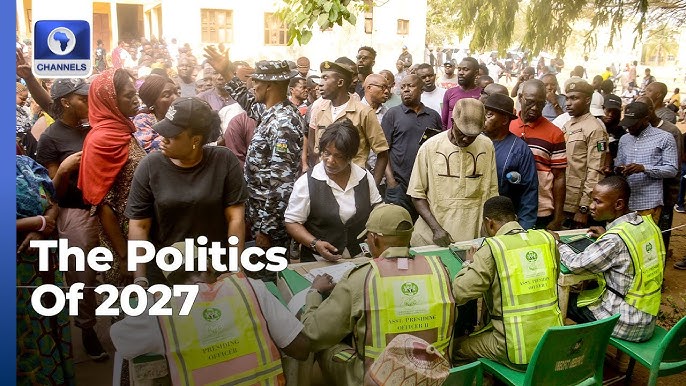
Nigeria is approaching another politically charged electoral cycle.
Already, political conversations are intensifying.
And with politics will inevitably come religious interpretation.
There will be new visions.
New prophecies.
New declarations.
New warnings.
New predictions.
New claims about who heaven has chosen.
But perhaps this time Nigerians should ask better questions before accepting them.
When was it said?
Where was it said?
Was it recorded?
What exactly was said?
Was it before or after political events made the outcome obvious?
Was the statement conditional?
Was it a political opinion or a divine claim?
What happened when the prediction failed?
Did the speaker acknowledge it?
Those questions should become part of Nigeria’s democratic literacy.
THE PULPIT MUST BE HIGHER THAN THE CAMPAIGN STAGE
Nigeria does not need religious leaders who fear politics.
Nigeria needs religious leaders who are not owned by politics.
The church should be able to criticize government when government is wrong.
The mosque should be able to challenge politicians when politicians are wrong.
A pastor should be able to support a political candidate without pretending that God personally endorsed that candidate.
An imam should be able to oppose a policy without claiming supernatural knowledge of the future.
And every religious leader should be humble enough to say:
“I may be wrong.”
Those words do not weaken faith.
They demonstrate human humility.
THE REAL LESSON FROM JONATHAN, BUHARI AND TINUBU
The deepest lesson from Nigeria’s electoral history is not that one pastor was right and another was wrong.
It is that human beings are fallible.
2015 demonstrated it.
2023 demonstrated it again.
And 2027 will test whether Nigerians have learned anything.
Political predictions will continue.
Political campaigns will continue.
Religious leaders will continue to have political opinions.
But perhaps Nigeria should stop confusing political certainty with divine certainty.
Because a politician can say:
“I will win.”
That is politics.
A political analyst can say:
“I think he will win.”
That is analysis.
A citizen can say:
“I believe she should win.”
That is opinion.
But when someone says:
“God has told me who will win,”
the standard must be different.
Because the speaker is no longer merely speaking for himself.
He is claiming to speak for heaven.
And heaven is not a political party.
THE FINAL QUESTION
Perhaps Nigeria should stop asking only:
“Which pastor predicted the winner?”
The bigger question is:
Why did we ever allow political predictions to carry the unquestionable authority of divine revelation?
The church does not lose its dignity by saying:
“We do not know.”
A pastor does not become less spiritual by saying:
“I cannot tell you who will win.”
A prophet does not become weaker by saying:
“Pray, discern, study the issues and vote according to your conscience.”
Indeed, there may be more wisdom in those words than in a thousand dramatic declarations.
The Church should not be ashamed of participating in democracy.
But it should be careful not to turn the pulpit into a political prediction center.
Because political candidates come.
Political candidates go.
Governments rise.
Governments fall.
Presidents are inaugurated.
Presidents eventually leave office.
But religious institutions remain long after the politicians have departed.
And therefore the credibility of the pulpit must be protected from the temporary passions of political seasons.
The church must be able to challenge power without becoming an instrument of power.
It must be able to support a candidate without baptizing that candidate as heaven’s candidate.
It must be able to criticize an election without declaring that God has canceled the result.
And when a prophecy fails, the prophet should not run from the record.
The record should remain.
Because history remembers.
The microphone remembers.
The camera remembers.
The newspaper remembers.
And increasingly, the internet remembers everything.
So when the next political season comes, perhaps we should listen differently.
Not with cynicism.
Not with hatred.
Not with blind faith.
But with discernment.
Because not every voice from the pulpit is the voice of heaven, and not every political conviction becomes a prophecy simply because it is spoken in the language of faith.
In the end, elections expose the limits of human prediction.
But accountability reveals the character of the person making the prediction.
And perhaps that is the lesson Nigeria has been trying to teach us all along:
Many may carry the title.
Many may carry the microphone.
Many may say, “Thus says the Lord.”
But only truth survives the morning after the prophecy.
— Ibrahim Bunu
ibrahimbunu@gmail.com