By Ibrahim Bunu
ibrahimbunu2520@gmail.com
The recent article by Hassan Husaini, MNI, titled “The Constitutional Coup That Must Not Stand,” raises important concerns about constitutional procedure, federalism, and democratic accountability. Those concerns deserve respect. However, the article ultimately confuses disagreement with a policy proposal with proof of a constitutional coup. That is a serious overstatement.
What the Article Gets Right

First, some points are correct:
* Nigeria’s Constitution remains the supreme law of the land.
* Any creation of new states, new governmental structures, or major redistribution of powers must follow the constitutional amendment procedures in Sections 8 and 9.
* No president can unilaterally restructure the federation by decree.
These are not controversial points. Supporters of restructuring should embrace them.
Where the Argument Overreaches
1. A Proposal Is Not a Coup
A constitutional amendment bill, a committee report, a white paper, or a public consultation is not a constitutional coup. Democracies regularly debate changes to their constitutions.
Nigeria itself has amended the 1999 Constitution several times through constitutional procedures. The proper question is not “Should people discuss regional reform?” but rather:
Can any final proposal secure the constitutional approvals required by law?
If the answer is yes, the process is constitutional. If not, it fails.
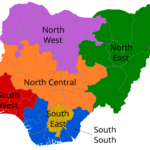
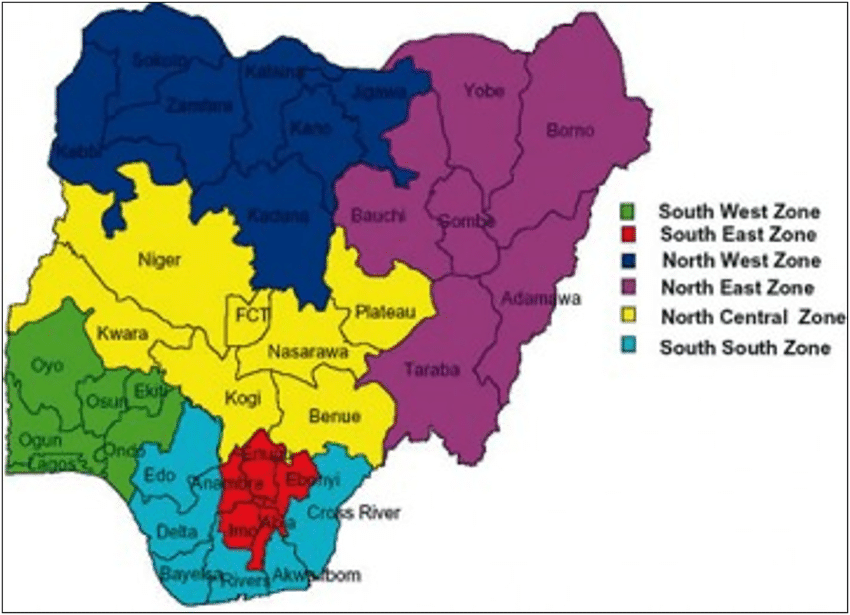
2. Geopolitical Zones Already Exist in Practice
Nigeria’s six geopolitical zones have been used for decades for:
* federal appointments,
* party organization,
* security coordination,
* educational admissions,
* infrastructure planning, and
* regional development initiatives.
Recognizing or strengthening coordination among these zones is therefore not the invention of a foreign structure. It builds on an existing administrative reality familiar to Nigerians.
3. Devolution Is a Global Democratic Practice
Around the world, successful federations and democracies use regional or devolved governance arrangements.
* Germany operates through powerful states (Länder) with significant authority.
* Canada grants extensive powers to its provinces.
* India combines strong national institutions with substantial state autonomy.
* Spain uses autonomous communities with devolved responsibilities.
* South Africa distributes powers among national, provincial, and local governments.
These countries differ in structure, but they share a common principle:
Government often works better when some decisions are made closer to the people affected by them.
This principle, known as subsidiarity, is widely recognized in democratic governance.
The Case for Regional Coordination
Supporters of regional reform are not necessarily seeking to abolish Nigeria’s federation. Many simply argue that stronger regional cooperation could improve:
* transportation networks,
* electricity projects,
* agricultural value chains,
* security coordination,
* environmental management, and
* economic planning.
A North-Central transportation corridor, a South-East industrial cluster, or a South-West power initiative can complement—not replace—the federal government.
On State Police
The article treats state police as inherently unconstitutional. The current Constitution indeed establishes a single Nigeria Police Force. However, constitutions can be amended.
The real debate should be about safeguards:
* independent police service commissions,
* judicial oversight,
* federal standards,
* funding transparency,
* protection against political abuse, and
* clear operational boundaries.
Many democracies successfully operate multiple policing layers while maintaining national unity.
On Fiscal Federalism
Nigeria’s revenue-sharing formula is constitutionally defined. Any alteration must follow constitutional procedures. Yet discussing fiscal federalism is entirely legitimate.
For decades, Nigerians across political divides have argued that states should have greater capacity to generate and retain resources while contributing fairly to the federation. That debate is part of democratic governance, not evidence of authoritarianism.
On Tenure Elongation
The strongest response here is simple:
* The Constitution currently provides fixed presidential and gubernatorial terms.
* Any change would require a constitutional amendment.
* Citizens, civil society, political parties, the media, and the courts remain free to oppose it.
Vigilance is necessary, but speculation should not be presented as an accomplished fact.
A Better Path Forward
Nigeria faces real challenges: insecurity, unemployment, infrastructure deficits, rising living costs, and uneven development. These problems require serious institutional thinking.
Instead of declaring every restructuring proposal a constitutional coup, we should insist on:
1. broad public consultation,
2. transparent drafting,
3. National Assembly debate,
4. state-level participation,
5. constitutional compliance, and
6. Judicial review where necessary.
That is how democracies reform themselves.
Conclusion
The Constitution is not a weapon to silence debate, nor is it a barrier to peaceful reform. It is the framework through which Nigerians can negotiate their future together.
Regional governance proposals may succeed or fail on their merits. They may require modification, compromise, or rejection. But they should be tested through evidence, consultation, and constitutional procedure—not through alarmist labels that mistake democratic discussion for democratic collapse.
Nigeria’s unity will be strengthened not by fear of reform, but by the confidence that any reform can be pursued openly, lawfully, and with the consent of the Nigerian people.