By Okoi Obono-Obla
The South‑South Battleground
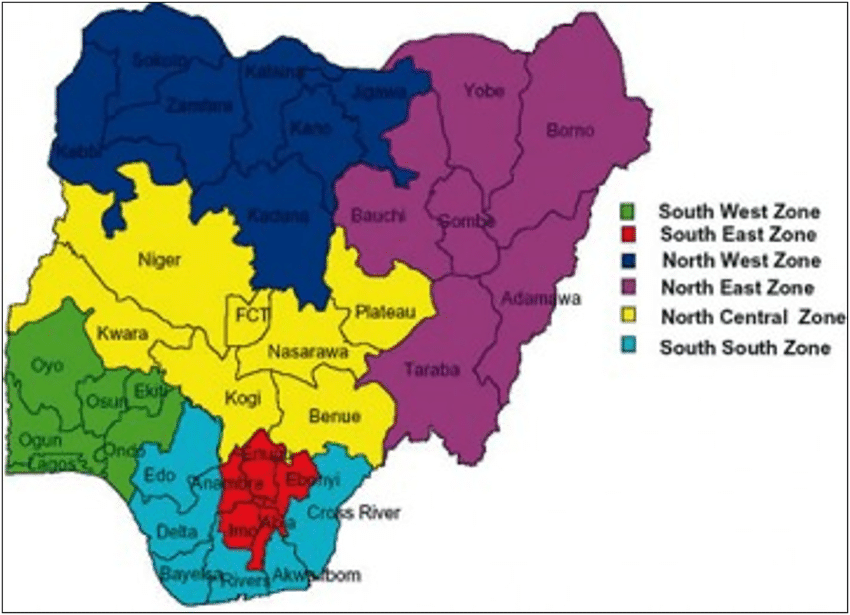
The South‑South geopolitical zone — Cross River, Akwa Ibom, Edo, Delta, Bayelsa, and Rivers States — will be one of the most fiercely contested regions in Nigeria’s 2027 general elections. Both the Presidential and Senate elections will take place on the same day, and the interplay between national momentum and local power structures will define the outcomes.
> “Governors are the trump card in Nigerian elections — they control the grassroots, the local governments, and the traditional rulers.”
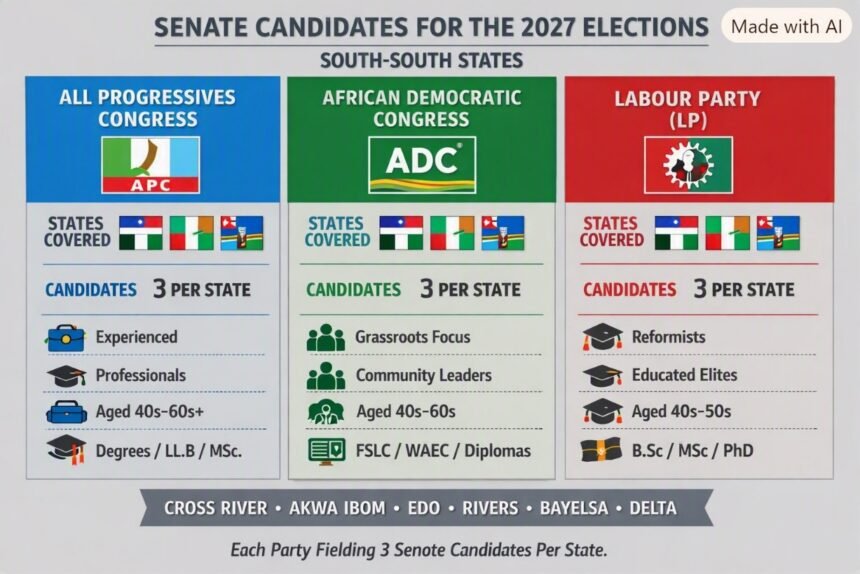
This analysis is based on the final list of Senate candidates released by the Independent National Electoral Commission (INEC) on 12 September 2026 for these six states. That dataset provides the foundation for understanding how the APC, ADC, Labour Party (LP), and NDC are positioning themselves in the South‑South.
APC’s Incumbency Advantage
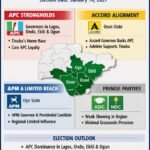
The All Progressives Congress (APC) currently governs all six South‑South states. This sweep gives APC a strategic monopoly over grassroots mobilization:
– Local government control ensures ward‑level voter mobilization.
– Traditional rulers are aligned through patronage networks.
– State resources provide logistics, vehicles, and personnel.
– Incumbency narrative reinforces continuity and stability.
With Senate and Presidential ballots cast on the same day, APC’s governors will act as regional campaign generals, ensuring cohesion between local and national efforts.
Opposition Parties: Uphill Battles
Labour Party (LP)
LP has urban appeal among youth and professionals but struggles in rural areas where governors dominate. Its presidential campaign could energize turnout, but without local government machinery, Senate victories remain difficult.
African Democratic Congress (ADC)
ADC fields community‑level candidates with grassroots credibility but lacks statewide reach. Without gubernatorial backing, ADC depends on personal networks and alliances, limiting its competitiveness.
Nigeria Democratic Congress (NDC)
NDC faces visibility challenges as a newer entrant. Its candidates are reform‑minded, but the party lacks institutional presence. NDC’s best hope lies in coalition politics or protest votes.
State‑by‑State Dynamics
– Cross River & Edo: Swing states with urban independence, but governors’ networks dominate.
– Akwa Ibom & Delta: High voter density makes gubernatorial mobilization decisive.
– Bayelsa & Rivers: Oil‑rich, politically intense zones where patronage and security structures amplify incumbency.
Cultural and Electoral Timing
The simultaneous presidential and senatorial elections will reinforce party loyalty. Nigerian voters often align their Senate choices with their preferred presidential candidate. In this context, APC’s governors’ grip on grassroots mobilization will be decisive.
“Power flows from the statehouses to the polling units — and on 16 January 2027, that flow will determine how each party fares in the South‑South.”
Outlook
The APC’s incumbency gives it a commanding structural advantage in both Senate and Presidential contests across the South‑South. However, LP’s urban momentum, ADC’s community networks, and NDC’s reformist appeal could still carve symbolic footholds, particularly in cosmopolitan centers like Port Harcourt, Benin City, and Uyo.
Ultimately, the governors’ control of grassroots mobilization — through local governments, traditional institutions, and resource deployment — will remain the decisive factor in shaping the South‑South’s Senate and Presidential outcomes.