

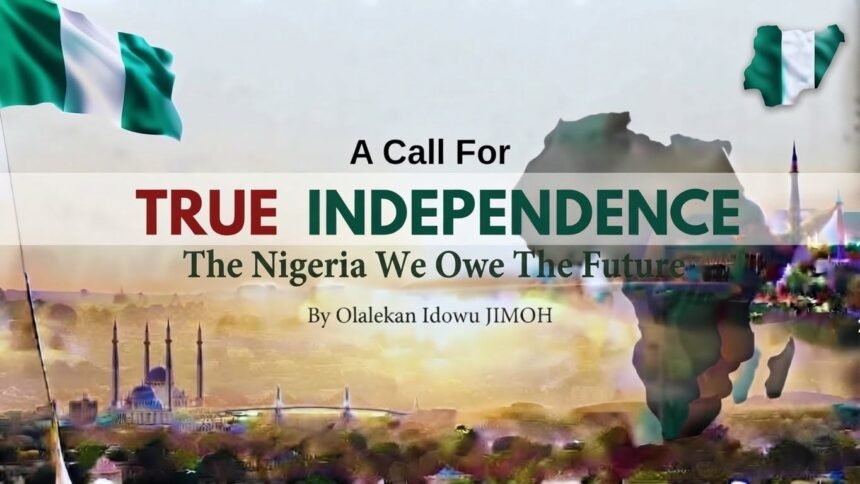
By Olalekan Idowu JIMOH
Today, Nigeria is once again raising her green-white-green flag. There will be speeches. There will be parades. There will be prayers. There will be photographs. There will be the familiar declarations of patriotism, followed by the familiar complaints about the state of the nation. And then, on the following day, we will return to business as usual. But I want to ask a question that is more direct than the usual Independence Day question: Independent from what? On 1st October, 1960, Nigeria became independent from British colonial rule. But after sixty-six years, we must have the courage to ask whether we have become truly independent. Because a nation can change the colour of its flag without changing the condition of its people. A people can inherit political sovereignty and remain economically dependent. A country can have a national anthem and still lack national direction. A people can have elections without experiencing genuine political freedom. And a church can be filled with worshippers and still produce a society that is morally impoverished. A nation can celebrate independence every year while millions of its citizens remain imprisoned by poverty, unemployment, insecurity, corruption, inequality, ignorance, institutional decay and dependency. So, this Independence Day, I am not interested merely in asking whether Nigeria is independent. I am asking whether Nigerians are free.
We Must Remember What We Once Had
There is a dangerous tendency among Nigerians today to imagine that nothing ever worked. That is not true. And if we continue to tell ourselves that nothing ever worked, we will never understand what we lost. Nigeria’s early federal arrangement gave considerable developmental responsibility to the regions. The regional governments pursued different approaches to education, agriculture, infrastructure and economic development. The Western Region, for example, launched universal free primary education and invested heavily in education, technical skills and agriculture. Development planning included roads, rural social services and farm settlement schemes. Northern Nigeria also developed institutions for economic and educational advancement, including development corporations, financial institutions and educational reforms. At independence, Nigeria was not a technological superpower. It was not a paradise. It had enormous problems. But there was something that seems increasingly scarce today: the conviction that government existed to build. There was an understanding that roads mattered. Schools mattered. Agriculture mattered. Public institutions mattered. Local communities mattered. Human capital mattered. The future mattered. And there was still a sense that a nation could deliberately build itself. We must not lie about history. But neither must we forget it. Nigeria did not begin as a failed state. Nigeria became a country of enormous contradictions. We had possibilities, but we squandered many of them. We had institutions, but weakened them. We had productive agriculture, but neglected it. We had regional competition that could really produce development, but, sadly, we replaced much of it with political competition for access to the centre. We had communities where people could know one another, trust one another and organise themselves. Very unfortunately, we went ahead to build a society in which the individual looks to Abuja for everything. And, most tragically, we gradually replaced the question, “What can we build?” with, “What can we collect?” That is not independence. That is dependency wearing our national colours.

Political Independence Without Human Freedom
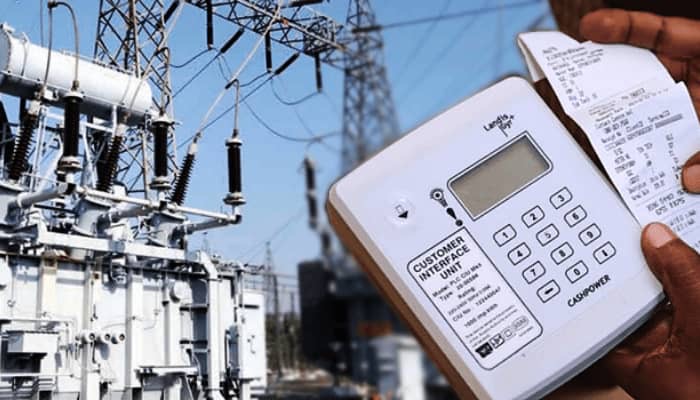
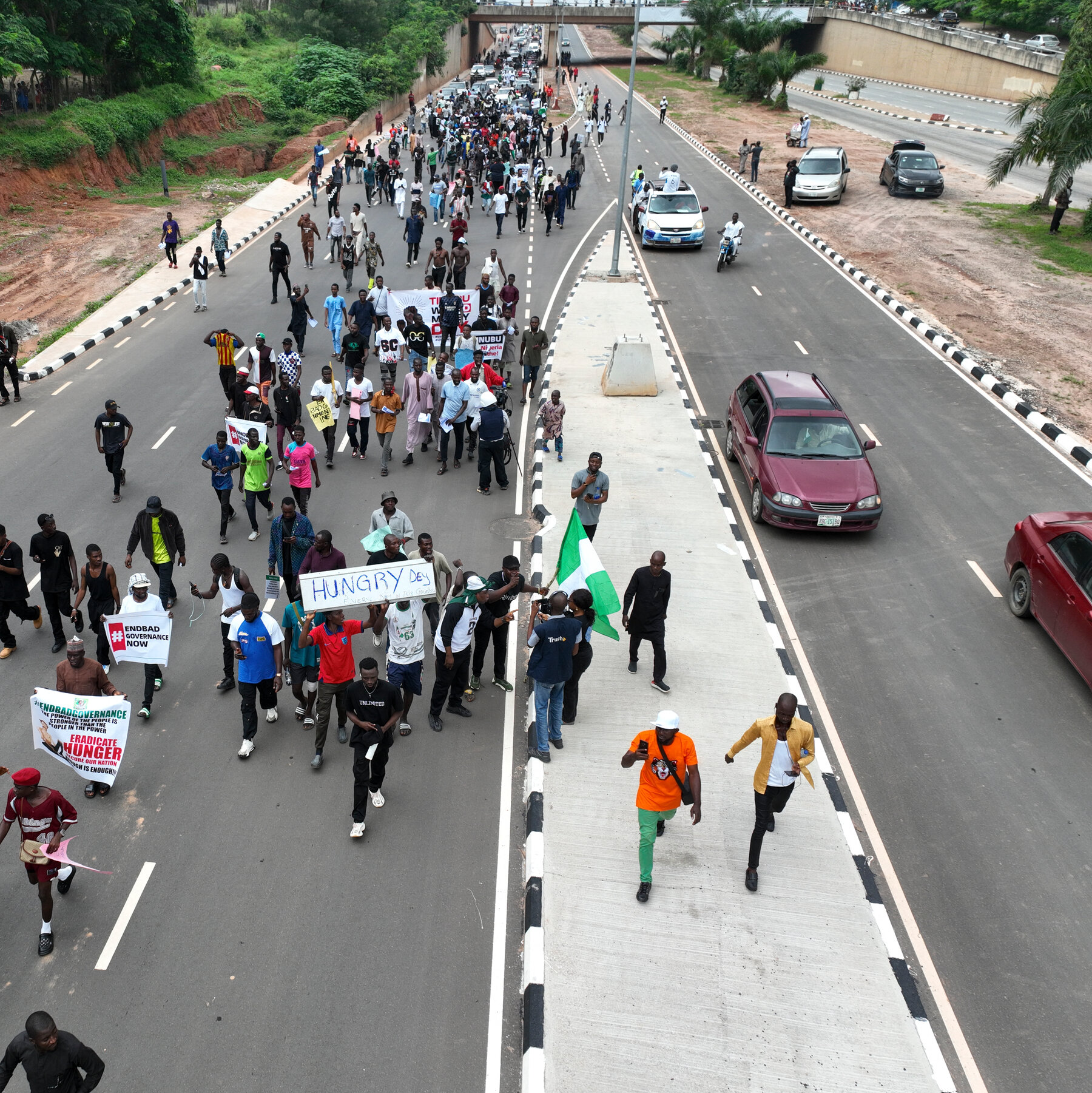
Nigeria gained political independence from Britain in 1960. But political independence was never supposed to mean merely replacing the colonial administrator with a Nigerian administrator. It was supposed to mean that, as Nigerians, we would become masters of our collective destiny. Yet what does independence mean to our unemployed graduates? What does independence mean to our farmers who cannot move their produce safely to market? What does independence mean to the young Nigerians who spend years acquiring education only to discover that the economy has no place for their competence? What does independence mean to families that spend an enormous portion of their incomes merely trying to eat? What does independence mean to our entrepreneurs who spend more energy navigating dysfunctional institutions than building productive enterprises? What does independence mean to citizens who must pay for electricity, security, water, education and healthcare privately while still paying taxes to a government expected to provide public services? These are not merely economic questions. They are questions of sovereignty. A nation whose citizens cannot translate their labour into dignified livelihoods has not achieved complete freedom. The World Bank currently describes Nigeria as facing widespread poverty, weak job creation, infrastructure gaps and insecurity, while noting that millions enter the labour force each year. Its April 2026 assessment also notes that, although macroeconomic stability has improved, household incomes have yet to recover fully and poverty remains high. This is why we must stop measuring national progress merely by GDP figures. A growing economy that does not improve the life of the ordinary citizen has not finished its work. The economy exists for the human person. The budget exists for the citizen. Government exists for society. The state is not a feeding trough for political elites.
- Independence From Poverty
There is nothing holy about poverty. We must stop baptising national deprivation as though suffering itself were a virtue. Jesus did not say, “Blessed are the permanently unemployed.” He said, “I am come that they might have life, and that they might have it more abundantly.” That statement cannot be reduced to material prosperity. But neither can it be interpreted as a divine endorsement of social misery. The God who commanded Israel to leave gleanings for the poor was concerned about economic dignity. The God who commanded justice for the vulnerable was concerned about social order. The prophets repeatedly condemned societies where the powerful accumulated wealth while the vulnerable were crushed. James asked what good it was to tell a hungry brother or sister to depart in peace without giving them what they needed. And the early believers did not build a spirituality that had no social consequence. They shared. They served. They cared. They gave. They built community. Authentic community shared life. Christianity was never designed to produce people who shout “Amen” on Sunday and remain indifferent to the suffering of their neighbours on Monday.
- Independence From Corruption
New politicians are not what Nigeria simply needs. Nigeria needs a new moral relationship with public office. The greatest danger is not that corrupt people enter government. The greater danger is that corruption becomes so normal that honest people begin to look foolish. When the public servant steals and the community celebrates him when he returns home with money, the problem is no longer merely political. It has become cultural. When the politician distributes stolen public resources and is called generous, we have corrupted generosity itself. When the person who acquires wealth through questionable means becomes a model for young people, we have corrupted aspiration. When churches honour wealth without asking how it was acquired, we have corrupted discipleship. When society condemns corruption only when someone else is caught, we have become part of the problem. A nation cannot legislate its way out of a moral crisis that its people continue to celebrate. We need institutions that are strong enough to restrain corruption, but we also need citizens who are courageous enough to reject it.
- Independence From Foreign Dependency
This is not a call for isolation. Nigeria should trade with the world. Nigeria should cooperate with other nations. Nigeria should receive knowledge, technology and investment from wherever useful. But there is a difference between international cooperation and intellectual dependency. A nation that cannot feed itself, manufacture essential goods, secure its borders, power its industries, educate its children adequately, retain its best minds and finance its development without perpetual external dependence must ask difficult questions about the depth of its independence. We cannot continue exporting raw materials and importing finished products while calling ourselves an economic giant. We cannot export our brightest young people and then complain about brain drain while failing to build institutions worthy of their talent. We cannot spend billions importing what our soil, industries and people are capable of producing. We cannot forever remain consumers in a world that rewards producers. Nigeria must become a producer nation again: producer of food, producer of knowledge, producer of technology, producer of energy, producer of institutions, producer of ideas and producer of value. Africa does not need another country perpetually asking the world for permission to develop. What Africa needs are nations that are capable of standing. Nigeria should be one of them.
- Independence From Insecurity
There was a time when a person could travel from one part of the country to another with a confidence that feels nostalgic. Today, insecurity has become one of the great enemies of Nigerian freedom. Banditry, kidnapping, terrorism, communal violence, separatist violence, organised crime, oil theft, cybercrime and political violence are not isolated security problems. They are all symptoms of a deeper breakdown in the relationship between citizen and state. Security is the first condition of civilisation. A farmer who cannot safely reach his farm is not free. A trader who cannot safely transport goods is not free. A child who cannot safely walk to school is not free. A person who cannot safely travel is not free. A community that lives at the mercy of armed groups is not free. And a government that cannot consistently protect its citizens cannot claim to have completed the work of nation-building. Nigeria needs intelligence-led security, effective policing, professional armed forces, functional justice institutions, secure borders, community-based security structures operating within law, technology and accountability. Above all, Nigeria needs a state that is present before criminals arrive, not merely after they have struck.
- Independence From the Tyranny of Centralisation
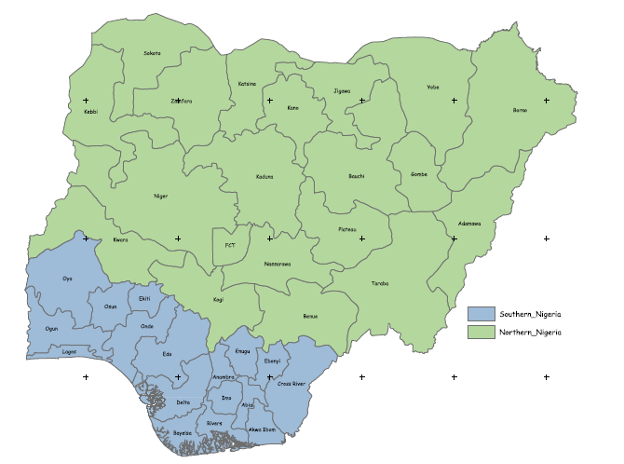
Honestly, we must also ask whether Nigeria has become too obsessed with the centre. Why must everything wait for Abuja? Why must development begin in the capital? Why must local communities wait for federal intervention before solving problems they are capable of solving themselves? The Nigeria of the early regional era reminds us of something important: development can be competitive, local and context-specific. This is not to say that we should return to 1960. We cannot. History does not move backwards. But we can recover the principle: let communities have room to build. Let states compete in education. Let local governments become genuine institutions of development. Let regions develop economic strengths. Let agriculture be locally organised. Let innovation flourish outside government offices. Let Nigeria’s diversity become an advantage rather than a perpetual source of political suspicion. A federation should not be a collection of political territories waiting for monthly allocations. It should be a federation of productive communities.
And Then There Is The Church
Here, I must speak as a Christian, and perhaps more painfully than anywhere else. Nigeria does not merely need political reformation. The Nigerian Church itself needs reformation. Not another conference. Not another denomination. Not another programme. Not another celebrity preacher. Not another religious empire. Reformation. I say it again: Reformation! We must become free from a form of Christianity that has imprisoned the believer inside religious dependency. The New Testament does not present the Bride of Christ as an audience gathered around a professional religious performer. Christ did not die to create a permanent clergy class surrounded by permanently passive laity. It is not that I do not believe in clergy; I simply do not believe in laity. There is nothing like laity, fron the viepoint of Christ. He gave gifts to the Body: Apostles, Prophets, Evangelists, Pastors and Teachers, “for the perfecting of the saints, for the work of the ministry, for the edifying of the Body of Christ.” Notice it carefully. The ministers equip the saints. The saints do the work of ministry. The goal is not to build an impressive platform around one man. The goal is to build the Body. That distinction is huge. Very sadly, we have inherited a Christianity in which too many believers attend church for years without becoming mature disciples. They hear sermons but cannot teach. They attend prayer meetings but cannot solve problems. They give offerings but do not understand stewardship. They can shout “fire” and speak in tongues, but cannot build institutions. They prophesy prosperity but cannot create employment. They condemn corruption but participate in it when opportunity comes. They speak about transforming Nigeria but have no vision for transforming their street. Something has gone wrong, and we must have the courage to say it.
- Independence From Churchianity
There is a Christianity that follows Christ. And there is a Christianity that follows religious culture. The two are not the same. Churchianity is obsessed with buildings, titles, programmes, uniforms, platforms, personalities, denominations and institutional survival. The Kingdom is concerned with something deeper: Christ, truth, righteousness, justice, mercy, holiness, love, service, stewardship, community and transformation. The Great Commission was never, “Go and build religious empires.” It was, “Go ye therefore, and teach all nations…” The Body of Christ was sent into the world. It was not sent merely to escape from it. We cannot continue preaching that Christians are “the light of the world” while training Christians to have no meaningful influence on the world. What are the Christian engineers building? Are the Christian economists designing better systems? Where are the Christian criminologists who are developing crime-prevention models? Are the Christian lawyers defending justice? Where are the Christian scientists solving Nigerian problems? Where are the Christian entrepreneurs creating dignified employment? Where are the Christian administrators building honest institutions? Where are the Christian politicians who understand public office as stewardship rather than inheritance? Are the Christian educators reforming education? Where are the Christian parents imparting godly morals to their children? Where are the Christian security professionals developing safer communities? Where are the Christians who will enter the marketplace and say, “The Kingdom of God has something to say about how this institution should function.” This is where the Church must rediscover ministry. The believer is not merely a worshipper. The believer is an agent of God’s Kingdom, colonising earth with heaven’s values.
- Independence From Clerical Captivity
I do not write this against genuine Ministers of God. I respect faithful servants of the Kingdom. I honour genuine Apostles, Prophets, Evangelists and Teachers. By the grace of God, I myself am an Apostolic Prophet, as I like to call it. So, I honour men and women who have sacrificed their lives to serve Christ. But the Church must never confuse honour for a servant with surrender to a personality. No minister is the mediator between Christ and His people. There is one Mediator: Christ. Yes, the believer must serve. But more importantly, the believer must grow. The believer must study Scripture and be taught. Yet the believer must also be allowed to discern. The believer must be allowed to mature. The believer must become responsible before God. The believer must not be tied down. Let my people go! Free the saints of God into their God-ordained mandates. Stop feeding fat on them. Stop using them to build your own empires. Allow them to fulfil God’s eternal purpose. We need churches that produce sons and daughters, not permanent dependants. We need pulpits that produce builders, not spectators. We need discipleship that produces character, competence and courage. We need Christian communities capable of confronting poverty, corruption, violence, injustice, ignorance and social fragmentation. Truth be told, if our Christianity cannot make our neighbourhood better, we should ask ourselves what kind of Christianity we are practising.
- Independence From Religious Tribalism
Nigeria has suffered enough from ethnic and political tribalism. But religious tribalism is equally destructive. Muslims against Christians. Christians against Muslims. People of one faith against people of another faith. But as a citizen of God’s Kingdom, I will speak more about Christians being against one another: Catholic against Pentecostal, Pentecostal against Anglican, Charismatic against traditional, even Kingdom Communities against Institutional Churches. Most denominations are even fighting within themselves. Clergy against clergy. Ministry against ministry. In fact, many value identity over truth. You no longer ask, “Is this true?” You ask, “Is this what we believe?” or “What church are you from?” Truth is decided by the group you belong to, not by Scripture, facts or conscience. We have divided ourselves despite being of the same faith, and other saints become “them” if they are not in your camp, denomination or ministry. There is also an unbecoming loyalty that makes you defend everything your leader, denomination or sect says or does, even when it is clearly wrong, and questioning any wrong is treated as rebellion, betrayal or backsliding. This leads to selective justice: if my pastor does it, it is grace; if your pastor does the same thing, it is not right. One standard for us, another for them. Some listen only to preachers from their own denominations, and many believers feel more offended when their leaders are insulted than when God is dishonoured. It is the reason people can quote Scripture and still hate, divide and destroy, because they are defending their denomination, not the faith. And sometimes, strangely, everyone claims to be defending Christ. But Christ is not divided. The early Church did not receive the Holy Spirit so that believers could spend centuries constructing rival empires. Alas, at no other time in history has the Body of Christ needed the prayer of Jesus more: “That they may be one.” Nigeria’s constitutional history recognised religious freedom and sought to protect citizens from religious discrimination. We must therefore resist the temptation to rewrite history as though Nigerians of different faiths have always been enemies. We have not. There have been conflicts. There have been persecutions. There have been terrible religious wars and violence. But there have also been families, markets, neighbourhoods, workplaces and communities in which Muslims, Christians and people of other faiths lived beside one another, traded together and shared public life. We need that wisdom again. Not religious compromise. Not doctrinal confusion. I can disagree with your theology without hating you. I can defend my faith without dehumanising you. I can proclaim Christ without turning my neighbour into an enemy. Let us encourage civic peace. That is civilisation.
The Independence We Actually Need
So, what kind of independence do we need? We need independence from poverty, so that work can produce dignity. We need independence from unemployment, so that our young people can build rather than jápa, rather than flee abroad. We need independence from corruption, so that public office becomes stewardship again. We need independence from insecurity, so that citizens can live without fear. We need independence from economic dependency, so that Nigeria becomes a producer rather than merely a consumer. We need independence from intellectual dependency, so that we can think with the world without surrendering our capacity to think for ourselves. We need independence from institutional decay, so that laws will mean something beyond the paper on which they are written. We need independence from political godfatherism, so that leadership becomes a public trust. We need independence from ethnic and religious manipulation, so that Nigerian identity becomes larger than political mobilisation. We need independence from centralised helplessness, so that communities can build for themselves. And yes, we need independence from religious captivity and personality cults. From passive Christianity and celebrity Christianity. Independence from denominational empire-building. Independence from a Christianity that can fill stadiums but cannot transform society. Independence from a Church that teaches believers how to receive blessings but not how to become blessings.
Perhaps this is the independence we actually need. Not independence from Britain. We achieved that already. But independence from everything that keeps Nigeria from becoming what she is capable of becoming. A second independence. An independence of the mind. An independence of institutions and production. An independence of citizenship and conscience. An independence of Christian maturity. An independence of African self-confidence. An independence from the mentality that says, “This is Nigeria. Nothing can work.” No! That is a lie we have repeated until failure became our culture. Things can work. Institutions can work. Families can work. Communities can thrive. Churches can make things work. Schools can work. Security systems can work. Agriculture can work. Industry can work. Government can work. People can work. Nigeria can work.
But only if we stop merely celebrating the Nigeria we inherited and begin building the Nigeria we owe to those yet unborn.
The Africa We Must Become
Perhaps Nigeria’s greatest tragedy is that we have forgotten how much Africa needs a functioning Nigeria. Nigeria is not merely another country on the African map. Our population, economy, intellectual capacity, cultural influence, military capability, entrepreneurial energy and historical weight give us continental significance. But influence without internal strength is ordinary noise. Africa does not need a Nigeria that is permanently asking to be rescued. Africa needs a Nigeria that is capable of rescuing others. We should be exporting technology, knowledge, agricultural expertise, security expertise, creative industries, manufacturing, scholarship, diplomacy, ideas, institutions and hope. Nigeria should be one of the places from which Africans learn how to build.
We Must Stop Waiting For A Messiah
This is not referring to Christ the Messiah. Let it be clear: No president can save Nigeria alone. No religious leader can save Nigeria. No political party can save Nigeria. The military cannot save Nigeria. No foreign investor can save Nigeria. No foreign government will save Nigeria. No international organisation can save Nigeria. And certainly, no politician should be treated as a messiah. Nigeria needs something deeper than a change of occupants in government offices. Nigeria needs a change in the quality of citizenship. Now, let me be frank with you. The corrupt politician comes from somewhere. The dishonest civil servant and the fraudulent businessman come from somewhere. The violent criminal and the religious bigot come from somewhere. The political thug and the corrupt pastor come from somewhere. The dishonest contractor and the citizen who sells his vote come from somewhere. They are our family members, our parents, our siblings, our uncles and aunts, our brothers and sisters. We keep asking, “What is wrong with Nigeria?” Maybe we should sometimes ask, “What is wrong with us?” Not because government should escape accountability. It must not. But because nation-building cannot be left to government alone. It is a collective responsibility. A nation is built by institutions. Institutions are built by people. And people are formed by values.
To The Elders Whose Memories Pity This Generation
To the fathers and mothers who remember the blossoming Nigeria, we hear you. When you tell us about roads that worked, farms that fed families, communities where neighbours knew one another, schools that produced disciplined citizens, and public servants who carried responsibility with dignity, we hear you. When you tell us that people of different faiths once shared neighbourhoods without every disagreement becoming a religious war, we hear you. But we will not merely sit down and romanticise your memories. We will ask what made those things possible. Then we will rebuild the principles that made them possible for our own generation. Because our children deserve more than stories. They deserve a country. And you must do your part before you depart. You owe it to us.
And To The Young
Do not leave Nigeria in your heart simply because you leave Nigeria physically. If you travel, learn. If you prosper, build. If you acquire knowledge, transfer it. If you acquire technology, adapt it. If you become powerful, serve. If you become wealthy, employ. If you enter government, reform. If you enter the Church, mature people. If you enter business, create value. If you enter academia, produce true knowledge. If you enter security, protect people. If you enter politics, remember that power is temporary and consequences could be permanent. Do not become another generation that escaped Nigeria and then forgot Nigeria. And do not become another generation that stayed in Nigeria and surrendered to cynicism. Build!
To The Church- The Christian Community
I speak again to the Body of Christ. We cannot continue waiting for government to transform Nigeria while the Church has millions of members scattered across every sector of society. The Church is already in the schools. The Church is already in the hospitals. The Church is already in the military. The Church is already in the police. The Church is already in politics. The Church is already in business. The Church is already in academia. The Church is already in technology. The Church is already in the civil service. The Church is already in the market. The question is: What are our saints doing there?
If we truly believe that Christ is Lord, then His lordship must mean something in our administration, our contracts, our laboratories, our classrooms, our boardrooms, our farms, our security institutions, our courts, our families and our communities. The Kingdom must become visible through the character and work of its people. The Church must stop measuring success only by attendance. Measure discipleship. Measure integrity and service. Measure transformed families and communities. Measure jobs created and lives rebuilt. Measure knowledge produced. Measure the injustice confronted and the poor served. Measure the Body edified. Measure Christ formed in people. That is Kingdom fruit.
Nigeria, Arise!
So today, as the flag rises, let us not merely clap. Let us think, remember, repent and rebuild. Let us ask harder questions. Let us refuse the cheap patriotism that celebrates a flag while ignoring the citizen beneath it. Let us refuse the cheap Christianity that celebrates miracles while ignoring righteousness. Let us refuse the cheap politics that celebrates projects while destroying institutions. Of what good is a cheap development that celebrates GDP while families cannot eat? Let us refuse the cheap security that counts arrests while communities remain afraid. Let us reject the cheap religion that multiplies followers but produces little transformation.
Nigeria does not need another generation that merely complains. Nigeria needs builders. Builders of institutions. Builders of communities. Builders of businesses. Builders of families. Builders of knowledge. Builders of justice. Builders of peace. Builders of the Body of Christ. Builders of the nation. Of course, we should not forget the biblical principle: “Except the LORD build the house, they labour in vain that build it.” But notice something equally important: God builds through people. Through obedient hands. Through courageous minds, righteous leaders and responsible citizens. Through communities. Through men and women who refuse to accept darkness as destiny.
Therefore, Nigeria, rise. Rise from the ashes of wasted possibilities. From the grave of institutional decay. Rise from the prison of corruption. Rise! Yes, rise from the chains of poverty. From the fear of insecurity. Rise from the paralysis of dependency. Rise from ethnic suspicion and religious captivity. Rise from passive Christianity. Rise from churchianity. Rise from the worship of personalities and from the mentality that somebody else must come and save you. You are not without resources. You are not without people. You are not without history. You are not without intelligence. You are not without land. You are not without creativity. And, surest of all, you are not without God. But you must recover the courage to build.
This Is The Independence I Want
Not merely a Nigeria independent of Britain, but a Nigeria independent of poverty, fear, corruption, dependency, intellectual captivity, political manipulation, religious snares, passive Christianity, institutional decay, the tyranny of personalities and the belief that nothing can work.
A Nigeria where government serves the people. Where institutions outlive individuals. Where work produces dignity. Where children can dream without having to leave the country. Where farmers can farm without fear. Where entrepreneurs can build without bribing. Where citizens can disagree without becoming enemies. Where the Church builds people who build society. Where political power is stewardship. Where wealth is productive and knowledge is valued. Where justice is not for sale. Where security is a right, not a privilege. Where the young do not inherit merely the complaints of the old, but the foundations of a better country. That is the independence worth fighting for, worth praying for and worth building. And perhaps, on this Independence Day, the most honest prayer we can pray is not merely, “God bless Nigeria.” It is, “Lord, make us the kind of people through whom Nigeria can be blessed.” Because Nigeria will not be transformed merely because we celebrate its independence. Nigeria is transformed when its people become free enough, courageous enough and righteous enough to build what freedom demands.
Nigeria became politically independent on 1st October, 1960. Now let us begin the harder work: making Nigerians free. Happy Independence Day, Nigeria. May the Nigeria we celebrate today become the Nigeria we finally have the courage to build.
Olalekan Idowu Jimoh is a Nigerian writer, commentator, criminology, security and strategic studies scholar-practitioner, and Christian thinker whose work engages faith, governance, national security, and the prophetic responsibility of the Church in society. He writes at the intersection of Christian faith, public affairs, security, and nation-building, with a particular burden for the oneness of the Body of Christ, ethical leadership, and the fulfilment of God’s counsel for Nigeria and the nations.


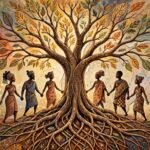



“We have moved from what can we build to what can we collect” this got me rethinking my stand as a Nigerian, reposting my mind from what can I collect to what can I build.Therefore Build!