by Agbonmagbe Kazeem
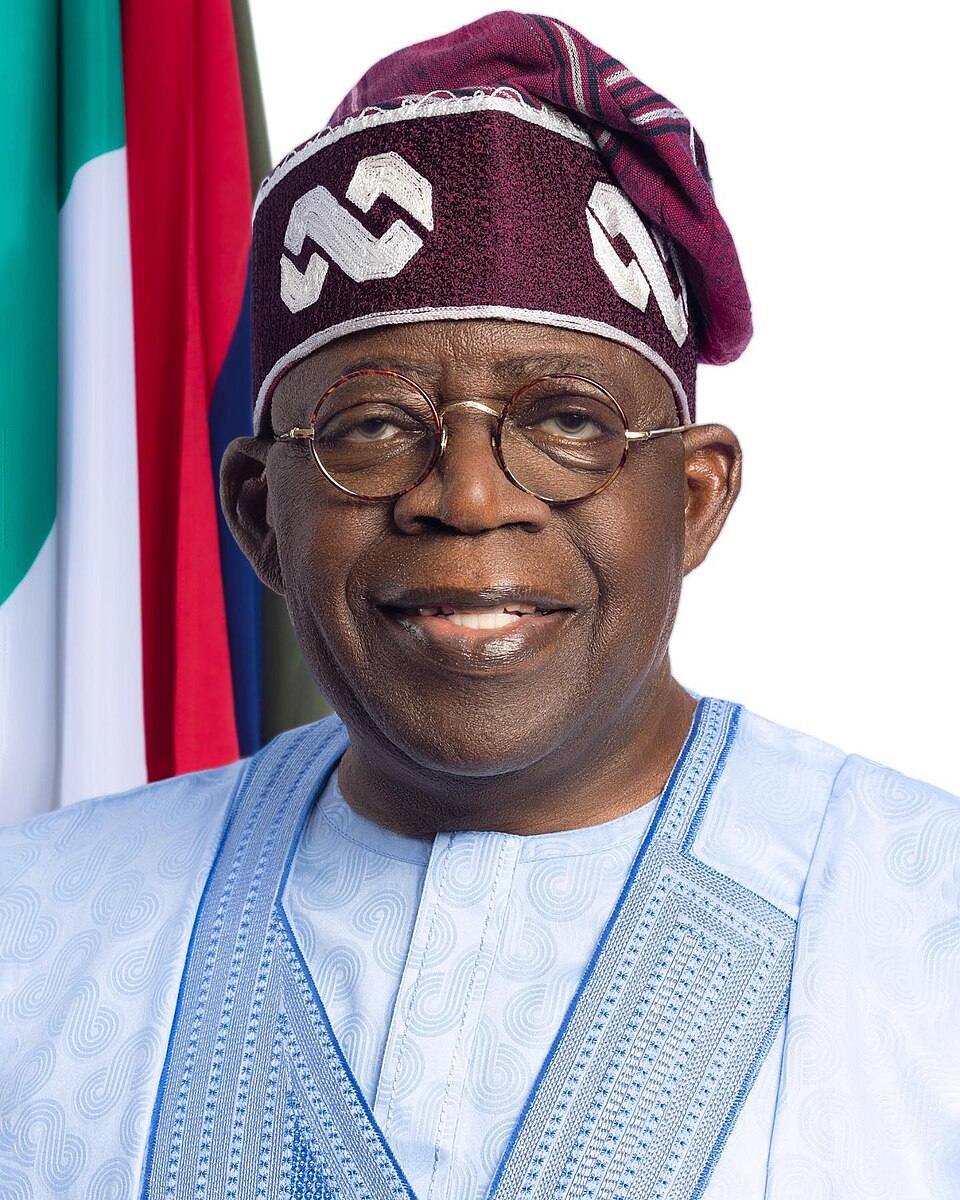
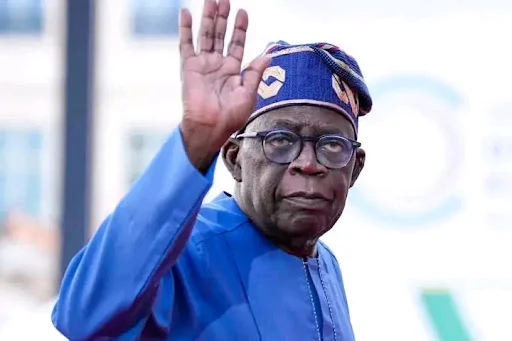
Tinubu’s Long Journey To President………..
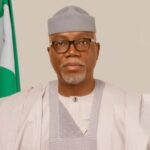
“The kingmaker has suddenly become the king himself, Tinubu who is considered as the kingmaker behind the emergence of President Muhammadu Buhari (PMB) in 2015, finally in 2023 became the 16th President of Nigeria.
It is mission accomplished for Ashiwaju Bola Ahmed Tinubu who said in 2023 that it was his turn to lead Nigeria, but the road to Aso Rock has not been smooth sailing; it is a difficult journey, such that Ashiwaju Tinubu himself attest that he did not relax and could not enjoy all through.

Known as the son of late Alhaja Abibatu Mogaji, the Iyaloja of Lagos, Tinubu had a commendable professional life with a number of international concerns as an Auditor before joining politics in 1992, on the platform of the Social Democratic Party led by late Shehu Musa Yar’Adua. He was elected to the Nigerian Senate, to represent the Lagos West constituency.
Military President Ibrahim Badamosi Babangida’s (IBB) unending transition, witnessed a dribbling that saw the annulment of the June 12, 1993 presidential election that was to produce M.K.O. Abiola.
This development brought Ashiwaju Tinubu into the limelight as he became a major arrowhead of the struggle to realise MKO’s mandate. With MKO in jail, he fled into exile in 1994, becoming a leader cum financier of the National Democratic Coalition (NADECO), against General Sanni Abacha. He had pushed IBB aside, later dismissing after 84 days in office, the interim government of Ernest Shonekan that Babangida had put in place. Tinubu only returned to Nigeria in 1998 after the death of General Sani Abacha. General Abdulsalami A. Abubakar who took over wanted to quickly leave office and Ashiwaju Tinubu was one of the beneficiaries of the General’s call for Nigerians to canvass for offices.
In the run-up to the 1999 elections, Ashiwaju Bola Tinubu was a protege of Alliance for Democracy (AD) leaders Abraham Adesanya and Ayo Adebanjo. He won the AD primaries for the Lagos State gubernatorial elections, and in January 1999, stood for the position of Executive Governor of Lagos State on the AD ticket and won.
On October 7, 1999, the late human rights lawyer, Gani Fawehinmi (SAN) filed a request at the Federal High Court, Lagos, to compel an investigation of criminal allegations which he made against BAT. This process was stalled in court given a serving governor’s immunity. Fawehinmi’s death ended all issues.
Ashiwaju Tinubu, alongside a new deputy, Femi Pedro, won re-election to office as governor in April 2003. He survived former President Obasanjo’s attempt to sweep all the Southwestern States into his ruling People’s Democratic Party (PDP). How he outsmarted Obasanjo (OBJ) is a story for another day. He was involved in a struggle with the Federal government over Lagos State’s right to create new Local Council Development Areas (LCDAs) to meet its large population’s needs. The controversy led to the federal government seizing funds meant for local councils in the state in spite of the decision of the Supreme Court against Obasanjo, the then President.
His tenure as Lagos State Governor ended on 29 May 2007. There are suggestions that he was wealthy before coming into politics. But many dubbed him the owner of Lagos. A 2015 documentary alleged BAT’s stranglehold on the political and financial jugular of Lagos. Ashiwaju Tinubu sued the producers, AIT, for N150 billion for libel, and the documentary was taken off the air on March 6, 2015 as AIT allegedly made restitution and apologized. Similar controversies over the ownership of Alpha-Beta, a consulting entity that massively assisted in raising the internally generated revenue of Lagos State has been settled with Dapo Apara, a chartered accountant and former company M.D.
Ashiwaju Tinubu had a history of being too controlling over his successors. For example, in December 2009, there were reports that serving Governor Babatunde Raji Fashola and Tinubu had a fight over Fashola’s re-election against 2011.
A similar imbroglio happened in 2015 over Fashola’s replacement. Tinubu allegedly decided on Akinwunmi Ambode, who was in turn denied a second-term and incumbent Babajide Sanwo-Olu was put in place.
Many people suggested that PMB did not want Ashiwaju Tinubu as his successor in spite of the role the former Lagos governor played in ensuring that he became President of Nigeria in 2015. In June 2021, for instance, in an interview, PMB stated that: “You cannot sit there in Lagos… and decide the fate of APC on zoning.” This was in reaction to a suggestion that the All Progressives Congress (APC) presidential candidate had been zoned to the South against the 2023 elections.
This message was read as meant for Tinubu, who was the frontrunner for his party’s nomination. The body language of PMB, as he foisted a chairman on the party who in turn tried to foist Ahmed Lawan as the APC presidential candidate gave the impression that all was sealed against Tinubu. Against all odds, with the support of nine APC Governors from Northern Nigeria, the use of his war-chest, etc., Tinubu emerged as APC’s presidential candidate.
The ill-fated redesign policy was clearly read as geared at preventing Ashiwaju Tinubu’s success, given the untold hardship that was added to the lackluster performance by the APC government during PMB’s eight years in office. However, this policy backfired in the north pushing people to look forward to BAT’s election to change the situation.
Little wonder that as Ashiwaju Tinubu took a careful position of embracing PMB’s failure in office but skillfully suggesting that he is different, PMB was pushed into a corner of lack of trust on his support for his party’s presidential candidate, hence he had to show his ballot paper to the world to prove that he voted in favour of his party.
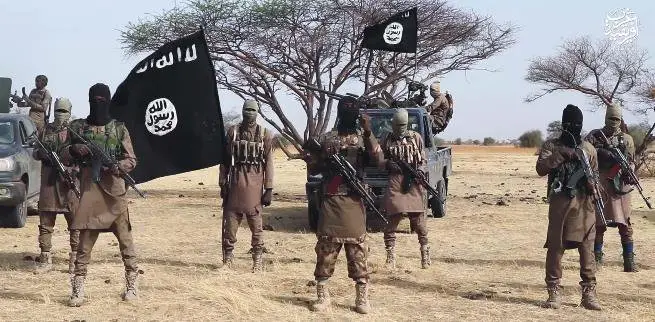
Tinubu faces a plethora of challenges. There is the controversy on whether Nigeria needs restructuring to avoid secession. The low international rating of Nigeria and worsening exchange rate, petrol “subsidy” removal, inflation, excruciating debt overhang, the youth bulge, accompanied by high unemployment etc., are major challenges. More importantly is the general insecurity that PMB slightly reduced by pushing Boko Haram out of territories it once held but with mayhem continuing in many parts of Nigeria.
“Section 134 of the 1999 constitution stipulates that a presidential candidate can only be announced as the winner if he or she has the majority of votes cast at the election; and has not less than one-quarter of the votes cast at the election in at least two-thirds of all the States in the Federation and the FCT.
Sub-section 3 of the said section provides that “in default of a candidate duly elected in accordance with subsection (2) of this section there shall be a second election”.
To be continued……..
“THE HISTORIAN”
AGBONMAGBE REMILEKUN KAZEEM
+2348036472826