by Mohammed Bello Doka
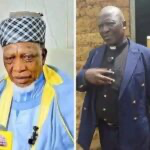
Solomon Dalung is someone that I have held in very high regard. A respected lawyer, a former minister, and a voice that has, on many occasions, spoken truth to power. But I believe in this regard, he has erred. And I am sure the records of what I am going to discuss in this rejoinder are available to him. The records of history, of violence, and of the suffering of communities that have bled on this Plateau for decades. Yet, in his recent intervention, Dalung chose to see only one side of the bloodshed. He chose to frame Reverend Ezekiel Dachomo’s inflammatory rhetoric as a mere “reaction to pain,” while painting Sheikh Sani Yahaya Jingir’s words as a calculated ideology of dominance. This is not just intellectually dishonest; it is dangerously selective morality. And Nigeria is too fragile for that kind of prejudice.
Let us begin with the facts. Dalung argues that Dachomo’s words are born from the “pain, anger and fear of communities that feel abandoned and repeatedly attacked.” He tells us that Dachomo has “buried victims” and “spoken from the pain” of Christian communities in Plateau. All of that is true. Reverend Dachomo has indeed witnessed horrors. His own family members have been killed. He has every right to demand protection for his community. He has every right to speak angrily about people being killed. But legitimate pain does not give anybody a
license to demonise an entire religion.

And what did Dachomo actually say? He declared, “We refuse to be Islamic, we will never bow down to Allah. Allah is a demon, that is why when Allah wants to suck blood, he tells his members to chant ‘Allahu Akbar’ before they embark on killings, so that Allah will suck blood”. He linked the sacred invocation of “Allahu Akbar” with the killing of Christians and described Allah in terms so derogatory that they transcend criticism of terrorists and become an attack on the faith itself. He has described a Muslim-Muslim presidency as “complete genocide” to Christians and portrayed it as an “Islamic agenda.” These are not merely expressions of pain. These are acts of theological warfare. They are designed to dehumanise millions of ordinary Muslims who have nothing whatsoever to do with the violence.
Now, Dalung rightly condemned Sheikh Jingir for describing Christians as “infidels” and urging Muslims to use their numerical strength to pursue their political interests. He argued that to describe a fellow Nigerian as an “infidel” is deeply derogatory and dangerous. I agree with him entirely. But here is the double standard: Dalung condemns Jingir for demonising Christians, yet he excuses Dachomo for demonising Allah Himself. Which is worse? To call a believer an infidel, or to call God a demon? Both are unacceptable. Both are hate speech. But Dalung gives one a pass because of “context” and condemns the other with full force. That is not consistency. That is hypocrisy.
Dalung also argues that Jingir’s words are worse because they are about “dominance,” while Dachomo’s are merely a “reaction.” But this is a false dichotomy. Dachomo is not just reacting; he is prescribing a political solution based on that reaction. He has declared that a Muslim-Muslim presidency is “complete genocide” and an “Islamic agenda” to take over the country. He has said Christians must “wake up” because Muslims want to “make every Christian become a Muslim by force.” This is identical to Jingir’s framing. Jingir argues for Muslim political dominance because of numerical strength; Dachomo argues against Muslim political dominance because he frames it as genocide. Both are reducing governance to religious arithmetic. Both are arguing that the other group’s political participation is illegitimate. There is no moral high ground here.
But Dalung’s most troubling omission is his failure to acknowledge that Sheikh Jingir and his community have also suffered immensely. He speaks of Dachomo burying victims, but he says nothing of the attacks on Jingir and his followers.
On 29 August 2011, following Eid-el-Fitr prayers in Jos, Muslim worshippers were attacked by armed youths. Contemporary Reuters reporting documented that gangs of armed youths attacked Muslims as they gathered to celebrate the last day of Ramadan, killing people and burning their cars. Reuters reported the attack. Al Jazeera also reported the attack on the Ramadan gathering in Jos and the ensuing violence.
The incident is important because it establishes that Muslim worshippers in Plateau were themselves victims of serious communal violence long before the later attacks on Sheikh Jingir. The attack was not merely an abstract political disagreement; people gathered for religious worship were caught up in deadly violence.
The history did not end there. In January 2015, a suspected improvised explosive device was discovered and defused close to Sheikh Sani Yahaya Jingir’s residence in Jos. Contemporary reporting placed the discovery around 2 January 2015. Contemporary reporting carried by AllAfrica reported that the suspected IED was defused and evacuated close to the residence of Sheikh Jingir.
Then came the attack that was even more direct. On 5 July 2015, twin bomb blasts struck Jos, including an attack at the Yantaya Mosque while Sheikh Jingir was preaching. Al Jazeera reported that the second attack targeted cleric Sani Yahaya Jingir as he was preaching. The Guardian likewise reported that the bombs struck a crowded mosque and a Muslim restaurant in Jos, killing 44 people. The attack was widely attributed at the time to Boko Haram.
Jingir was a prominent critic of Boko Haram, and contemporary reports described the mosque attack as targeting him while he delivered his Ramadan sermon. A report by the Catholic news agency Fides likewise recorded that the second blast occurred near the mosque in Yantaya where Imam Sani Yahaya Jingir preached and noted his opposition to Boko Haram.
If Dalung argues that Dachomo’s context of suffering warrants consideration for his words, then Jingir’s similar context of direct, life-threatening attacks must be acknowledged with the same weight. To ignore this is to engage in selective amnesia.
Dalung also speaks of Christians being killed in “their lands,” as if Muslims are not also indigenous to Plateau. But the historical record tells a different story. When British miners discovered tin on the Plateau in the early 1900s, they drew labour from across the northern region, including Hausa, Fulani, Nupe, and Kanuri Muslims. These communities have been present since the 19th century, with established settlements in the emirates of Wase and Kanam. By 1910, they had formed permanent quarters in Jos, Bukuru, and Barkin Ladi. Yet in Plateau State, where Christians dominate local government, Hausa-Fulani Muslims, whose families have lived in Jos for over a century, are still classified as “settlers”. This is a civic apartheid that denies the deep, multi-generational roots of Muslim communities in Plateau. These families are not guests. They are Nigerians whose belonging is as legitimate as anyone else’s.
And what of the Muslim travellers who have been killed on Plateau roads?
On 3 September 2018, retired Major General Idris Alkali disappeared while travelling from Abuja to Bauchi through the Jos area. Vanguard reported that Alkali went missing on September 3, 2018 while travelling from Abuja to Bauchi through Jos. The Nigerian Army later disclosed details of the search, including the discovery of his vehicle and subsequently his remains. Channels Television reported the Army’s discovery of a shallow grave during the search for Alkali.
The Army’s account established that Alkali was murdered after his journey brought him into the Dura-Du area. His vehicle was subsequently recovered from a mining pond, while his remains were eventually found in the Guchwet area of Jos South.
It is important, however, to distinguish between what has been established and what remains an allegation concerning motive. The available contemporary reports establish the circumstances surrounding Alkali’s disappearance, death and recovery of his remains, but they do not conclusively establish that he was targeted simply because he was a Muslim. What they do establish is that a senior military officer and Muslim traveller was killed while passing through a volatile part of Plateau State.
Then, on 14 August 2021, a convoy of Muslim travellers was attacked along Rukuba Road in Jos North. The passengers were returning from an Islamic religious event in Bauchi State and were travelling towards Ikare in Ondo State.
Reuters reported that authorities described the killing of the travellers as a premeditated ambush. Reuters reported on the prearranged nature of the attack. Other contemporary reports said the convoy consisted of five buses carrying Muslim faithful and that police suspected Irigwe youths and their sympathisers of carrying out the attack. Africanews reported the police account of the attack.
According to the Plateau State Police Command, the attack occurred at about 9:28 a.m. on August 14, 2021. Police said 22 people were killed and others injured. The Muslim passengers were returning from the Annual Zikr prayer in Bauchi State and were heading to Ikare in Ondo State.
Jama’atu Nasril Islam and other Muslim organisations condemned the incident in very strong terms, with JNI describing it as a planned pogrom. Again, the distinction between established fact and attribution is important. The deaths, the identity of the travellers as Muslim passengers, the location of the attack, and the police account of suspected perpetrators are documented. The characterization of the attack as a “pogrom” was an assessment made by JNI, rather than a judicial finding. But the scale and circumstances of the attack cannot reasonably be erased from any honest discussion of the suffering of Muslims on the Plateau.
Dalung says he will not deny the persecution of Christians simply because he is uncomfortable with some of the language used by Christian voices. That is commendable. But he also says he will not pretend that every statement made in the name of Islam is acceptable simply because he respects Muslims. Yet that is exactly what he is doing when he gives Dachomo a pass. He is pretending that Dachomo’s words are acceptable because they come from a place of pain. But pain does not sanctify bigotry. Trauma does not license blasphemy.
The answer to Muslim triumphalism cannot be Christian triumphalism. The answer to Christian fear cannot be Muslim triumphalism. We have to be able to say something very simple: Christians must be protected. Muslims must be protected. Every Nigerian must be treated as an equal citizen. And religious leaders, precisely because they command enormous influence over their followers, have an even greater responsibility to understand the weight of their words.
Where Dachomo demonises Islam, I will condemn him. Where Jingir demeans Christians or uses religious identity to justify political dominance, I will condemn him. Where either of them speaks truth about the suffering of their respective communities, I will acknowledge that truth. That is what consistency looks like. That is what equity demands.
But those who come with equity must come with clean hands. They cannot weigh the pain of one community on a golden scale and the pain of another on a rusty one. They cannot claim to stand for justice while their empathy flows only in one direction. They cannot speak of healing while they stoke the flames of division with their selective outrage.
Solomon Dalung, you are better than this. You have the platform, the intellect, and the moral authority to rise above the fray. But in this instance, you have chosen to be a partisan, not a prophet. And when you do that, you risk being seen not as a statesman, but as a tribalist in the robes of a statesman. Not as a bridge-builder, but as an arsonist who picks and chooses which fires to put out.
Nigeria is bleeding. And in this moment, we need leaders who can see the blood of all Nigerians, not just the blood of those who share their faith. We need voices that can say, without qualification, that hate speech is hate speech, regardless of who speaks it. We need men and women who understand that the path to peace is not through minimising the pain of one side to magnify the pain of the other.
I beg to differ, Sir. Not because I do not respect you. But because I respect the truth more. And the truth is that Reverend Ezekiel Dachomo and Sheikh Sani Yahaya Jingir are two sides of the same dangerous coin. They are both men of faith who have crossed the line into hatred. They are both men who have used their pulpits to divide rather than unite. And they both deserve to be condemned with equal vigour.
Anything less is not justice. It is just politics. And Nigeria has had enough of that.
Mohammed Bello Doka can be reached via bellodoka82@gmail.com