By Okoi Obono-Obla
Philosophical Dimensions of Yakurr Patriclan, Matriclan, and Adoption Systems:
The uniqueness, complexities, and intriguing character of Yakurr philosophical thought, particularly regarding the patriclan and matriclan kinship systems, remain confounding and unparalleled in philosophical discourse. The Yakurr people of Cross River State, Nigeria, possess a kinship philosophy that blends social structure, moral order, and metaphysical reasoning into a coherent system of lineage identity.
My paternal grandparents were members of the Ejika Okina (Abamtigwe) Patriclan of Lekpankom Ijiman Okurubong Town in Ugep, Yakurr. My paternal grandfather, Obol Ubi Ottoh Ejika, also belonged to the Yajeni Matriclan. My grandmother, Mma Eni Okoi Okene, hailed from Lekpankom Bikobiko Town but was of the Yayor Matriclan. She married Obol Ikpi Usang of Kekenkolo Ijom Town, Ugep, who was a member of the Yakunkunebol Lejimo sublineage of the Leboljima (Royal Matriclan).

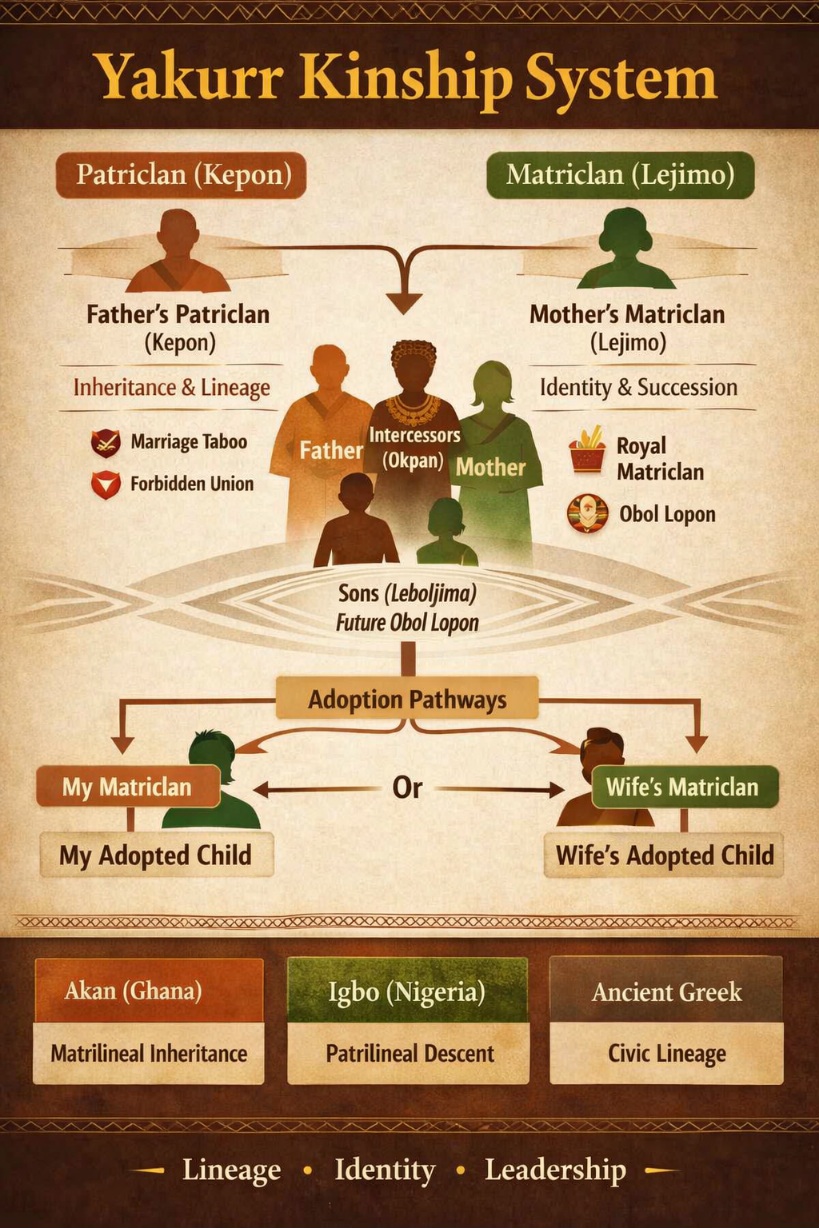
My father, Tata Daniel Ofem Obono (Ofem Ebison), belonged to the Yakumiko Matriclan of Ugep Yakurr. I married Iquo Justina, who is also a member of the Yakunkunebol sublineage of Leboljima. She bore two sons for me, and both of them belong to Leboljima. This means they could become Obol Lopon of Ugep in the future, even though their father, Chief Okoi Obono-Obla, does not belong to the Royal Matriclan of Ugep—Leboljima.
Intriguingly, I and my father do not belong to the same matriclan. However, members of my father’s matriclan, Yakumiko, are my Okpan—which means intercessors. When circumstances arise where members of my patriclan and matriclan are forbidden to partake, my intercessors assume responsibility.
I am forbidden to marry a woman from my patriclan. Likewise, I am forbidden to engage in any immoral relationship with a female from my patriclan or with the spouse of a member of the same patriclan. However, I can marry a distant member of my matriclan, though not second, third, or fourth generation members of the same matriclan.
Children from my uncles and aunties on my paternal side do not belong to the same matriclan as me, except in cases where those uncles or aunties marry women from my matriclan. Furthermore, if I marry a woman from Yoruba, Hausa, Igbo, or Oyibo (Mbakara), the children from that union will belong to my matriclan.
If I adopt someone and integrate him or her into my family, that person automatically belongs to my matriclan. However, I could also allow my wife to adopt him or her equally into her matriclan. This flexibility reveals the philosophical inclusivity of Yakurr kinship thought, where adoption is not merely a social act but a metaphysical integration into lineage identity. It reflects the Yakurr belief that kinship transcends blood and can be extended through symbolic and moral bonds.
Philosophical Implications of Adoption
Adoption in Yakurr thought harmonizes with the dual descent system—bridging patriclan and matriclan obligations. It embodies the Yakurr ideal of balance and reciprocity, ensuring that lineage continuity is maintained through both biological and chosen relationships. This philosophical openness distinguishes Yakurr kinship from other systems:
– Among the Akan of Ghana, identity is tied to maternal blood (mogya), making adoption philosophically constrained.
– Among the Igbo of Nigeria, adoption strengthens patrilineal continuity, while Yakurr emphasizes matriclan belonging, showing a different priority.
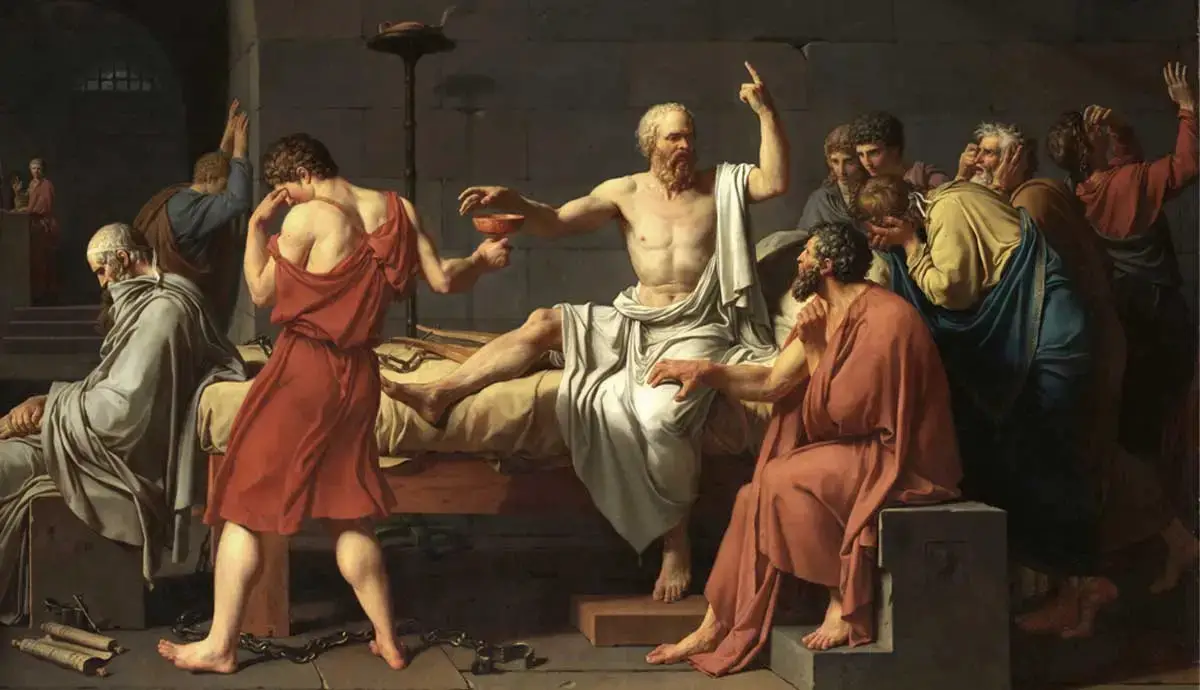
– In Ancient Greece, adoption preserved civic lineage and property, but Yakurr adoption integrates moral and spiritual belonging into dual descent.
Thus, Yakurr adoption practices highlight the inclusive and integrative nature of its kinship philosophy, reinforcing the idea that lineage is not only inherited but can also be consciously extended.
Conclusion
The Yakurr kinship system demonstrates a profound philosophical framework where patriclan and matriclan affiliations intersect to shape identity, inheritance, and leadership. Its intellectual richness—especially its inclusive approach to adoption—makes it not only a cultural treasure of Cross River State, Nigeria, but also a subject of immense academic value in comparative anthropology and philosophy.