By Okoi Obono-Obla
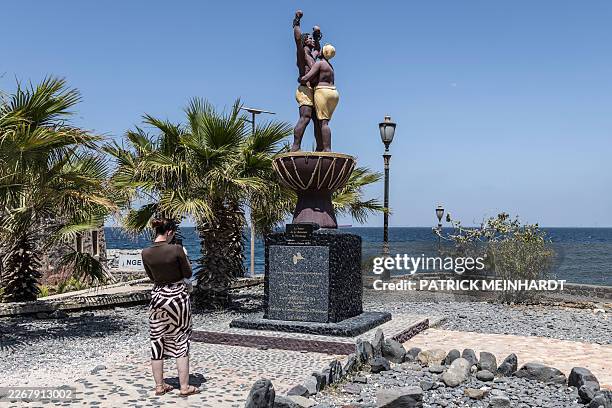
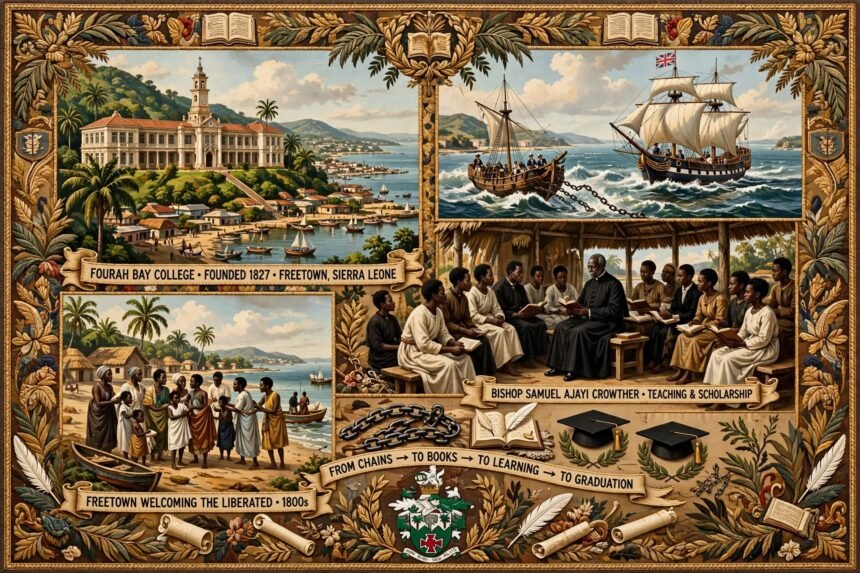
The story of Fourah Bay College in Freetown, Sierra Leone is interwoven with the history of the Transatlantic Slave Trade, its abolition by the British Parliament in 1807, the naval operations of the Royal Navy in the Gulf of Guinea, the founding of Freetown itself, and British colonialism in West Africa, to create a breathtaking tapestry of history.
Fourah Bay College was founded on 18th February, 1827 by the Church Missionary Society [CMS] as a school for recaptives — Africans liberated from slave ships intercepted by the British Royal Navy’s West Africa Squadron. These vessels, belonging to slave merchants conveying captives to the Americas, were captured and the liberated Africans were resettled in the new settlement of Freetown. The college was established to provide them with education, skills acquisition, and training to help propagate Christianity and support colonial administration.
From such humble beginnings, Fourah Bay College grew to become a teacher training college and later, a full-fledged University. Affiliated to Durham University in England in 1876, it made history as the first university to be established in colonial West Africa, modelled on Western philosophy and educational tradition. It earned the distinguished appellation, “The Athens of West Africa.”
One of the most illustrious products of Fourah Bay College is Bishop Samuel Ajayi Crowther. As a young boy of about 12, he was captured in 1821 during the Yoruba wars, fueled by slave raiding linked to King Ghezo of Dahomey. He was sold to Portuguese slave traders, but the ship transporting him was intercepted by HMS Myrmidon of the Royal Navy’s anti-slavery squadron and taken to Freetown. There, he was educated, trained as an Anglican clergyman at Fourah Bay College, and later deployed to the Niger Territories. He became the first African Anglican Bishop and famously translated the Bible into Yoruba, evangelizing and spreading the message of God along the Niger.
Beyond his evangelical work, Crowther was also a renowned linguist. While his most celebrated linguistic achievement was the standardization of the Yoruba language, he also made pioneering contributions to the development of a standardized, intelligible Igbo language from the numerous dialects of present-day South-Eastern Nigeria. Working with fellow Fourah Bay College alumnus, Rev. John Christopher Taylor, an Igbo recaptive, he compiled early vocabularies of the Isuama-Igbo dialect in 1882, laying the foundation for what would later be standardized as Union Igbo by Archdeacon Thomas John Dennis for the translation of the Igbo Bible.
On this historic note, I heartily congratulate Professor Oka Obono on his appointment as Honorary Professor at such a citadel of learning as Fourah Bay College. This appointment is a testament to his intellectual capabilities, resourcefulness, and dedication to scholarship.