by Emmanuel Adegbite
Every October 1, Nigeria performs the familiar ritual of remembering that she became independent in 1960. The flags emerge, the speeches begin, politicians suddenly rediscover the vocabulary of unity, sacrifice, patriotism, hope and national greatness, and the country briefly becomes the object of everyone’s affection. Those who spent the previous eleven months complaining about Nigeria, exploiting Nigeria, governing Nigeria badly or simply trying to escape Nigeria suddenly remember to say, “God bless Nigeria.” There will be ceremonies, parades, patriotic songs and carefully prepared addresses about the greatness of the Nigerian spirit. For a few hours, the country becomes almost unrecognisable from the Nigeria its citizens experience every other day. Then the microphones are switched off, the flags are folded, the speeches disappear into official archives and Nigeria returns to the business of being Nigeria. Perhaps that is why Independence Day should occasionally be more than a celebration. It should be an interrogation. We should not only ask what Nigeria has survived; we should ask what Nigeria has become.
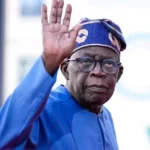
This year’s Independence Day offers an especially interesting opportunity for such reflection because Nigeria has, in recent years, changed the song through which she speaks about herself. On 29 May 2024, President Bola Ahmed Tinubu signed the National Anthem Bill into law, restoring “Nigeria, We Hail Thee,” the anthem adopted at independence in 1960 and replaced in 1978 by “Arise, O Compatriots.” After forty-six years of familiarity with the latter, Nigerians were suddenly required to recover the former. There is something almost perfectly Nigerian about this historical reversal. We can spend years debating electricity, insecurity, unemployment, education, corruption and institutional reform, but when it comes to deciding what Nigerians should sing at public functions, the machinery of the state can suddenly discover the virtues of urgency. A country that sometimes struggles to preserve its hospitals, roads and public institutions managed to retrieve a song from the archives with impressive speed. One might almost conclude that the easiest national reform is the one that requires citizens to learn a new chorus.
Yet beneath the irony lies a much more serious question. A national anthem is not merely a song. It is a ritualised statement of national identity; it is poetry compressed into ceremony and political philosophy reduced to lines that children can memorise before they are old enough to understand the politics behind them. Every time citizens stand to sing an anthem, the state is asking them to participate in a particular understanding of what the nation is, what citizenship means and what the country ought to become. Therefore, changing an anthem is not quite as insignificant as changing the music played before a football match. It changes the language through which a nation imagines itself. And the difference between “Arise, O Compatriots” and “Nigeria, We Hail Thee” is therefore worth examining not merely as a question of taste or generational nostalgia, but as a question of rhetoric, political imagination and national philosophy.

“Arise, O Compatriots” begins with a command: “Arise, O compatriots.” The first word is an imperative verb, and the choice is significant. The citizen is not invited to admire Nigeria from a comfortable distance; the citizen is summoned to action. The next line makes the relationship even more explicit: “Nigeria’s call obey.” The nation is personified as a voice that calls, while the citizen is positioned as the one who must respond. The vocabulary that follows—service, defence, sacrifice and collective duty—creates a rhetorical atmosphere of mobilisation. It is the language of a country telling its citizens that belonging is not passive. To be a compatriot is to have obligations. The historical context makes this even more interesting. “Arise, O Compatriots” was introduced in 1978, during Nigeria’s military era, and its command-oriented diction sits comfortably within a political culture that placed considerable emphasis on discipline, unity, obedience and national mobilisation. The anthem did not politely knock on the door of citizenship; it summoned the citizen to attention.
Then comes the restored anthem, and the change in tone is immediate: “Nigeria, we hail thee.” The difference between “arise” and “hail” is not merely grammatical; it is emotional and ideological. “Arise” is a command. “Hail” is an affirmation. The former anthem begins with what Nigerians must do, while the restored anthem begins with an expression of what Nigeria means to those who sing it. One mobilises; the other embraces. One begins with duty; the other begins with affection. Even the archaic “thee” contributes to the ceremonial and almost devotional character of the line. The nation is addressed as something worthy of recognition and honour. This is followed by “our own dear native land,” perhaps one of the most intimate expressions in the anthem. The accumulation of possessive and emotive language—“our,” “own,” “dear,” “native”—transforms Nigeria from a political territory into a homeland. The country is presented not merely as a republic governed through institutions but as a place of belonging, a home to which citizens owe something deeper than legal allegiance.
The significance of this language becomes clearer when the anthem confronts the most persistent fact about Nigeria: diversity. “Though tribes and tongues may differ,” it says, before proposing its answer: “In brotherhood, we stand.” The anthem does not begin by pretending that Nigerians are homogeneous. It recognises ethnic and linguistic difference, then attempts to place those differences within a larger conception of national fellowship. “Brotherhood” is a metaphor of family, and the metaphor is politically important because national identity often requires strangers to imagine themselves as members of the same household. The Yoruba, Igbo, Hausa, Ijaw, Tiv, Kanuri, Efik and hundreds of other Nigerian identities do not disappear because an anthem calls them brothers; rather, the anthem proposes that these differences need not make national solidarity impossible. It is an admirable ideal, but it also exposes one of Nigeria’s recurring contradictions. We are remarkably good at singing unity and considerably less consistent at practising it. We can sing “in brotherhood we stand” in perfect harmony and then spend the afternoon calculating political appointments according to ethnicity, region, religion or patronage. Brotherhood is easy in the chorus; it becomes considerably more difficult in the distribution of power.
The next phrase, “Nigerians all,” contains a deceptively powerful word: “all.” The anthem imagines citizenship without qualifications. Not some Nigerians, not politically connected Nigerians, not wealthy Nigerians, not Nigerians who can afford to escape when the economy collapses, but Nigerians all. The word suggests an inclusive national identity in which citizenship is not graded according to geography, ethnicity, religion, wealth or political influence. It is followed by another phrase that deserves to be placed on the walls of every government office in the country: “and proud to serve.” The anthem does not define patriotic pride through the possession of power; it defines it through service. Nigerians are supposed to be proud to serve their country. This becomes an uncomfortable proposition when placed beside a political culture in which public office has too often appeared less like service and more like an opportunity to be served by the public. The citizen queues; the politician passes. The citizen pays; the politician announces. The citizen waits; the government promises. The anthem says “proud to serve,” while the political class sometimes behaves as though the more appropriate expression were “proud to be served.”
The phrase “our sovereign Motherland” deepens the anthem’s family metaphor. Nigeria becomes a mother, and citizens become her children. But metaphors carry obligations. A mother is expected to nurture, protect and provide. If Nigeria is Motherland, then the language naturally invites questions about what the Nigerian state owes its children. What does it provide in education, healthcare, security, justice and opportunity? What protection does it offer to the ordinary citizen who encounters the state not in a ceremonial parade but at a police station, a hospital, a public school, a tax office or a border crossing? The metaphor becomes uncomfortable precisely because it creates expectations. A state cannot indefinitely demand that its children love it while giving them reasons to flee from it. Patriotism cannot become a one-way transaction in which citizens are expected to sacrifice endlessly while institutions refuse to reciprocate with competent governance.
The second stanza becomes even more politically demanding because it moves from identity to values: “Our flag shall be a symbol.” The question then becomes: a symbol of what? The answer is “truth and justice.” These are not decorative patriotic words. They are standards. Truth asks whether the nation is honest about itself; justice asks whether the nation treats its citizens fairly. Truth is inconvenient because it demands that appearances give way to facts. Justice is inconvenient because it demands that privilege give way to fairness. The anthem goes further: “That truth and justice reign.” The verb “reign” personifies truth and justice as sovereign powers. The national imagination being proposed here is therefore remarkably ambitious: Nigeria should be a country in which truth and justice occupy the throne. Not money, not ethnicity, not political influence, not godfatherism, not impunity, but truth and justice. It is one thing to sing those words at an Independence Day ceremony; it is another to construct institutions capable of making them true.
This is where the anthem becomes almost unintentionally ironic. Nigeria can sing about justice while ordinary citizens wait endlessly for justice. We can sing about truth while political communication often turns into a contest in which inconvenient facts are buried beneath slogans. We can sing about brotherhood while political actors exploit ethnic and religious anxieties whenever those anxieties become electorally useful. We can sing about service while public office sometimes appears to be treated as an avenue for personal accumulation. The problem is not that the anthem is hypocritical; the problem is that the country can become hypocritical if it celebrates the words without accepting the obligations behind them. An anthem can articulate an ideal, but it cannot manufacture the institutions necessary to realise that ideal. No melody can make a corrupt institution honest. No chorus can make an unjust system fair. No patriotic ceremony can substitute for competent governance.
The line “In peace or battle” introduces another important contrast. The nation is imagined as something whose dignity should survive both peace and conflict. Here the restored anthem and “Arise, O Compatriots” meet on common ground. Despite their different emotional registers, both understand citizenship as responsibility. “Arise, O Compatriots” commands Nigerians to rise and serve; “Nigeria, We Hail Thee” declares Nigerians proud to serve. The first is more martial and mobilising; the second is more intimate and aspirational. One tells the citizen to rise to duty; the other reminds the citizen what that duty is supposed to preserve. They are not necessarily contradictory visions. They are two different rhetorical approaches to the same national problem: how to persuade diverse citizens to imagine themselves as participants in one political community.
Perhaps the most profound line in the second stanza, however, is “To hand on to our children.” Here the anthem moves beyond the present generation and introduces the idea of national inheritance. We are not permanent owners of Nigeria. We are temporary custodians. We received something from those before us, and we are expected to pass something on to those who will come after us. That single idea should make every Independence Day uncomfortable for those who have governed the country without regard for posterity. What exactly are we handing to our children? Strong institutions or weakened ones? Functional schools or collapsing classrooms? A productive economy or generations of debt? Secure communities or a culture of fear? A credible democracy or a political system in which young people increasingly believe that the only reliable route to a future is a passport? The anthem asks us to hand on a country whose “banner” is “without stain.” The metaphorical stain can be read as corruption, injustice, oppression, betrayal and national disgrace. The flag therefore becomes more than cloth; it becomes a representation of national honour.
This is why October 1 should be more than a day on which Nigeria congratulates herself. Independence is a historical achievement, but survival is not the same thing as fulfilment. Nigeria has survived civil war, military coups, dictatorships, economic crises, institutional failures, insecurity and political upheavals. That endurance deserves recognition. But a nation can survive for decades without becoming the nation its founders imagined. We inherited political independence in 1960; the harder question is what we have done with it. We inherited a country; have we built a nation? We inherited diversity; have we converted it into strength? We inherited resources; have we converted them into broad prosperity? We inherited institutions; have we strengthened them? We inherited sovereignty; have we exercised it responsibly? These questions are much harder than the speeches normally delivered on Independence Day because they require citizens and rulers alike to examine the distance between the Nigeria we celebrate and the Nigeria we actually inhabit.
Perhaps this is why the restoration of “Nigeria, We Hail Thee” should not be reduced to a quarrel between generations over which anthem sounds better. Familiarity is not literary superiority, and historical age is not proof of perfection. “Arise, O Compatriots” became part of the emotional memory of generations of Nigerians because they grew up singing it; that is a legitimate part of national memory. But “Nigeria, We Hail Thee” also contains a remarkably coherent philosophy of citizenship: belonging despite difference, service rather than entitlement, truth rather than deception, justice rather than privilege, peace rather than oppression, and responsibility to future generations. The appropriate question, therefore, is not simply which anthem we prefer. It is what each anthem asks us to become.
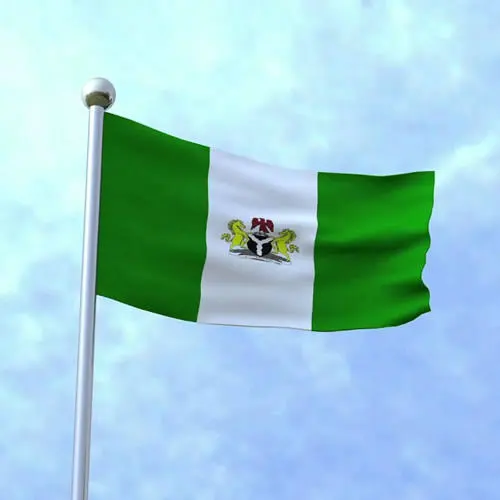
And perhaps the most uncomfortable truth is that Nigeria does not need a better anthem nearly as much as she needs the courage to live by the anthem she has chosen. When Nigerians sing “though tribes and tongues may differ,” the country should ask whether its politics has learned to live with difference. When they sing “in brotherhood we stand,” they should ask whether citizens are treated as brothers or merely mobilised as ethnic constituencies. When they sing “proud to serve,” they should ask whether public office is genuinely understood as service. When they sing “truth and justice reign,” they should ask whether truth and justice actually govern public institutions. When they sing “to hand on to our children,” they should ask what exactly this generation is preparing to hand over. And when they sing of a “banner without stain,” perhaps they should look beyond the green-white-green cloth and examine the hands carrying it.
So, on this October 1, let us celebrate Nigeria, but let us refuse to flatter her. A country is not loved by pretending that she has no wounds. A country is loved by refusing to make peace with those wounds. Let us celebrate the teacher who enters the classroom with more hope than resources, the nurse who works through the night, the farmer who feeds cities he may never visit, the trader who opens his shop despite another difficult morning, the student who continues to dream despite inadequate facilities, the journalist who insists on asking uncomfortable questions, the entrepreneur who creates something where the state has failed to create opportunity, and the young Nigerian who continues to believe that this country is worth building when leaving sometimes appears easier. These are the people who keep Nigeria alive between Independence Day speeches and election campaigns.
The government will change. Political parties will change. Presidents will come and go. Governors will come and go. Legislators will change. Slogans will change. Even anthems can change. But Nigeria remains. That is why the country cannot be reduced to the government of the moment. Nigeria is larger than Aso Rock, larger than the National Assembly, larger than any political party and certainly larger than the ambitions of those who temporarily occupy public office. The government is temporary; the nation is not. The flag belongs to the citizen as much as it belongs to the state. The anthem belongs to the people as much as it belongs to the ceremony.
“Arise, O Compatriots” once told Nigerians to rise. “Nigeria, We Hail Thee” now asks Nigerians to hail, stand together, serve and preserve. But perhaps, after sixty-six years of independence, the more difficult question is no longer whether Nigerians will rise. It is rise to what? Rise into what kind of country? Rise under whose justice? Rise according to whose truth? Rise for whose benefit? Rise to serve whom? A people can be ordered to arise every morning and still remain trapped in the same political darkness if the institutions around them refuse to change. We can change the anthem, memorise the lyrics, wave the flag, stand at attention and sing with perfect harmony, but none of those rituals can make truth reign, none can make justice reign, none can create brotherhood and none can produce a nation without stain. Those things have to be lived.
That, perhaps, is the deeper meaning of Independence Day. October 1 should not merely remind us of the Nigeria that became independent in 1960. It should remind us of the Nigeria that independence placed in our hands. The anthem has changed, but the responsibility has not. The flag remains. The promise remains. The country remains. And so does the unfinished work of nationhood. Perhaps the greatest tribute we can pay Nigeria today is not another extravagant speech about her greatness, but an honest commitment to make the words we sing less aspirational and more descriptive. We have spent sixty-six years singing about the Nigeria we want. The real work of independence is to build the Nigeria our songs keep promising.