By Akin Awofolaju, PhD
Tinubu, Atiku, ADC and the Accord Factor: The Political Equation That Could Reshape Osun Politics and Aregbesola’s Future
Before It Is Too Late: The Cost of Choosing Political Relevance Over Political Reality
Politics is an unforgiving enterprise. It rewards strategic foresight, punishes miscalculations and rarely allows political actors to sustain influence indefinitely on the strength of past achievements.

A politician may possess an impressive political résumé, national recognition and a formidable history, yet discover that yesterday’s political capital no longer translates into today’s electoral power.
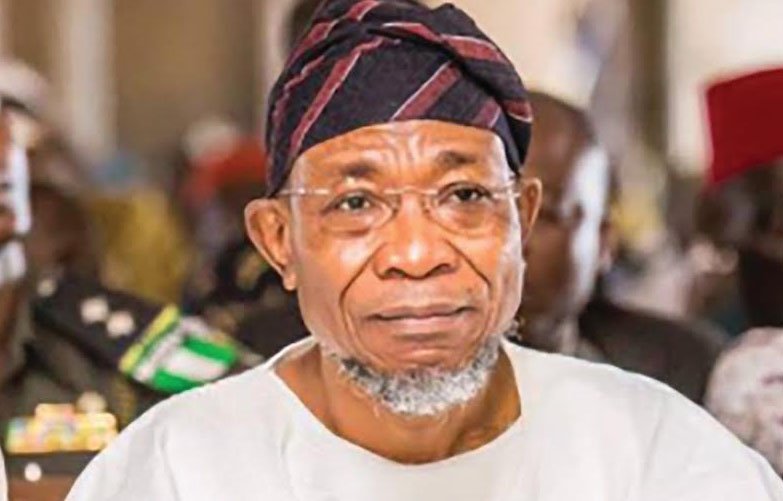
Rauf Aregbesola, former governor of Osun State, former Minister of Interior and current National Secretary of the African Democratic Congress (ADC), appears to be confronting precisely this dilemma.
His political journey has reached a critical crossroads. His departure from the APC was a huge mistake, his fractured relationship with President Bola Ahmed Tinubu was catastrophic as unintiligently played on public space , his alignment with ADC and his apparent difficulties in consolidating a viable grassroots political structure in Osun raise fundamental questions about his political judgment and future.
But the latest developments introduce another dimension: the emerging tension between Atiku Abubakar and some ADC leaders in the South-West.
This is no longer simply an Aregbesola-versus-Tinubu political story. It is becoming a broader question about political relevance, regional influence, financial capacity, coalition management and the distribution of power within ADC ahead of 2027.
1. Tinubu: The Political Relationship Aregbesola Cannot Simply Erase
Aregbesola’s political history is inseparable from Tinubu.
Their political partnership helped shape the progressive movement in the Southwest and contributed to the emergence of the APC. Aregbesola’s governorship, political advancement and subsequent ministerial appointment were all connected to that broader political history.
However, disagreements surrounding Osun’s political succession and the emergence of Gboyega Oyetola as Tinubu’s preferred successor fractured the relationship.
Aregbesola eventually left the APC and aligned with ADC.
There is nothing inherently wrong with challenging a former political benefactor. Political independence is legitimate, and no political relationship should become an unquestionable lifetime obligation.
However, there is a difference between political independence and strategic isolation.
Pres.Tinubu remains a formidable political actor with extensive networks and influence within the ruling establishment. Aregbesola’s challenge is therefore not simply to disagree with Tinubu but to build an alternative political structure capable of sustaining his ambitions.
The question is whether ADC provides that structure.
2. ADC: National Ambition, But What About Osun?
Aregbesola’s decision to join ADC may have been motivated by the desire to reinvent himself nationally, challenge the APC establishment and participate in constructing a broader opposition coalition.
That ambition is understandable.
But political ambition must be supported by a formidable structure and laser focused organisational capacity.
The August 15, 2026 Osun governorship election offered an uncomfortable assessment of ADC’s electoral standing in Aregbesola’s home state.
Accord’s Ademola Adeleke secured 511,067 votes, APC’s Bola Oyebamiji received 444,815, while ADC’s Najeem Salaam secured just 17,180.
These figures demonstrate the considerable disparity between the electoral performance of Accord and ADC in Osun.
The question is unavoidable: why would a former governor with Aregbesola’s political history choose a platform that had not demonstrated comparable electoral strength in his home state when another opposition platform had already established a substantial statewide presence?
Accord represented an existing electoral ecosystem. ADC represented a political structure that still had considerable organisational work to do.
This is the central strategic dilemma and a political calculus that had failed him arithmetically.
3. The Accord Factor: The Missed Osun Opportunity?
Accord deserves particular attention because Osun is not merely another state for Aregbesola. It is his political homeland, the foundation of his governorship and the principal arena in which his historical political influence must be tested.
Accord has demonstrated an ability to assemble a statewide electoral coalition and compete successfully against the APC.
Aregbesola could have explored an arrangement that leveraged Accord’s existing political infrastructure while contributing his own political experience, networks and organisational capacity.
That would not necessarily have guaranteed electoral success or an easy political relationship with Accord’s existing leadership. There would have been questions of leadership, influence, candidate selection and competing interests.
Nevertheless, it was an option deserving serious consideration.
In politics, the smartest platform is not necessarily the one offering the most prestigious title; it is the one whose organisational structure and political interests can accommodate your objectives.
ADC gave Aregbesola a national position. Accord had demonstrated substantial electoral traction in Osun better than ADC anywhere nationally
The distinction should not be ignored.
4. The Emerging Atiku-Aregbesola Problem: When Regional Leaders Feel Sidelined
Perhaps the most revealing development is the reported dissatisfaction among some ADC leaders in the Southwest over Atiku Abubakar’s campaign arrangements.
A November 1, 2026, report by The Punch alleged that some ADC state chairmen and governorship candidates complained that Atiku was conducting political activities through personal associates rather than working sufficiently through established party structures.
The complaints were reportedly raised at a September 4 meeting in Ibadan, attended by Aregbesola.
According to the report, some regional leaders wanted Atiku to recognise the existing party structures and give them a meaningful role in his political activities.
This development is particularly significant because Aregbesola is ADC’s National Secretary and one of its most prominent figures in the South.
It places him in a difficult position, so also the shadow of betrayal that bedevilled him in APC will often unleash his claws wherever he goes.People often have a lense of tendencies to view the recurring precedent as a backview mirror by constantly inspecting what they are expecting, esp. in politics where trust becomes a rare commodity
He must reconcile the expectations of regional party leaders with the operational preferences of the presidential candidate whose campaign the party is preparing to support.
If the grievances are sustained, Aregbesola could find himself leading a regional political structure whose members feel marginalised by the very presidential project they are expected to promote.
However, the allegations must be considered alongside the party’s response.
ADC spokesman Bolaji Abdullahi rejected claims of an institutional crisis, explaining that national party officers did not necessarily need appointments to the presidential campaign council because they had broader party responsibilities.
Atiku’s campaign spokesman, Phrank Shaibu, also denied that Southwest party officials had been sidelined, arguing that state campaign structures had not yet been formally constituted. Some Southwest leaders subsequently publicly denied the existence of a regional leadership crisis.
These competing accounts demonstrate that the situation remains contested.
Nevertheless, the underlying issue deserves attention: how much influence will ADC’s established regional structures actually exercise over the presidential campaign?
5. The Financial War Chest: The Elephant in the Room
There is another important dimension to the reported disagreement: political financing.
Presidential campaigns are expensive national operations. They require transportation, communications, political mobilisation, regional coordinators, campaign offices, logistics, media engagement and sustained engagement with local political structures.
Atiku’s financial capacity to sustain an extensive nationwide campaign is therefore a legitimate subject of political analysis.
Some ADC insiders quoted in the November 1 Punch report alleged that Atiku was reluctant to provide financial support to Southwest party structures. One anonymous official reportedly complained about the failure to provide transportation allowances to state chairmen attending meetings.
These are allegations, not independently established evidence of Atiku’s overall financial position. His campaign has disputed the broader accusations of marginalisation.
Nevertheless, the financial question cannot be dismissed.
If a presidential candidate has limited campaign resources, difficult decisions must be made about allocation. A candidate may prioritise regions where established networks, political relationships and mobilisation infrastructure already exist.
But there is a danger in allowing financial considerations to become a justification for neglecting an entire region.
The Southwest is politically significant, particularly given Tinubu’s political roots and the APC’s historical strength there.
A presidential campaign that does not adequately engage the region’s party structures risks weakening the very coalition it needs to build.
Political finance is not simply about how much money a candidate possesses; it is also about how strategically and transparently available resources are deployed.
6. Aregbesola’s Osun Result: The Symbolism Is Difficult to Ignore
Here lies the most uncomfortable irony.
Aregbesola is ADC’s National Secretary and one of its most prominent political figures in the South. Yet the party struggled to demonstrate substantial electoral strength in the very constituency where his political influence should have been most visible.
At his polling unit in Ilesa East during the August 2026 governorship election, the results were:
Party| Votes
APC| 256
Accord| 43
ADC| 13
These figures were reported by TheCable, Premium Times and other Nigerian news organisations.
There is an important qualification: a polling-unit result cannot independently measure a politician’s entire political following. Nor does it establish that the national party secretary personally controls every vote cast in his neighbourhood.
But the symbolism is significant.
For a former governor who once commanded considerable political influence in Osun, ADC’s performance at his polling unit invites questions about the strength of his current political machinery.
It also raises a difficult question for Atiku and the ADC national leadership:
If one of the party’s most prominent southern leaders is unable to demonstrate substantial local electoral traction, what measurable organisational strength should the national campaign expect from the broader regional structure?
That is a question of political performance, not personal humiliation.
7. The Consequence for Atiku’s Southern Strategy
The alleged friction between Atiku and Southwest ADC leaders could have wider consequences.
Atiku needs a national coalition, not simply a northern political constituency. His political ambitions require engagement with different regions, political traditions and voter groups.
The North remains an important electoral constituency for him, but Nigeria’s presidential elections are national contests. A sustainable campaign requires more than concentration on familiar political networks.
The concern raised by some ADC insiders is that the presidential campaign may be insufficiently investing in the Southwest and other southern structures.
One interpretation is that a resource constrained campaign might prefer to concentrate on regions where it believes existing relationships can produce greater returns.
But that interpretation should not be mistaken for proof that Atiku has adopted a deliberate northern only strategy.
Indeed, a campaign that neglects its southern structures could undermine its own coalition building objectives.
The bigger issue is whether Atiku and the ADC leadership can establish a transparent understanding of regional responsibilities, campaign financing and political participation before the campaign becomes more advanced.
8. The Political Cost to Aregbesola
This is where the situation becomes especially complicated for Aregbesola.
He has already made a consequential political break with Tinubu and the APC. He has committed his political identity to ADC and assumed a significant national leadership responsibility.
Now, if some of the regional leaders under his political influence feel excluded from the presidential campaign, he must demonstrate that his national position carries meaningful organisational influence.
The National Secretary’s office is important, but titles do not automatically confer control over campaign resources or presidential strategy.
Aregbesola could therefore face a double challenge:
– Rebuilding his personal political credibility in Osun.
– Demonstrating that he can effectively represent and coordinate the interests of the Southwest within ADC’s national structure.
Failure to address either challenge could complicate his political future.
It would also reinforce the perception that his national visibility has not yet translated into sufficient political leverage.
9. The 2027 and 2031 Questions: Atiku’s Political Legacy
Atiku’s presidential ambitions must also be examined within the context of Nigeria’s political succession cycle.
Atiku has contested several presidential elections and remains a significant opposition figure. However, the question of his political future beyond 2027 is inseparable from the performance of his next political project.
If his campaign struggles to build a broad national coalition, the consequences could affect his influence within opposition politics.
The possibility of further litigation following a disputed election is part of Nigeria’s democratic experience, but no responsible analysis should assume either electoral defeat or a predetermined court outcome.
Likewise, the 2031 political succession question introduces a different set of considerations, including regional rotation, party arrangements, constitutional eligibility and the emergence of new political leadership.
Atiku’s future should therefore be assessed on the basis of his political coalition, electoral performance and the changing dynamics of national politics, rather than predetermined predictions about his next election.
10. Before It Is Too Late: Aregbesola Must Reassess His Political Architecture
Aregbesola needs to ask himself some difficult questions.
Is ADC providing the political platform he expected?
Does his position as National Secretary translate into meaningful influence over the party’s regional and national decisions?
Can he reconcile the concerns of Southwest party leaders with Atiku’s campaign priorities?
Does ADC have the financial and organisational resources to build a credible nationwide electoral structure?
And, perhaps most importantly, what is his long-term political strategy for Osun?
There is no shame in reassessment.
Political maturity sometimes requires recognising that a previously attractive arrangement is no longer delivering the expected results.
However, another party defection without rebuilding grassroots credibility would accomplish very little.
He must also recognise that Accord’s demonstrated electoral strength in Osun is a political reality worth studying, even if it does not automatically represent an available political home.
Aregbesola’s political future cannot depend indefinitely on his disagreement with Tinubu, his national title in ADC or the nostalgia of his years as governor.
It must depend on what he can organise, negotiate and deliver.
CONCLUSION: THE POLITICS OF RELEVANCE VERSUS THE REALITY OF POWER
The Aregbesola-Tinubu-Atiku-Accord equation exposes the complicated nature of political realignment in Nigeria.
Tinubu represents the former political alliance and the formidable establishment Aregbesola chose to leave.
ADC represents Aregbesola’s attempt at national political reinvention, but its Osun electoral performance raises questions about its local organisational capacity.
Atiku represents the presidential ambition around which the national opposition coalition is being assembled, while reported disagreements with some Southwest leaders raise questions about regional inclusion, campaign financing and internal party management.
Accord represents an established electoral force in Aregbesola’s home state, making it an important reference point in any serious discussion of his political options.
The central lesson is that political relevance and political power are not interchangeable.
Aregbesola may still command some pockets of local but not national attention, however, the ultimate test of his political influence lies in his capacity to organise people, maintain relationships, build coalitions and demonstrate electoral strength bandwidth which was lacking right now.
He must also understand that a political confrontation with Tinubu cannot be sustained by personal conviction alone, and a national position in ADC cannot substitute for a functioning grassroots structure in Osun.
The most dangerous political miscalculation is not necessarily choosing the wrong party. It is refusing to reassess a political strategy when the evidence demands it.
Before the aftershocks of these decisions become more difficult to manage, Aregbesola must confront the realities of his political position.
The time for political symbolism alone is passing. The next chapter demands strategy, institutional strength, credible alliances and grassroots renewal.
Because in Nigerian politics, history may give you a platform, but only organisation, relationships and the confidence of the people can sustain your political future.