

By Emmanuel Adebanjo
There is a fundamental question Nigerians must begin to ask themselves: Can a country achieve meaningful economic development when almost everyone expects government to carry the entire responsibility for national progress?
Today, whenever Nigerians discuss the economic difficulties facing the country, the government naturally becomes the centre of criticism. Citizens have every right to demand better living conditions, employment opportunities, affordable food, electricity, security, good roads and access to quality healthcare.
Government must never escape its constitutional responsibilities. However, national development cannot be achieved by government alone. It requires the collective commitment of the private sector, religious institutions, universities, wealthy individuals, professional organisations and ordinary citizens.

We must therefore begin to examine what every sector is contributing towards building the Nigeria we all desire.
## 1. RELIGIOUS INSTITUTIONS: WHERE ARE OUR DEVELOPMENT PRIORITIES?
Nigeria is a deeply religious society. Churches and mosques attract enormous followings, and religious leaders command considerable influence over their members.
There is nothing wrong with worshipping God, establishing religious institutions or constructing places of worship. Freedom of religion must be respected.
However, I believe it is time to ask some uncomfortable but necessary questions.
When religious leaders announce plans to construct auditoriums comparable in size to entire cities, including structures as enormous as Ibadan, what economic or technological value will such investments bring to the country?
How many manufacturing industries will they establish? How many young people will receive technical training? How many research laboratories, technology centres or industrial development facilities will emerge from these enormous financial commitments?
We see the construction of prayer mountains and the expansion of worship centres in different locations. But as technology advances rapidly across the world, are our religious institutions equally concerned about investing in the future of the young people who follow them?
Religious institutions have every right to pursue their spiritual missions. Nevertheless, their social and economic responsibilities should not be ignored.
If they can mobilise their members to contribute enormous sums towards constructing auditoriums, why can’t some of those resources also be directed towards technical education, healthcare, vocational training, agricultural development and industrial investment?
This is not a demand that religious organisations abandon their spiritual responsibilities. It is a call for a broader understanding of their responsibilities to society.
## 2. OUR UNIVERSITIES: CERTIFICATES OR INNOVATION?
What exactly are we expecting from our universities?
A university should be more than an institution where students attend lectures, pass examinations and graduate with certificates.
Universities should be centres of research, innovation, scientific discoveries and practical solutions to societal problems.
Where are the locally developed machines? Where are the industrial technologies? Where are the discoveries that can improve agricultural production, pharmaceutical manufacturing, engineering and other productive sectors?
We must examine how effectively our universities are translating research into practical solutions.
This criticism should also apply to privately owned universities, including those established by religious organisations.
Establishing a university is commendable, but its contribution should not be measured by the number of buildings, students or graduates alone. Research, patents, inventions, partnerships with industries and practical innovations should also form part of the assessment.
We cannot continue producing graduates without paying sufficient attention to what they can create, develop and contribute to society.
## 3. EDUCATION AND THE LOSS OF CAREER DIRECTION
In our school days, teachers often observed students’ academic performance and abilities. Those who demonstrated particular strengths in mathematics and science could be encouraged towards engineering, medicine and other professional disciplines.
Career guidance helped students recognise their abilities and consider the opportunities available to them.
What has happened to that culture?
Today, we should be asking whether our schools are giving sufficient attention to identifying individual talents and guiding students towards productive careers.
A student who demonstrates exceptional ability in science should receive encouragement and opportunities to develop that talent. Another with practical mechanical abilities should not be overlooked simply because academic examinations do not fully reflect that person’s potential.
We must stop measuring educational success exclusively by certificates.
Education should equip people to identify problems, develop solutions and contribute meaningfully to society.
Becoming a pastor, an entrepreneur or a content creator is not a failure. These are legitimate occupations. The real issue is whether our educational system is developing the full range of talents and skills required for national development.
## 4. THE PRIVATE SECTOR CANNOT STAND ASIDE
One of the mistakes in our national conversation is the assumption that government must provide everything.
Must government establish every factory, create every job, finance every business and build every productive institution?
Certainly not.
Government has a responsibility to create an enabling environment through good policies, reliable infrastructure, security, electricity, access to education and a transparent regulatory system.
The private sector, on the other hand, must be prepared to invest, innovate, manufacture, employ people and expand productive activities.
We have wealthy individuals, successful businesspeople, large religious organisations and institutions with considerable financial resources.
What proportion of their resources is being committed to expanding Nigeria’s productive capacity?
We need more investment in food processing, agricultural machinery, pharmaceuticals, construction materials, technology, engineering and other industries.
We cannot continue importing almost everything we need while expecting government alone to reverse our economic difficulties.
National development requires investment from all sectors.
## 5. POLITICAL LEADERSHIP: LET US DISCUSS SUBSTANCE
Our political discussions also require a change of direction.
For instance, debates about the educational certificates of presidential candidates should be guided by constitutional requirements, transparency and credible evidence.
However, possessing educational certificates should not automatically be confused with possessing leadership capacity.
A person’s academic qualifications do not, by themselves, establish the ability to manage a country. Equally, speaking fluent English or answering questions confidently does not automatically establish good leadership.
We should examine the person’s understanding of national problems, previous responsibilities, policy direction, decision-making, integrity and measurable achievements.
We must also distinguish legitimate questions about educational records from political distractions that contribute little to understanding how a country should be governed.
The same standards should apply to every political candidate, irrespective of party affiliation.
## 6. GOVERNMENT CANNOT DO EVERYTHING ALONE
Let us return to the ordinary Nigerian who is experiencing economic hardship.
When people complain about the cost of living, unemployment and inadequate infrastructure, their concerns deserve serious attention.
However, we must also recognise that government cannot single-handedly create a productive economy.
Consider the contribution that could come from religious institutions establishing technical colleges, private investors financing factories, universities developing practical technologies and wealthy individuals investing in agricultural processing.
Imagine the opportunities that could emerge if these institutions worked together with government.
Instead of concentrating all our expectations on government, we should also ask what other powerful institutions are doing with the resources and influence available to them.
This does not excuse government from its responsibilities. Rather, it recognises that national development requires cooperation, accountability and investment from multiple sectors.
## 7. WHAT KIND OF NATION ARE WE BUILDING FOR THE NEXT GENERATION?
This is perhaps the most important question of all.
Are we preparing the next generation to become consumers of foreign technology, or are we preparing them to become inventors, manufacturers, engineers and creators of solutions?
Are our universities encouraging discoveries? Are our religious institutions supporting productive development? Are our wealthy citizens investing in industries? Are our businesses creating opportunities for young Nigerians?
And are our political leaders creating the conditions under which these contributions can flourish?
These questions should concern every Nigerian.
We cannot continue to blame one institution for every national difficulty while ignoring the responsibilities of other institutions and individuals who have the capacity to make meaningful contributions.
## CONCLUSION: NATIONAL DEVELOPMENT IS EVERYONE’S RESPONSIBILITY
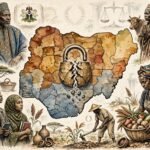
Nigeria needs responsible government, productive businesses, innovative universities, socially responsible religious institutions and citizens who understand their individual responsibilities.
We need fewer arguments about who should carry the entire burden and more commitment to building a productive society.
We must recognise that worship, education, wealth, political leadership and professional achievements should also be examined in terms of their contributions to human welfare and national progress.
I am not suggesting that every religious organisation should become a manufacturing company, or that every university must produce a world-changing invention. I am asking that every institution examine how it can contribute more meaningfully to society.
A nation cannot develop by depending on prayers, certificates, political promises or government expenditure alone.
**We must move from a society that celebrates structures, titles and promises to one that celebrates innovation, production, employment and measurable contributions to human development.**
Nigeria belongs to all of us. Its development must therefore become a collective responsibility.
**The question is no longer what government alone can do for Nigeria. The question is what every sector of Nigerian society is prepared to contribute towards building the country we want.**
*Emmanuel Adebanjo*
*Concerned Citizen & Public Awareness Advocate*