
By Idowu Ephraim Faleye +2348132100608
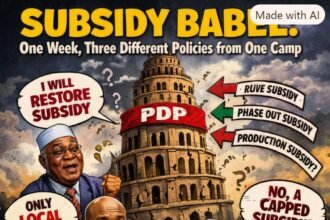
There are political promises that sound so good to suffering citizens that people stop asking questions. “I will restore petroleum subsidy” is one of them. At a time when Nigerians are facing high petrol prices, rising transportation costs and increasing pressure on household incomes, any politician promising cheaper petrol will naturally attract attention. But Nigerians must look beyond the sweetness of the promise and ask a simple question: who exactly will benefit when the subsidy returns, and who will control the billions of naira government will spend to make it happen?
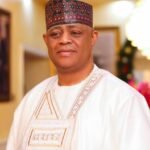
This is why Alhaji Atiku Abubakar’s promise to restore the removed petroleum subsidy deserves serious scrutiny. It is easy to tell Nigerians that petrol will become cheaper again; it is harder to explain how much the policy will cost, where the money will come from, who will receive it, how fraud will be prevented and how Nigerians will be protected from the weaknesses that previously made the subsidy system vulnerable to abuse. Without clear answers, the promise risks becoming election rhetoric designed to appeal to Nigerians suffering from the consequences of subsidy removal.
Let us be clear: petroleum subsidy itself is not necessarily a criminal policy. Governments sometimes subsidise essential commodities to protect citizens from sudden price increases. If properly designed and transparently managed, subsidy can provide temporary relief to households and businesses. Nigeria’s problem, however, was not simply the existence of subsidy; it was the way the system was structured, administered, monitored and exploited.

For years, government paid enormous sums to keep petrol prices below the international or import-parity cost. The principle was simple: consumers would pay less while the government compensated suppliers for the difference. But when huge public funds move through importers, marketers, regulators, banks, shipping documents, depots and government agencies, every weak point becomes an opportunity for manipulation.
And Nigeria’s experience exposed those weaknesses. Investigations into the subsidy regime raised serious questions about questionable import claims, inflated volumes, payments for products allegedly not supplied, questionable allocations and failures of verification and oversight. The 2012 House of Representatives investigation, for example, raised questions around billions of naira in subsidy claims and recommended substantial recoveries from various companies and institutions. The lesson is not that every petroleum marketer was fraudulent; the lesson is that the system created enormous opportunities for abuse.
This distinction matters because the debate should not simply be about whether petrol should be cheap or expensive. The deeper question is: who receives the money when the government makes petrol cheap? If the government spends hundreds of billions or trillions of naira to reduce the pump price, that money does not disappear. It enters a supply chain, and whoever controls that supply chain has an economic interest in the policy.
That brings us to the people who could potentially benefit from restoring the old arrangement. There were questionable beneficiaries whose subsidy claims or allocations were challenged. There were individuals and companies involved in fraud-related investigations and legal proceedings. There were also government officials and institutions responsible for approving, verifying and processing subsidy claims, as well as wider political and business networks that could benefit from access, influence and patronage.
We should not accuse everyone who participated in the subsidy system of stealing public money. Some companies operated legitimately, and many officials performed legitimate duties. But legitimate participants do not erase the weaknesses and abuses documented within the system. If the government is going to reopen such a massive financial pipeline, Nigerians have every right to ask what has changed since the days when subsidy claims could be manipulated and public funds exposed to questionable transactions.
This is where Atiku’s promise becomes particularly important. He is not merely promising to reduce petrol prices. He is promising to restore a policy that created a huge financial relationship between the government and the petroleum supply chain. Nigerians should therefore ask exactly what he intends to restore. Is it the old system? Will the government subsidise consumers directly? Will it pay importers or marketers? How will locally refined petrol be treated? These are not questions for economists alone; they are questions about the management of public money.
There is another dimension that deserves attention. Presidential politics in Nigeria is extremely expensive. A serious presidential candidate needs structures across the federation, campaign offices, media operations, rallies, mobilisation, transportation, polling agents, legal teams and political networks. These expenses are enormous, and they do not disappear simply because a candidate loses an election.
Atiku is a veteran presidential contender who has pursued the presidency several times. This does not prove that he is financially exhausted, and it would be irresponsible to claim that he is broke without credible evidence. However, repeated presidential campaigns create a legitimate question about political financing: who pays for the political machinery when the same ambition is pursued election after election?
That question becomes more important when the candidate proposes a policy capable of directing enormous public resources into the petroleum supply chain. Nigerians should want to know who his major political financiers are, what businesses they operate, whether they have petroleum interests and whether any have previously benefited from the subsidy regime. This is not an accusation against Atiku; it is a legitimate question about potential conflicts of interest.
The principle is simple: follow the money. Who finances the campaign? What businesses do major donors own? What government policies affect those businesses? Did any of them participate in the old subsidy system? Do they have interests in petroleum importation, marketing, refining or distribution? These questions should be asked of every presidential candidate.
The danger is that a policy presented as helping poor Nigerians can also create enormous opportunities for powerful economic interests. The ordinary Nigerian may see only a lower pump price. A businessman may see a return of a huge government-funded market. A political financier may see an opportunity to support a government whose policies could protect his economic interests. A corrupt official may see another opportunity to manipulate public funds.
This is why Atiku should explain how his proposed subsidy will work. How much will it cost annually? Where will the money come from? Who will receive it? How will imports be verified? Who will audit the payments? How will fraudulent claims be punished? How will politically connected companies be prevented from capturing the system?
There is also a fundamental question: why simply restore the old model? If the objective is to protect Nigerians from high energy costs, the government could design a more targeted system. It could support public transportation, provide targeted assistance to vulnerable households, encourage domestic refining and create a competitive petroleum market that reduces dependence on government-funded price support.
This is not an argument that Nigerians should accept high petrol prices and suffer. Subsidy removal has created genuine hardship, and the government has a responsibility to protect vulnerable citizens. But helping Nigerians through targeted support is different from resurrecting a system that exposed enormous public resources to rent-seeking and fraud.
That is why Atiku’s promise can reasonably be described as phony—not because cheaper petrol is undesirable, but because promising to restore subsidy without explaining its enormous financial and governance implications is incomplete. It tells Nigerians what they want to hear without adequately explaining what the policy will cost or who will control the money.
Atiku can prove otherwise. He can publish a detailed subsidy restoration plan showing the projected annual cost, funding source, payment mechanism, beneficiaries and anti-fraud safeguards. He can explain how his proposal will prevent the abuses associated with the old system. He can allow economists, civil society groups, journalists and Nigerians to examine the numbers. Until then, Nigerians should remain skeptical.
The question is not whether Nigerians want cheap petrol. Of course they do. The real question is whether Nigeria can afford to spend enormous public resources subsidising petrol without recreating the weaknesses that previously allowed some individuals, companies and networks to make extraordinary gains from the system.
A presidential candidate who has contested for the highest office several times must understand that Nigerians deserve more than another attractive promise. They deserve numbers, mechanisms and accountability.
So the question that should follow Atiku throughout the campaign is simple: If you want to restore petroleum subsidy, tell Nigerians exactly what you are restoring. Is it relief for the Nigerian people—or the return of a system that created wealthy beneficiaries, powerful networks and questionable claims around public money?
Nigerians need relief, but relief must not become another name for rent-seeking. Nigerians need cheaper energy, but cheaper petrol should not require reopening the door to the weaknesses of the old subsidy regime. And protecting the poor should never become an excuse for returning public money to interests that may once again find ways to profit from the system.
*Idowu Ephraim Faleye is a freelance political writer based in Ado-Ekiti, Nigeria. +2348132100608*