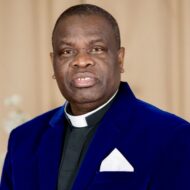

Pastor Amos Dada PhD, P. Eng, FNSChE
As Nigeria marks 66 years of independence, I salute our nation and honour the leaders, past and present, whose service and contributions have helped shape its journey. We wish future leaders wisdom, courage and a deep commitment to responsible leadership, so they may build a more peaceful, prosperous and united Nigeria.
Recently, I watched series of the documentary on Chief Obafemi Awolowo which to me offers an important lesson for Nigeria. His government in the Western Region pursued ambitious social development, including free education. When Awolowo left the premiership for federal politics, Samuel Ladoke Akintola succeeded him in 1959. Their political disagreement later contributed to the 1962 Western Region crisis; further turmoil, including the violence known as “Operation Wetie,” formed part of the wider breakdown of the First Republic before the January 1966 coup. Historians describe this as a complex national crisis, with several causes, not one event alone.
The lesson is twofold: bold development can improve people’s lives, and responsible leadership must protect democratic institutions when political disagreements arise. As Nigerians approach another general election, citizens should expect candidates to present practical, costed agendas with measurable commitments. Political leaders and their supporters must reject violence and respond to election results peacefully and with magnanimity. INEC, in turn, must ensure that every vote is counted and that the elections are free, fair and credible.

Ten commitments that could turn pain into gain
*1.Practise responsible governance and protect the security of citizens.*
Government’s first duty is to protect life and uphold the law. Candidates should explain how they will prevent and combat kidnapping, banditry and terrorism; protect vulnerable communities, schools, farms and highways; improve intelligence-sharing; and bring perpetrators and their financiers to justice. Leaders should respect the Constitution, strengthen independent institutions, protect peaceful opposition and prevent political rivalry from becoming violence. Measure progress through a public quarterly report on attacks, abductions, response times, rescues and prosecutions. Political disagreements must also be handled through democratic institutions and the rule of law, so rivalry does not descend into violence.
*2. Protect free education and improve NELFUND.*
Guarantee free, compulsory primary and secondary education, with funding that reaches schools and supports learning. Progressively expand tuition-free access in public tertiary institutions, like Obafemi Awolowo did when Nigeria has no crude oil, while improving NELFUND so eligible students receive decisions and disbursements promptly. NELFUND should be a reliable bridge for students who need support, not a substitute for the commitment to accessible education. Publish application, approval and payment figures, including the share of complete applications processed within 30 days.
*3. Renew healthcare so Nigerians can receive high-quality treatment at home.*
Equip and staff existing hospitals before building new ones. Upgrade at least one major referral hospital in each of the six geopolitical zones, with clear standards for staffing, equipment, essential medicines and specialist services. Publish annual hospital-readiness results and the number and cost of publicly funded overseas medical referrals for conditions treatable in Nigeria. Nigerians are tired of their leaders jumping to foreign nations for medical treatment.
*4.Make reliable electricity a foundation for work and production.*
Focus on giving the nation power, not empty, failed electioneering campaigns. Expand grid connections, mini-grids and other local power solutions for homes, farms and businesses. Set a four-year target for new, verified connections and report it publicly. For industrial areas, measure power availability, outages and cost each month so businesses can see whether electricity is becoming more dependable.
*5.Build an industrial economy that creates jobs and adds value locally.*
Develop industrial and agro-processing clusters where electricity, roads, water, finance and permits work together. Choose locations based on local strengths and publish a four-year target for each cluster. Measure operational factories, manufacturing output, local value added, exports and sustained jobs, not just land allocated or buildings constructed. Why are we boasting of fuel subsidy when it does not translate to improved lifestyles of citizens. Governors should use subsidy money to develop the states.
*6.Reduce fuel costs through competition, efficient refining and targeted relief.*
Publish the components of petrol prices, including refining or import costs, transport, taxes and margins. Set clear, independently audited milestones for local refineries, including actual operating capacity and litres supplied; NNPC’s recent agreement on restarting and expanding its refineries makes transparent delivery targets especially important.
If government provides fuel-price support during a severe shock, it should be time-limited, capped, included in the budget and publicly audited. Targeted help for public transport and vulnerable households can protect people while avoiding an open-ended subsidy that hides its cost. Refining more locally may reduce supply and transport costs, but pump prices will also depend on crude prices, exchange rates, taxes and competition.
*7. Create paid work and move households out of poverty.*
Government should deliberately focus on moving people out of poverty. Creat jobs. Creat enabling environment for investors to create jobs. Give tax incentives where necessary. What is the essence of tax reforms that makes the people poorer? Connect vocational training and apprenticeships to actual employers and local industries. Expand targeted support for people in severe hardship, with payments independently verified. Establish the national poverty baseline using a consistent household survey, then set a four-year reduction target and report it annually, alongside the number of sustained jobs created.
*8.Raise farm productivity, lower food costs and develop mineral resources responsibly.*
Improve irrigation, storage, extension services, access to finance and feeder roads, while protecting farmers and rural communities from violence. Set clear targets for crop yields and reduced post-harvest losses, and track food supply and farm-to-market costs. Nigeria’s mineral resources should be mapped, extracted under effective regulation, and processed locally to create jobs and add value. Publish mining revenues, enforce environmental standards and ensure host communities benefit. Measure progress through agricultural productivity, local mineral processing, formal jobs and transparent royalty payments.
*9.Build new roads and maintain the roads Nigerians already use.*
The Lagos–Calabar Coastal Highway and the Sokoto–Badagry Superhighway are major projects intended to improve national connectivity. Their construction is laudable, and the public should receive regular reports on cost, progress, quality and completion. At the same time, Nigeria must repair and maintain existing federal roads, many of which carry daily traffic for families, farmers and businesses. Publish an annual road-condition scorecard, list roads needing urgent repairs, and report kilometres repaired, project costs, completion dates and road-safety improvements.
*10. Overhaul the corruption-control system and make corruption unattractive.*
Anti-corruption institutions must do their work impartially and consistently, regardless of a person’s party, position or connections. Nigeria needs a comprehensive review of the whole corruption-control system: the mandates, independence and coordination of its agencies; procurement and budgeting safeguards; asset declarations; whistle-blower protections; and the tracking of public funds. Prevention should make theft harder; investigation should be evidence-based; and prosecution should follow due process. Publish annual results on investigations, court outcomes, recovered assets and how those assets are returned to public use. The aim is to make corruption a high-risk, low-reward choice for anyone entrusted with public service.
Conclusion
Nigeria’s future will be shaped by the choices we make and the leadership we demand. As we celebrate our 66th independence anniversary and venture to another general election, let us look beyond slogans and ask for clear plans, honest service and measurable results. Let us reject violence, protect every citizen’s right to vote and hold those elected accountable for their promises.
Nigerian are tied of unfilled political promises. Nigeria’s pain can give way to progress when responsible leadership and active citizenship work together. May God grant our nation’s leaders wisdom and integrity, strengthen our unity, and help us build a peaceful and prosperous Nigeria for generations to come.
Happy 66th independence anniversary- Nigeria
May God bless Nigeria.