By Okoi Obono-Obla
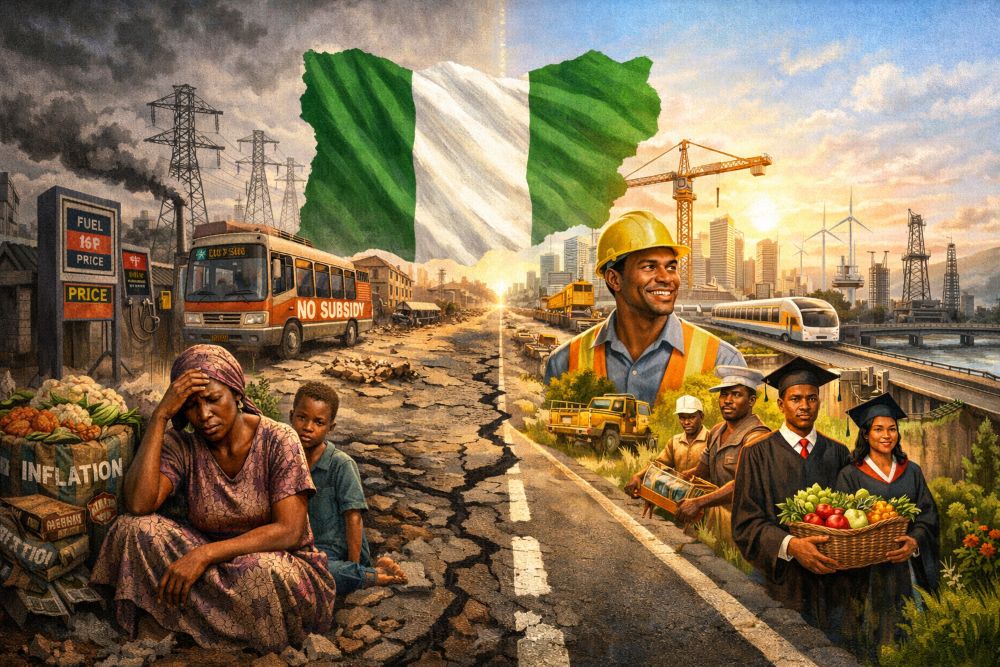
Nigerians have complained about hardship since President Bola Ahmed Tinubu introduced his economic reform agenda in 2023, which led to the removal of subsidies on petroleum products and the floating of the naira.
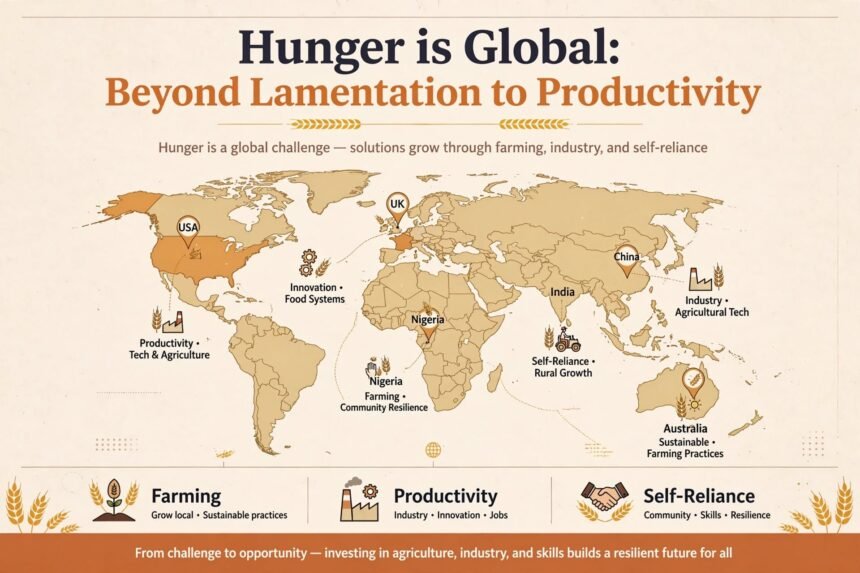
Yes, hunger is devastating. Yes, prices have risen. But let us stop creating the impression that Nigeria is the worst place on earth and the only country where people experience hunger. Hardship is not peculiar to Nigeria; it is a global phenomenon.
The global economy has been under severe strain from a cascade of international crises. The Russia-Ukraine war disrupted food and energy supply chains, while the conflicts in the Middle East, including the U.S./Israeli and Iranian confrontation, have further destabilized energy markets, raised shipping costs, and triggered a new wave of inflation worldwide. Economics teaches a timeless truth: resources are scarce. The fundamental challenge of every economic system is how to manage these scarce resources efficiently to meet the needs of its population. Therefore, hardship is a global trend, not a Nigerian invention.

The data proves this.
THE GLOBAL HUNGER DATA
Sources: UN FAO SOFI 2024 & 2026, WFP, USDA, UK Parliament, Foodbank
| Country | People Who Don’t Get Enough Food Every Day (Chronic Hunger) | People Who Sometimes Skip Meals or Worry About Food.
| USA | Very low – less than 2.5% | About 47 million ;
| UK | Very low – less than 2.5% | 6 million (9% of population) ;
| Australia | Very low – less than 2.5% | About 3.7 million households ;
| South Africa | About 4 million (6-7%) | About 15-20 million ;
| Egypt | About 7-8 million (7%) | About 20 million ;
| Ghana | About 1.8 million (5-6%) | About 2-3 million ;
| China | Very low – less than 2.5% | Low ;
| India | 142.5 million (9.8%) – down from 244 million 20 years ago | 520 million can’t afford healthy diet
| Nigeria | 25-30 million (16-18%) | 34.8 million projected to face serious hunger late 2026
What it means: Chronic hunger means not having enough calories every day to live a healthy life. Food insecurity means having food sometimes but skipping meals, eating less, or worrying about food due to money, drought or high prices. The global total is 673 million chronically hungry people in 2024.
This data shows clearly that no country is immune. The United States, the United Kingdom and Australia, all advanced economies, have millions of their citizens who are food insecure. India still has 142.5 million chronically hungry people, even though it has reduced the number from 244 million over the last 20 years.
In Nigeria, hardship has become a potent political weapon. Those who are weaponizing and sloganeering about hunger just to win votes are being deceptive. Some of them have been Vice President or Governors of their States for a minimum of eight years and they did not quench hunger. Yet today they talk as if, if given power, they would solve the problem of hunger in four years — especially among those who have signed agreements to serve for only four years.
Groaning and self-pity will not solve the problem.
The solution to hardship lies not in lamentation, but in a fundamental shift in attitude. We must prioritize productivity over consumption, self-reliance over dependence, and prudent management over waste.
Nigeria must produce what it eats and eat what it produces. Government at all levels, businesses and individuals must cut waste, block leakages, and invest scarce resources in areas that create value and jobs — agriculture, manufacturing, skills and technology. The removal of subsidies has freed up resources for the three tiers of government; prudence demands that these resources be managed transparently and productively for the benefit of the people.
Hardship may be inevitable in a time of global turbulence and necessary reforms, but it is not insurmountable. Nations that have overcome similar challenges did so not by lamentation, but by discipline, hard work and efficient management of scarce resources.