By Agbonmagbe Kazeem
The story of the Ogoni Nine grew from a struggle over land, oil, environmental destruction and the rights of the Ogoni people in Nigeria’s Niger Delta.
At the centre was Ken Saro-Wiwa, writer, businessman and leader of the Movement for the Survival of the Ogoni People, MOSOP. The movement demanded greater political rights for Ogoni people and action over environmental damage associated with oil production.
Tensions intensified between MOSOP, General Sani Abacha’s military government, local political opponents and the oil industry.
Then, on 21 May 1994, four prominent Ogoni leaders were killed at a meeting in Giokana and their bodies burned. The government blamed MOSOP supporters, while Saro-Wiwa and others denied responsibility. The killings became the basis of the case that eventually sent nine Ogoni activists to the gallows.
Saro-Wiwa and other Ogoni leaders were arrested and detained. Human rights organisations reported harsh detention conditions, limited access to lawyers and other serious concerns. Amnesty International described the prosecutions as politically motivated and unfair.
A special Civil Disturbances Tribunal was established to try them. The defence challenged its fairness and the evidence. Human Rights Watch reported that defence lawyers withdrew after the tribunal refused to admit a government press-conference recording in which the Rivers State military administrator had accused MOSOP of responsibility for the murders. There were also allegations that prosecution witnesses had been bribed or pressured.
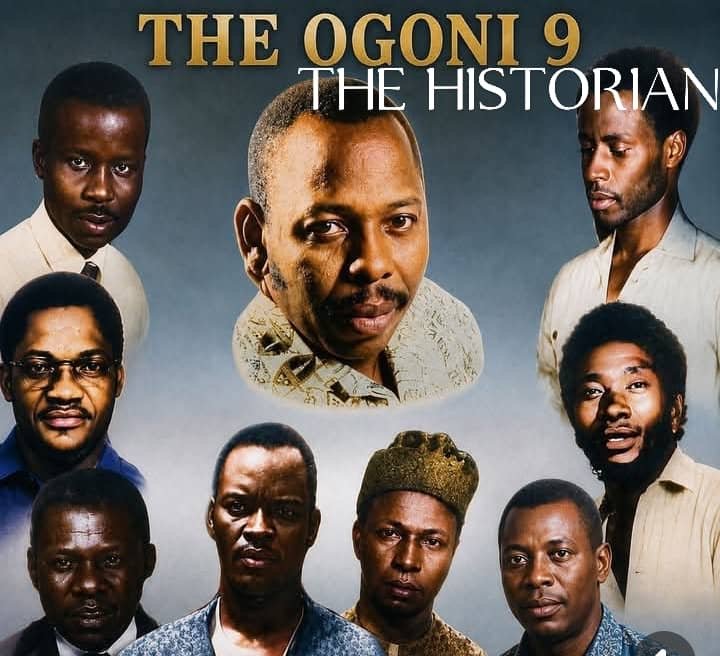
On 30 and 31 October 1995, nine men were convicted and sentenced to death by hanging. Ken Saro-Wiwa, Barinem Kiobel, John Kpuinen, Baribor Bera, Saturday Dobee, Felix Nuate, Nordu Eawo, Paul Levura and Daniel Gbooko.
On 8 November, the Abacha military government confirmed the death sentences. Despite international appeals for clemency, the nine were hanged at Port Harcourt Prison on 10 November 1995.
THE CONTROVERSY OVER THE HANGING
One of the most disturbing stories concerns claims that the hanging did not go smoothly and that some of the men may have remained alive after the first attempt.
Contemporary accounts reported repeated attempts, with particular attention focused on Saro-Wiwa’s prolonged death. Reports described executioners struggling to complete the hanging, requiring repeated attempts before he was declared dead.
According to accounts, Saro-Wiwa was taken to the gallows with the other condemned men and hanged one after another. When his turn came, the execution reportedly went badly. He was said to have remained alive after the initial attempt, requiring the executioners to try again.
Accounts differ over exactly how many attempts were made and how long Saro-Wiwa remained alive. Some described him struggling for an extended period before finally being pronounced dead.
The more extreme claim that some of the Ogoni Nine remained alive for a significant period before being killed has persisted, but it has not been conclusively established.
What is firmly documented is that the executions were carried out despite international appeals for clemency, and Saro-Wiwa’s execution became the subject of accounts describing repeated difficulties.
The accounts of Saro-Wiwa’s prolonged hanging became one of the most haunting elements of the Ogoni Nine story.
“THE HISTORIAN”