By Okoi Obono-Obla
Echoes of Akpa: Language, Identity, and Colonial Legacy:
Dialogue with Ellie Yari
In recent times, I have entered into intimate dialogue with Ellie Yari, with whom I have been conversing deeply about the people known as Akpa. The Akpa played a tremendous role in the history of the various peoples that make up the Cross River Basin, which spans present‑day Enugu, Akwa Ibom, parts of Ebonyi, Cross River, and Abia States, extending into the South‑Western Province of the Republic of Cameroon. Ellie Yari, who is Ogbia from Ogbia Local Government Area, explained that the Ogbia people of Bayelsa State and the Abua people of Rivers State were originally part of the Akpa people and lived in the Cross River Basin before migrating to their present locations. He convinced me that his people are related to the Yakurr of Cross River State by pointing to linguistic similarities, shared Nsibidi scripts, and even identical names of towns between Ogbia and Yakurr, all of which reveal a deep commonality among these seemingly different groups.
Ekamasai and Linguistic Connections:
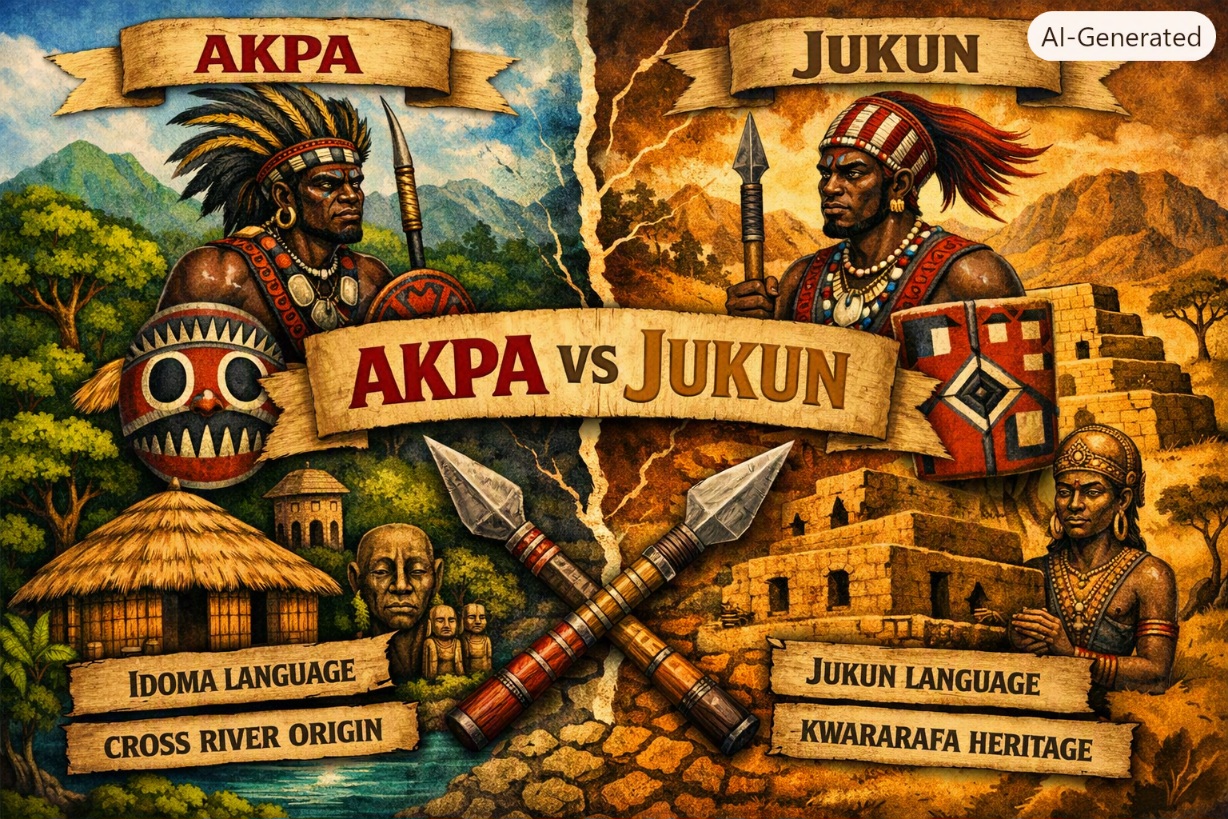
There is a town called Ekamasai in Cross River State. The name comes from the Akpa language and means “tooth carvers,” perhaps reflecting an ancient tradition of teeth carving. In Idoma (Benue), Ami means “me” and Awo means “you.” These linguistic overlaps exist because the Idoma were part of a confederated kingdom where Akpa served as the lingua franca. Even the Jukun are called Akpa, not necessarily because they belong to the Akpa ethnic group, but because they too were part of that kingdom.

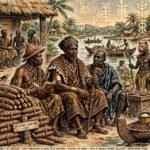
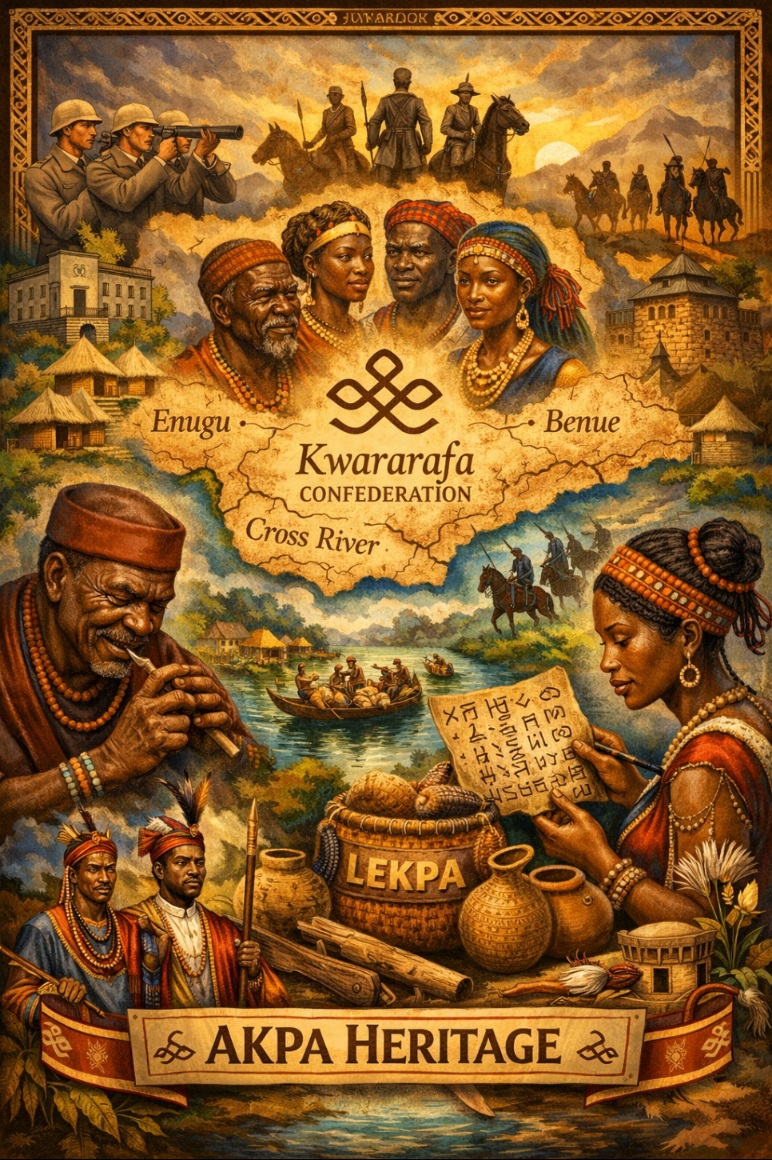
In Ogbia, some call a bag ikpa, others akpa. In Igala it is ikpa, in Idoma ekpa. The opening vowel shifts—i, a, e—but the root remains. Indeed, in Yakurr (Cross River State), near Chief Asuquo’s compound at Afaben Town Hall and Primary School No. I, Mkpani in Yakurr Local Government Area, there is Ekamasai. The Yakurr people call a bag lekpa, similar to the Idoma of Benue, the Igala of Kogi, the Jukun of Taraba, and even the Ibibio of Akwa Ibom. Ellie Yari, an Ogbia from Bayelsa, rationalized that this similarity stems from the Kwararafa Confederation, which arose in the 15th century across present‑day North Central, North Eastern, South Eastern, and South Southern Nigeria, before disintegrating in the 18th century.
The Kwararafa Confederation:
As Ellie explained:
“OK. In Idoma (Benue), Ami is me, Awo is you. They share some words with us because they were part of the confederated kingdom where Akpa was the lingua franca. Even Jukuns are called Akpa because they were also part of the kingdom, not really because they are part of the Akpa ethnic group.”
The Yakurr and Ogbia share words for “I,” “me,” and “you,” classified under the Delta Cross languages of the Benue‑Congo branch of the larger Niger‑Congo language family. This linguistic continuity underscores that Nigeria is not merely a geographical expression cobbled together by British colonialists for administrative convenience. Centuries before colonialism, these peoples already had names by which they called themselves—different from the identities they presently bear. Long before colonialism, communities across these regions had interacted, traded, intermarried, and shared cultural and linguistic ties. Over millennia, human factors led to the evolution of distinct groups from what were once common origins. Colonialism, however, disrupted these organic connections, imposing artificial boundaries and identities.
Colonial Disruptions:
European colonial administrators, scholars, and missionaries who thronged into Africa—often holding the continent in deep awe yet misunderstanding it—encountered established chiefdoms, kingdoms, and empires. After the Berlin Conference of 1884/1885 in Germany, where European powers discussed the partition and balkanization of Africa, they carved the continent into about fifty countries out of roughly 40,000 communities. In doing so, they created new ethnicities, tribes, and political identities that had not previously existed. This is how some of the ethnic groups we know today in Africa, including Nigeria, came about.
Shared Heritage:
My people in Cross River State had long interacted with the Ibibio, whom they called Yabibi, and with the Efik, whom they called Yafil.
Conclusion:
Nigeria’s story is not simply one of colonial invention but of deep historical interconnectedness. The shared words, traditions, and identities across regions reveal a tapestry woven long before European intervention. Colonialism may have complicated these bonds, but the echoes of Akpa and Kwararafa remind us that Nigeria’s peoples have always been linked by language, culture, and history.