By Okoi Obono-Obla
Charles Eyo, in one of my posts, made a comment that I find very interesting. It opens a vista of opportunities for researchers in history, geography, ethnography, and anthropology to shed more light on the peoples and cultures of the trapezium that eminent geographer Professor Reuben Kendrick Udo described as the Cross River Basin. According to him, this basin stretches from present‑day Enugu, Abia, Akwa Ibom, Cross River, and Ebonyi States in Nigeria to the South‑Western Province of the Republic of Cameroon. In some of his works, Professor Udo surmised that the Cross River Basin was inhabited by the Ibibio people before the 10th century, when the Nri Igbo people arrived. He attributed the preponderance of places with Ibibio names in Enugu State as evidence to buttress this Ibibio origin.
Charles Eyo stated thus:
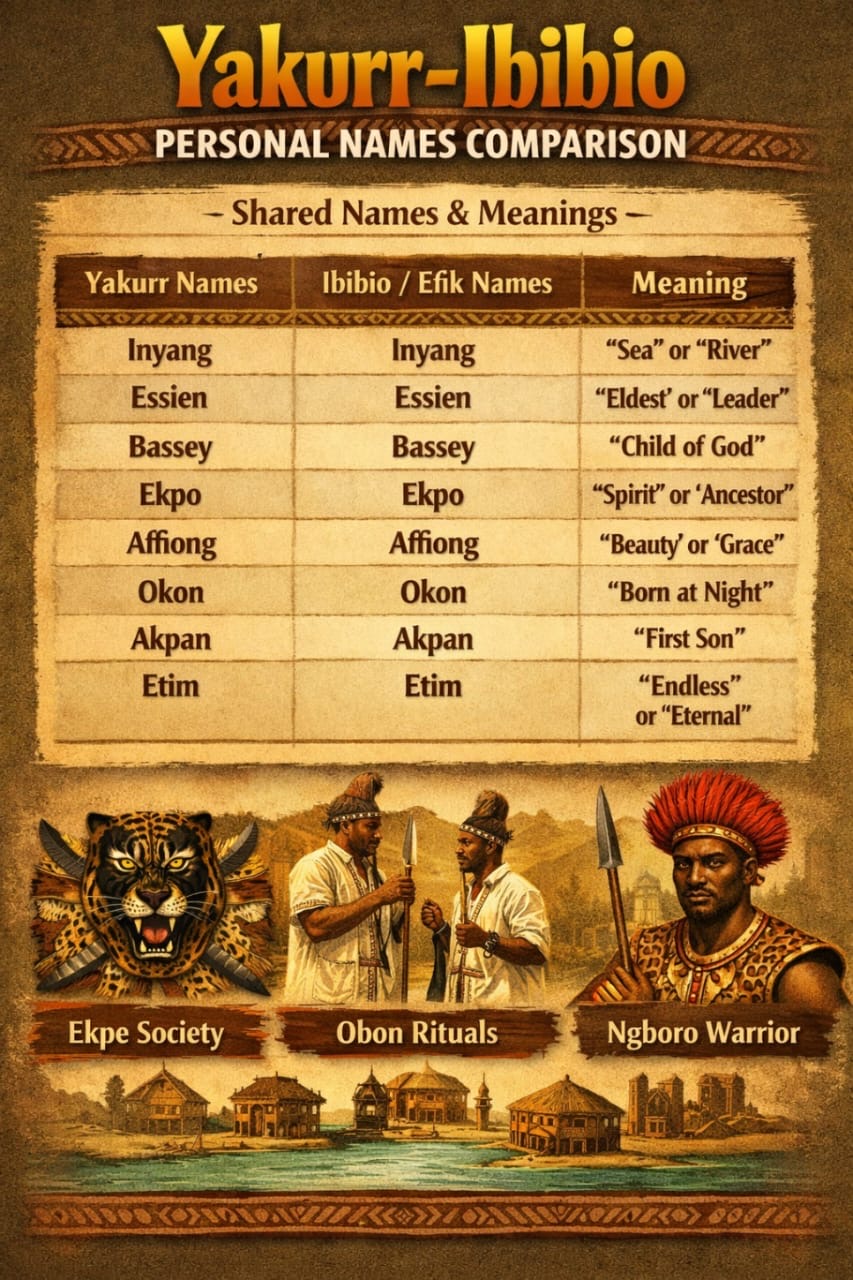
“Aside from being a fine writer and jurist, you are also a gifted historian. Do you know why many Ibibio names are prevalent among the Yakurr people? For instance, Yakurr people bear such Ibibio names as Inyang, Essien, Bassey, Ekpo, Isang, Nko, Effiom, Affiong, Ene, Okon, Akpan, Ewa, Etim, Enang, etc. A few Yakurr people can actually speak either Efik or Ibibio. Do the Yakurr people have ancestral links with the Ibibios?”
This raises important questions: Do the Yakurr people, who live in the middle Cross River region of present‑day Cross River State, have ancestral ties with the Ibibio people of Akwa Ibom State? Are they a proto‑Ibibio group, or a product of cultural intermingling within the diverse trapezium of the Cross River Basin? Could these similarities in names, marriage practices, and cultural traditions—such as Ekpe, Obon, the fattening room, or burial rites for warriors like Ngboro—be evidence of shared ancestry? Or do they instead reflect centuries of interaction and trade along the Cross River between its lower and middle regions, prior to Western colonization?

Furthermore, the Yakurr (Yako) language, classified as an Upper Cross River language within the Benue‑Congo substratum of the larger Niger‑Congo family, contains a mix of Efik, Ibibio, Ejagham, the extinct Akpa, and even sprinklings of Igbo words. This linguistic blend may well be a reflection of the cultural trapezium that shaped the region. But are these words indigenous to the Yakurr people? What biological processes of human interaction in linguistic studies are responsible for this phenomenon as seen in the Yakurr language?
Biological and Linguistic Processes of Human Interaction
In linguistic anthropology, such phenomena are often explained through processes like:
– Language contact: When two or more groups interact through trade, migration, or intermarriage, words and expressions are borrowed across languages.
– Borrowing: Specific names, titles, or cultural terms are adopted directly, often retaining their original form.
– Code-switching: Speakers alternate between languages, gradually blending vocabulary into everyday speech.
– Convergence: Over time, languages in close contact begin to share structural features, not just vocabulary.
– Ethnolinguistic diffusion: Cultural practices and rituals spread alongside language, reinforcing shared identity markers.
These processes are “biological” in the sense that they arise naturally from human interaction, migration, and adaptation. Just as genes mix through intermarriage, languages mix through sustained contact, producing hybrid vocabularies and cultural expressions.
Comparative Table: Ibibio Place Names in Enugu State
| Place Name | Ibibio Root/Meaning | Notes |
|—————-|————————–|———–|
| Nsukka | Nsuk (Ibibio for “market” or “meeting place”) | Suggests Ibibio settlement influence. |
| Nike | Nke (Ibibio for “strength” or “power”) | Retains Ibibio phonology. |
| Agbani | Agban (Ibibio for “community” or “clan”) | Reflects Ibibio social organization. |
| Awgu | Awgwu (Ibibio for “hill” or “highland”) | Topographical naming tradition. |
| Opi | Opi (Ibibio for “horn” or “signal”) | Possibly linked to ritual or communication. |
This comparative evidence supports Professor Udo’s thesis that Ibibio groups once inhabited parts of Enugu before later Igbo expansion, leaving linguistic imprints in place names.
Conclusion
The Yakurr–Ibibio connection remains a fertile ground for scholarly inquiry. Whether through shared ancestry, cultural diffusion, or prolonged interaction along the Cross River, the similarities in names, practices, and language point to a deep historical entanglement. The Yakurr language itself, with its layered borrowings, illustrates how human contact, migration, and trade shape linguistic identity. This underscores the Cross River Basin as a crucible of cultural convergence in West Africa, with Professor Reuben Kendrick Udo’s insights offering a valuable historical lens.