By Eneojo Herbert Idakwo
- The Cost of Educational Exclusion
- Human Capital as National Infrastructure
- The Birth of the Student Loan Initiative
- Expanding Access at Scale
- Reducing Inequality Through Opportunity
- Strengthening the Future Workforce
- Challenges and Public Concerns
- Education and the Renewed Hope Agenda
- Looking Beyond the Present
For generations, higher education has been regarded as one of the surest pathways to social mobility in Nigeria.
Parents sacrificed endlessly to send their children to universities. Students worked part-time jobs, borrowed money from relatives, and endured enormous hardship in pursuit of academic qualifications that could unlock future opportunities.
Yet for millions of talented young Nigerians, the dream of obtaining a university education often collided with a harsh reality: financial constraints.

Every year, countless students either deferred admission, abandoned their studies, or graduated under severe economic pressure because their families simply could not afford the rising cost of higher education.
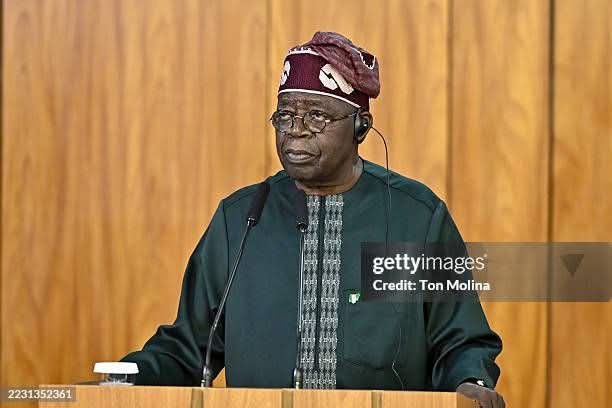
The administration of President Bola Ahmed Tinubu believes this reality must change.
One of the most significant social interventions introduced during the first three years of the administration has been the Nigerian Education Loan Fund (NELFUND), a program designed to ensure that financial hardship does not prevent qualified Nigerians from pursuing tertiary education.
The initiative represents one of the boldest attempts in recent decades to democratize access to higher education and invest directly in Nigeria’s human capital.
The question now is whether the scheme can transform educational access on a scale large enough to reshape the country’s future.
The Cost of Educational Exclusion
Education is often described as an investment rather than an expense.
For developing nations, this principle carries particular importance.
Countries that successfully expanded access to quality education frequently experienced stronger economic growth, technological advancement, and social development.
Nigeria possesses one of the largest youth populations in the world. This demographic advantage can become a tremendous national asset or a serious challenge depending on the opportunities available to young people.
For years, however, many students faced significant barriers:
- Rising tuition costs
- Accommodation expenses
- Transportation costs
- Learning materials
- Economic instability within households
As inflation increased and living costs rose, these barriers became even more difficult for many families to overcome.
The result was a widening gap between educational aspiration and educational access.
Human Capital as National Infrastructure
When discussions about national development arise, attention often focuses on roads, bridges, railways, airports, and power stations.
While these are important, modern economies are ultimately built by people.
Engineers build roads.
Doctors strengthen healthcare systems.
Teachers shape future generations.
Scientists drive innovation.
Entrepreneurs create businesses.
Skilled workers sustain industries.
In this sense, education itself is a form of infrastructure.
It is the infrastructure of human capability.
The Tinubu administration appears to have embraced this perspective by placing significant emphasis on educational access as part of its broader development agenda.
The Birth of the Student Loan Initiative
The student loan program emerged from a recognition that educational financing remains a major challenge for many Nigerian families.
The central idea behind the scheme is straightforward.
No qualified Nigerian student should be denied higher education solely because of financial limitations.
Through the Nigerian Education Loan Fund, eligible students can access financial support to cover educational expenses, allowing them to focus on learning rather than survival.
The initiative represents a shift away from a system where access to tertiary education is heavily influenced by household income.
Instead, it seeks to create a pathway where talent and determination play a greater role in educational advancement.
Expanding Access at Scale
According to figures cited by President Tinubu during his third anniversary address, more than 1.5 million students have benefited from the program, with over ₦282 billion disbursed to support higher education access.
These numbers suggest a level of scale rarely seen in educational financing initiatives within Nigeria.
Supporters of the program argue that the impact extends beyond individual beneficiaries.
Each student who gains access to higher education potentially influences:
- Family income prospects
- Community development
- Workforce quality
- Innovation capacity
- National productivity
The long-term effects may therefore extend far beyond the classroom.
Reducing Inequality Through Opportunity
One of the most powerful arguments in favor of educational financing programs is their ability to reduce inequality.
In many societies, access to quality education often reflects economic privilege.
Students from wealthier backgrounds generally possess advantages that poorer households struggle to match.
Educational loans do not eliminate all inequalities, but they can narrow important gaps.
They provide capable students from modest backgrounds with opportunities that might otherwise remain inaccessible.
For a country seeking inclusive growth, this objective carries significant importance.
The administration frequently emphasizes that development must be broad-based rather than concentrated among a privileged few.
Educational access forms part of that larger vision.
Strengthening the Future Workforce
Nigeria’s economic future depends heavily on the quality of its workforce.
The country is experiencing rapid technological change, evolving labor market demands, and increasing global competition.
Future economic growth will require:
- Engineers
- Software developers
- Medical professionals
- Agricultural scientists
- Teachers
- Researchers
- Entrepreneurs
- Skilled technicians
Expanding access to higher education helps build the human resources necessary to support these sectors.
Supporters of the student loan initiative argue that today’s educational investments will produce tomorrow’s economic gains.
The benefits may not be immediate, but they can prove transformative over time.
Challenges and Public Concerns
Like any major policy initiative, the student loan scheme faces challenges.
Questions remain regarding:
- Long-term sustainability
- Repayment structures
- Administrative efficiency
- Institutional capacity
- Awareness among eligible students
Some observers also argue that educational financing alone cannot solve all challenges facing Nigerian universities.
Issues such as:
- Infrastructure deficits
- Academic quality
- Research funding
- Staff welfare
- Technological capacity
must also receive sustained attention.
The success of the program will therefore depend not only on loan disbursement but on the broader health of the tertiary education system.
Education and the Renewed Hope Agenda
The student loan initiative aligns closely with the administration’s broader Renewed Hope agenda.
The government views human capital development as essential to long-term national transformation.
Alongside investments in infrastructure, agriculture, housing, healthcare, and digital innovation, educational access is being positioned as a key pillar of national development.
The administration’s argument is simple:
A nation cannot build a prosperous future if millions of capable young people are denied the opportunity to develop their talents.
Looking Beyond the Present
The true impact of educational reforms is rarely measured within a few years.
Their effects unfold over decades.
The student receiving financial support today may become tomorrow’s doctor, engineer, entrepreneur, researcher, teacher, or public servant.
The knowledge acquired in classrooms today may influence industries and institutions for generations.
This is why investments in education often produce some of the highest long-term returns available to any nation.
Three years into the Tinubu administration, the student loan scheme stands as one of the government’s most ambitious social investments.
Whether it ultimately transforms educational access on the scale envisioned will depend on consistent implementation, accountability, sustainability, and continued support.
But the principle behind the initiative is clear.
Nigeria’s future will not be built solely by roads, bridges, railways, or refineries.
It will also be built by educated minds equipped with the knowledge and skills to drive the nation’s next phase of development.
And for many young Nigerians, the journey toward that future may now be a little more accessible than before.