By Umaru Tanko Al-Makura
There are seasons in the life of a nation when politics must rise above the pursuit of advantage and rediscover its larger obligation to society.
Nigeria is entering such a season. As political parties prepare for primaries and the long march towards the 2027 elections, the country stands at an important democratic crossroads. The choices made now, within party structures, within state chapters, within consultations among leaders and stakeholders, will shape not only electoral outcomes, but the wider stability and cohesion of the republic itself.
Too often in our politics, elections are discussed only in terms of victory, numbers, strategy and control. Yet the true health of a democracy is not measured merely by who wins office. It is measured by whether citizens continue to trust the process through which leaders emerge. Where trust weakens, cynicism grows. Where cynicism grows, institutions begin to lose moral authority. And where institutions lose authority, divisions deepen in ways that eventually affect governance, peace and national confidence.

This is why the conversation about party cohesion must now be elevated beyond internal calculations. It is no longer simply a partisan concern. It is a national concern.
Political parties are not private empires. They are democratic institutions carrying public consequences. The internal conduct of parties ultimately shapes the external stability of the nation. A party that manages disagreement with fairness strengthens democracy. A party that rewards exclusion, manipulation or excessive dominance weakens public faith not only in itself, but in the democratic system altogether.
At moments such as this, leaders must resist the temptation to reduce politics to personal succession battles or contests of supremacy. Power is transient. Institutions are meant to endure. The danger begins when individuals start treating party structures as extensions of personal authority rather than collective platforms governed by rules, consultation and restraint.
Nigeria has travelled too far democratically to return to a politics where process exists only in appearance, while outcomes are quietly predetermined elsewhere. The preservation of due process is therefore not a procedural luxury. It is the very foundation of legitimacy. Aspirants must believe they are entering a fair contest. Party members must feel that their voices matter. Stakeholders must trust that consultations are genuine. When people lose faith in internal democracy, fractures begin quietly before they eventually become public crises.
History offers enough lessons on this matter. Political parties rarely collapse suddenly. They weaken gradually through unresolved grievances, selective fairness, poor consultation and the concentration of influence in too few hands. Factions do not emerge from nowhere. They grow in spaces where people feel unheard, excluded or taken for granted. This is why mature leadership matters.
At this stage of our national development, Nigeria needs leaders capable of calming tensions rather than inflaming them. It needs political actors who understand the difference between influence and imposition. Influence persuades. Imposition compels. Influence strengthens institutions. Imposition weakens them. The most enduring leaders are rarely those who controlled every outcome. They are those who protected the credibility of the process even when outcomes were uncertain.
That is the deeper test before all major political actors as 2027 approaches.
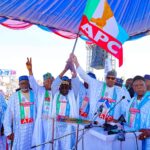
The All-Progressives Congress, as the governing party, carries a particularly significant responsibility. By virtue of its national reach and governing mandate, its internal conduct inevitably shapes wider public expectations. The party must therefore continue to project itself not merely as an electoral machine, but as a stable institution capable of balancing competing interests across regions, generations and political tendencies.
This responsibility becomes even more delicate in a country as diverse and sensitive as Nigeria. Ours is a nation whose strength lies in balance. No section can flourish sustainably at the expense of another. No democracy survives for long where groups consistently feel excluded from opportunity, representation or recognition. Leadership must therefore remain conscious of the need to preserve both party cohesion and national cohesion simultaneously.
The politics of bitterness may generate temporary applause, but it rarely builds lasting stability. A nation as complex as Nigeria requires bridge builders more than agitators. It requires leaders capable of listening across divides, negotiating differences with patience and reassuring all sides that they belong within the national project.
The coming electoral cycle must therefore not become another theatre of hostility where political competition degenerates into institutional damage. Parties must learn to compete fiercely without destroying the frameworks that hold them together. Ambition is legitimate. Democracy encourages competition. But ambition without restraint eventually corrodes the very structures upon which political legitimacy rests.
It is also important at this moment to speak about political maturity. One of the enduring weaknesses in many democracies is the inability of political actors to transition gracefully from one phase of leadership to another. Some struggle to leave influence behind. Others attempt to exercise authority without consultation. Some younger actors mistake impatience for courage, while some older actors confuse experience with entitlement.
Yet healthy democracies require balance between generations.
Nigeria needs experienced leaders willing to guide without dominating. It equally needs younger politicians and technocrats prepared to learn the discipline of institution building rather than merely pursuing rapid political elevation. Politics cannot survive on ambition alone. It requires mentorship, continuity and memory.
The country must consciously encourage a culture where experienced public figures become conveners of ideas, stabilising voices and mentors to emerging leaders across regions and sectors. Leadership should not end with office. In many societies, some of the most important national interventions come not from those seeking immediate power, but from respected figures capable of calming tensions and encouraging moderation when emotions run high.
This is especially important in the North Central, a region whose political and social character has historically reflected moderation, diversity and strategic balance within the federation. The region occupies a unique place in Nigeria’s democratic equilibrium. It understands coexistence. It understands negotiation. It understands the necessity of building bridges across fault lines that might otherwise divide the nation.
At a time when politics across many parts of the country is becoming increasingly polarised, the North Central has an opportunity to reinforce a different tradition. A tradition rooted in inclusion, civility and responsible engagement. The country needs voices capable of connecting regions rather than isolating them, and connecting generations rather than setting them against one another.
Indeed, one of the greatest challenges facing modern politics globally is the collapse of moderation. Public life increasingly rewards outrage over reflection, confrontation over dialogue, noise over wisdom. Yet nations are not stabilised by volume. They are stabilised by clarity, restraint and responsible leadership.
Nigeria must resist the temptation to allow its politics drift entirely into extremes. The future of the republic cannot be built on permanent hostility. Elections must not become declarations of war between citizens who must still live together afterwards. Political disagreements are inevitable in every democracy, but they must never erase our collective obligation to national peace and cohesion.
This is why the language of fairness matters. This is why the conduct of primaries matters. This is why internal consultations matter. Processes may appear technical in the short term, but they produce emotional consequences that shape long term loyalty, stability and public trust.
A candidate who emerges through a transparent and broadly respected process carries greater legitimacy into the general election. Party members rally more willingly behind leadership they consider fair. Even those who lose are more likely to remain invested in the collective project when they believe they were treated with dignity and fairness.
Conversely, where processes are perceived as manipulated or exclusionary, resentment accumulates quietly. Sometimes it surfaces immediately. Sometimes it waits. But unresolved grievances rarely disappear entirely. They return later in weakened structures, fractured alliances and diminished trust.
For this reason, political leaders at every level must approach the coming season with caution and wisdom. Governors must recognise the limits of incumbency. Party leaders must understand the weight of neutrality. Stakeholders must resist the urge to personalise institutional disagreements. Aspirants must conduct themselves with discipline and maturity.
Above all, everyone involved in the democratic process must remember that the ultimate objective of politics is not simply to win power. It is to preserve society while governing it responsibly.
That responsibility becomes even heavier at a time when many Nigerians are facing economic hardship, social anxiety and uncertainty about the future. Citizens want reassurance. They want stability. They want evidence that leadership is still capable of rising above narrow calculations. They want to see institutions behaving credibly and responsibly.
The burden therefore falls heavily on political leaders to conduct themselves in ways that strengthen confidence rather than deepen suspicion. Calm leadership is not weakness. Restraint is not indecision. Consultation is not surrender. Some of the strongest leaders in history were those who understood when to exercise power carefully rather than aggressively.
As 2027 approaches, Nigeria requires precisely that kind of leadership. Leadership capable of lowering tensions rather than heightening them. Leadership committed to fairness even when fairness is inconvenient. Leadership conscious that the preservation of institutions matters more than the temporary triumph of individuals.
In the end, every political season eventually passes. Offices change hands. Alliances shift. Victories fade into history. What remains is the record leaders leave behind. Whether they strengthened institutions or weakened them. Whether they united people or divided them. Whether they elevated democratic culture or diminished it.
This is the moment for sobriety, maturity and statesmanship.
The nation does not need more fractures. It does not need more bitterness. It does not need politics that leaves permanent scars on institutions and relationships. Nigeria needs bridge builders, stabilising voices and leaders willing to place national cohesion above temporary advantage.
Before 2027, political parties across the country must therefore make a choice. They can embrace consultation, fairness and internal democracy, thereby strengthening public confidence in the republic. Or they can choose narrow calculations that may produce immediate victories but leave deeper wounds behind. The wiser path is clear.
For democracy to endure, parties must remain cohesive. For the nation to remain stable, politics must remain responsible. And for Nigeria to move forward with confidence, leadership must once again rediscover the discipline of fairness, balance and restraint.
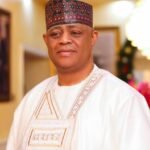
Al Makura is a former Governor of Nasarawa State and one of the foundational pillars of the APC. He served as Senator representing Nasarawa South.