Today’s Verified Nigerian News Roundup
— May 26, 2026
by Ukamaka John
Politics & Governance
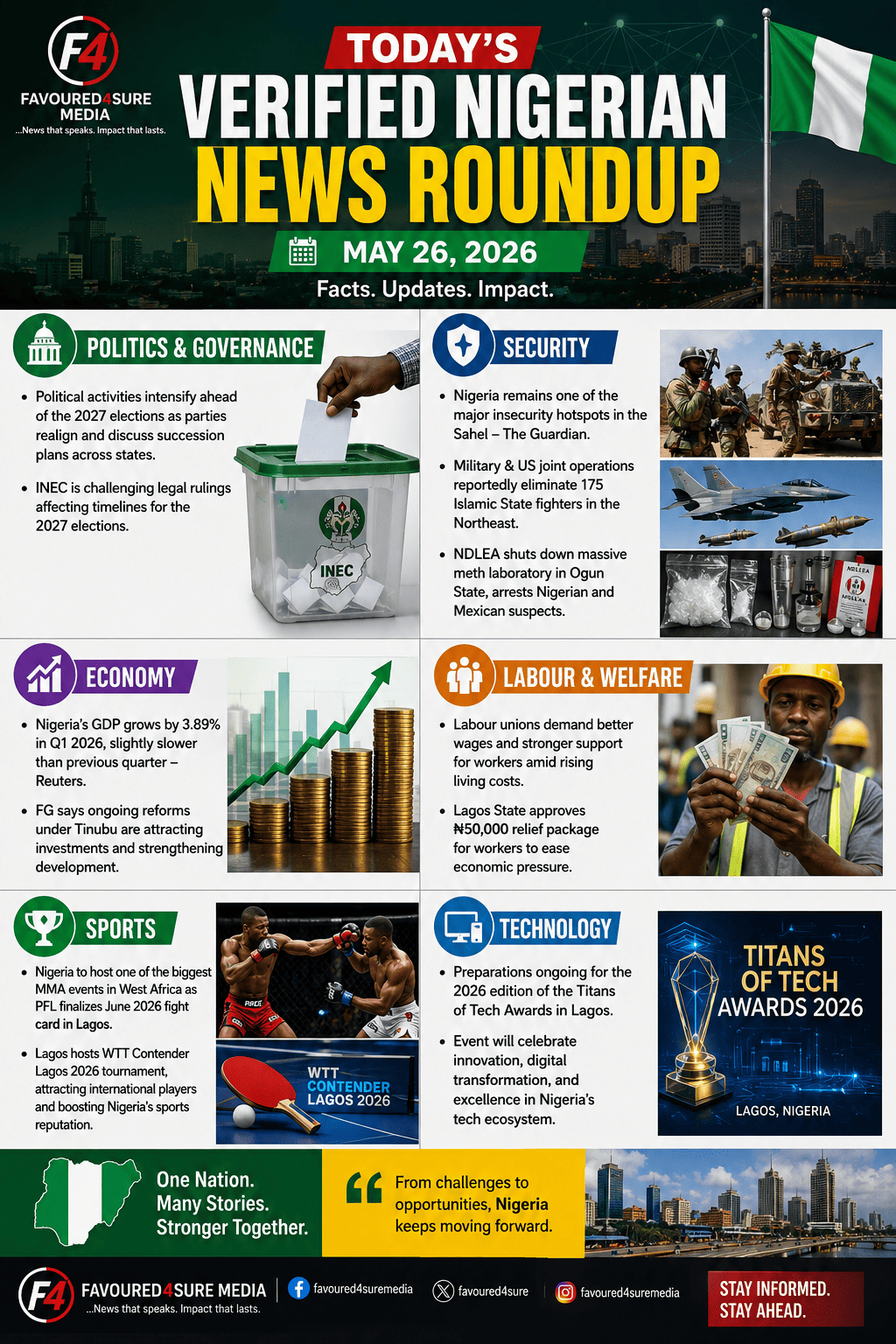
Nigeria’s political atmosphere is gradually intensifying ahead of the 2027 general elections as political actors across different parties continue strategic alignments, consultations, and power negotiations. Several states are already witnessing growing tensions among political stakeholders over succession plans, party control, and possible coalition arrangements.
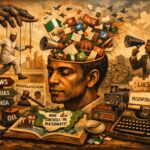
Political analysts believe the early political activities reflect the high stakes surrounding the next election cycle, especially as Nigerians continue to demand improved governance, economic stability, and stronger security measures. Concerns have also been raised over the increasing use of inflammatory rhetoric, political propaganda, and divisive narratives capable of heightening tensions within communities.
Meanwhile, the Independent National Electoral Commission (INEC) is reportedly challenging certain legal rulings affecting preparations and timelines connected to the 2027 elections. Electoral observers continue to call for reforms that will strengthen electoral transparency, reduce violence, and restore public confidence in Nigeria’s democratic system.
Security
Nigeria continues to battle serious security challenges across several regions, with insecurity remaining one of the nation’s biggest concerns. A recent international report by The Guardian described Nigeria as one of the major insecurity hotspots within the Sahel region, citing weak governance structures, poverty, overstretched security agencies, and the continuous activities of armed groups.
In the northeast, Nigeria’s military announced successful joint operations with the United States targeting insurgent groups linked to the Islamic State. According to military reports, coordinated operations reportedly eliminated about 175 fighters during multiple offensives aimed at weakening terrorist activities in the region.
Security agencies also recorded major breakthroughs in the fight against drug trafficking and organized crime after the National Drug Law Enforcement Agency (NDLEA) dismantled a large methamphetamine production laboratory in Ogun State. The operation reportedly led to the arrest of both Nigerian and Mexican suspects, highlighting the increasing sophistication of transnational criminal networks operating within West Africa.
Experts continue to warn that unless poverty, unemployment, corruption, and weak local governance are addressed, insecurity may continue to evolve despite military operations and law enforcement efforts.
Economy
Nigeria’s economy recorded a slight slowdown in growth during the first quarter of 2026. According to Reuters, the country’s Gross Domestic Product (GDP) expanded by 3.89%, slightly below the previous quarter’s performance. Analysts attribute the slowdown to inflationary pressures, high production costs, exchange rate instability, and reduced purchasing power among citizens.
Despite these challenges, the Federal Government insists ongoing economic reforms introduced under President Bola Tinubu’s administration are gradually attracting investments and laying foundations for long-term economic recovery. Government officials argue that reforms in the foreign exchange market, infrastructure development, and energy sectors are necessary to stabilize the economy and encourage private sector growth.
However, many Nigerians continue to express concerns over rising food prices, transportation costs, and the increasing cost of living affecting households nationwide.
Labour & Welfare
As economic hardship persists, labour unions and civil society groups are intensifying calls for improved worker welfare, salary adjustments, and social protection measures. The Nigeria Labour Congress (NLC) has repeatedly urged the government to prioritize policies that protect workers from worsening economic realities.
In response to growing public pressure, Lagos State approved a ₦50,000 relief package for workers aimed at cushioning the impact of inflation and economic reforms. Similar demands are emerging across other states as workers seek stronger support systems amid rising living expenses.
Economic experts warn that without effective welfare programs and job creation initiatives, social frustration and unemployment may continue to rise, especially among young Nigerians.
Sports
Nigeria’s sports industry continues to gain international recognition as the country prepares to host one of the biggest Mixed Martial Arts (MMA) events in West African history. The Professional Fighters League (PFL) has finalized plans for its June 2026 fight card scheduled to take place in Lagos, attracting global attention from combat sports enthusiasts.
In table tennis, Lagos recently hosted the WTT Contender Lagos 2026 tournament, bringing together international players and reinforcing Nigeria’s growing reputation as a major destination for sporting events in Africa. Sports analysts believe such events will boost tourism, youth engagement, and investment opportunities within the entertainment and sports sectors.
Technology
Nigeria’s technology sector continues to expand despite economic challenges, with preparations underway for the 2026 edition of the Titans of Tech Awards in Lagos. The event is expected to celebrate innovation, digital transformation, cybersecurity development, and technological excellence across different industries.
Technology experts say Nigeria’s digital economy remains one of the country’s strongest growth sectors, driven by fintech innovation, increasing internet penetration, startup expansion, and the growing adoption of digital services among businesses and consumers.
Closing Note
Today’s developments reflect a nation balancing progress and pressure simultaneously. While Nigeria continues to battle insecurity, economic hardship, and political uncertainty, there are also signs of resilience through technological innovation, sports development, and ongoing reforms.
The coming months will remain critical as citizens, institutions, and leaders navigate the challenges shaping Nigeria’s future.