
By Okoi Obono-Obla
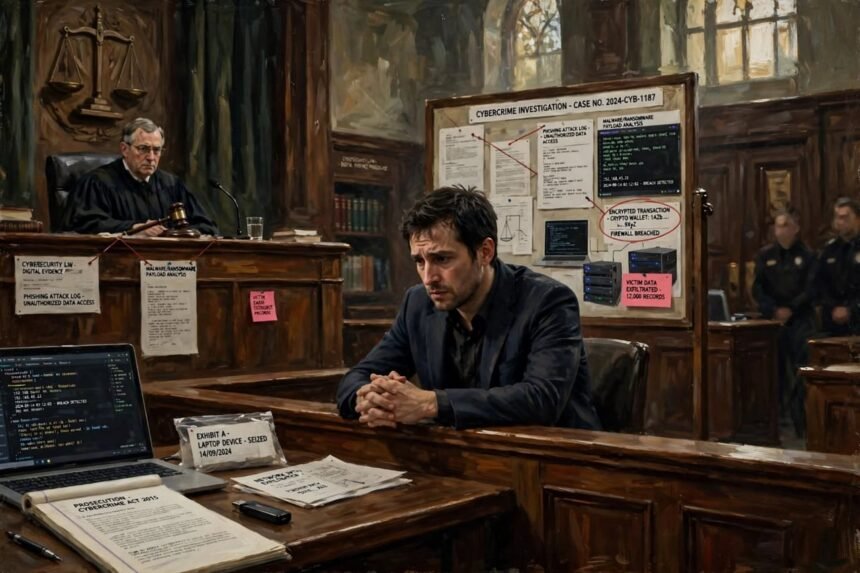
A suspended Reform UK councillor, Glenn Gibbins, has been convicted after posting a Facebook comment suggesting that Nigerians living in Sunderland should be “melted down” and used to fill potholes.
Gibbins, 66, was found guilty of sending a grossly offensive communication following a trial at South Tyneside Magistrates’ Court on Monday, 9 November 2026. The post, published in March 2024, stated: “Can’t believe amount of Nigerians in town….. should melt them all down and fill in the potholes!!” It resurfaced in May 2026 after campaign group Hope Not Hate examined Gibbins’ social media activity ahead of his election to Sunderland City Council.
During the trial, Gibbins admitted that the comment was offensive but claimed it was intended as a tongue-in-cheek joke. He said he had consumed a couple of cans of beer before making the post and did not expect anyone to take it literally.

District Judge Zoe Passfield rejected the defence, ruling that the message was grossly offensive, dehumanising and specifically targeted Nigerians living in Sunderland. Gibbins was sentenced to a 12-month community order, including 150 hours of unpaid work. He was not given a custodial sentence. His legal team has indicated that he intends to appeal the conviction at the Crown Court.
Nigerian community leader Godwin Ejeh told the court that the remarks caused distress among Nigerians in Sunderland, with some raising concerns about their safety and that of their children. Reform UK had previously suspended Gibbins over the post. He was later reinstated following an internal disciplinary process and issued a final written warning.
The legal basis in the UK
Gibbins was convicted under Section 127 of the UK Communications Act 2003, which makes it an offence to send, by means of a public electronic communications network, a message that is “grossly offensive or of an indecent, obscene or menacing character.”
The case is important because it shows that the law does not treat social media as a lawless playground. A post made in jest, after drinking, and without any intention that it be taken literally, can still be criminal if a court finds it grossly offensive, dehumanising and targeted at an identifiable group.
The lesson for Nigeria
If the provisions of the Cybercrimes (Prohibition, Prevention, etc.) Act, 2015 — which were similar to, if not on all fours with, the UK Act under which Mr Gibbins was prosecuted — were seriously enforced in Nigeria, many netizens in Nigeria would be in trouble, as many of them use Facebook and other social media to indulge in the very conduct that brought Gibbins into trouble.
The lesson is that netizens in Nigeria must be wary of how they use social media and must purge themselves of the mindset that the right to freedom of speech gives them the latitude to defame, ridicule, scandalise, and engage in ethnic profiling and ethnic and religious hatred. Otherwise, there should be consequences for their acts.
That warning is sound in principle. But it needs one important legal qualification.
The crucial correction: Nigeria’s law has changed
The comparison with the UK Act was accurate for the original 2015 Act, but it is no longer accurate for the law as it now stands.
The original Section 24 of the Cybercrimes Act, 2015 criminalised knowingly or intentionally sending a message by computer system or network that was “grossly offensive” and provided for a fine of up to ₦7,000,000 or imprisonment for up to 3 years, or both.
Following the ECOWAS Court judgment that Section 24 violated freedom of expression, Nigeria amended the Act on 28 February 2024. The amended Section 24 no longer contains the words “grossly offensive.” It now covers a person who knowingly or intentionally sends a message that is:
(a) pornographic; or
(b) known to be false, for the purpose of causing a breakdown of law and order, posting a threat to life, or causing such message to be sent.
What this means
A Gibbins-type post — grossly offensive, dehumanising ethnic abuse, but not pornographic, not knowingly false, and not necessarily a threat to life or intended to cause a breakdown of law and order — would not neatly fall under amended Section 24.
The broader lesson therefore remains valid, but it should not be presented as if the current Nigerian provision is on all fours with the UK provision. It was, before 2024; it is not now.
In Nigeria, such conduct could potentially raise issues under other laws, depending on the facts, such as laws on threats, incitement, criminal defamation where it still applies, or other provisions of the Cybercrimes Act. But it should not be assumed to be automatically covered by Section 24 as amended.
Conclusion
Gibbins’ conviction is a reminder that freedom of speech is not freedom to dehumanise. The fact that a post is described as a joke, made casually, or posted years before it resurfaces does not neutralise its harm or its legal consequences.
Nigerian netizens should take the same warning seriously: the internet remembers, the law can catch up, and ethnic hatred dressed up as humour is still hatred.