

by Akin Awofolaju, PhD, CLE, CSP, CFP, CFA, CFE( Cornell) Neuroeconomist
An analytical examination of historical antecedents, political strategy, policy choices, contradictions, and the paradox of opposition politics in Nigeria.
Introduction: What Does Tinubu Exceptionalism Really Mean?
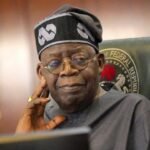
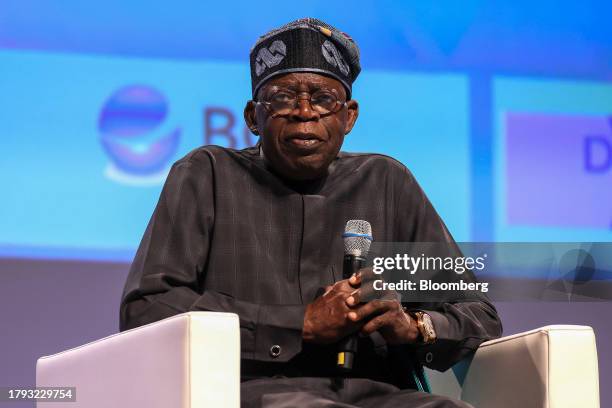
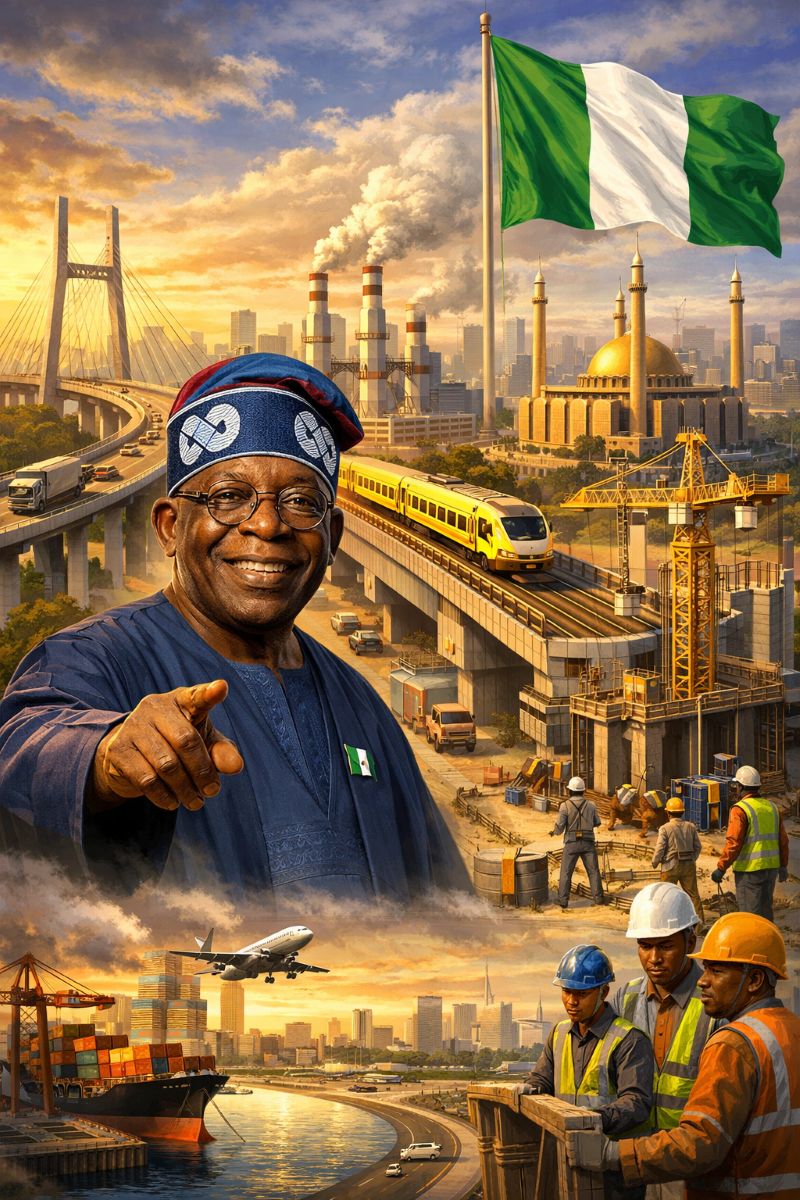
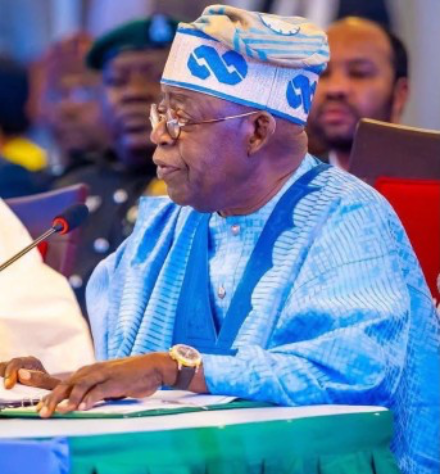
The expression “Tinubu Exceptionalism” invites a serious examination of the political phenomenon surrounding President Bola Ahmed Tinubu: his long journey through political opposition, his role in building political coalitions, his influence on the emergence of successive administrations, and his eventual ascent to the presidency in 2023.

Exceptionalism, in this context, should not mean that one political leader is infallible, uniquely entitled to govern, or exempt from public scrutiny. Rather, it refers to the distinctive political methods, networks, strategic calculations, and institutional experiences that have shaped Tinubu’s career.
The central question is not whether Tinubu is beyond criticism. He is not. It is whether Nigeria’s political opposition has developed a credible alternative to his political project or whether internal rivalries, personal ambition, ideological inconsistency, and an excessive fixation on his removal have sometimes weakened its own credibility.
The phrase “useful idiots” is deliberately provocative. Historically, it has been used to describe people whose actions unintentionally advance another party’s objectives. Applied to Nigerian politics, it raises a question worth examining: can opposition figures, commentators, and political factions inadvertently strengthen the very administration they seek to discredit?
The answer requires history, evidence, and a willingness to scrutinize both government and opposition.
1. Historical antecedents: From the annulment of June 12 to the architecture of power
The 1990s–2007: Opposition, democratic resistance, and the consolidation of political influence
Tinubu’s political evolution cannot be understood without examining the collapse of Nigeria’s Third Republic and the annulment of the June 12, 1993 presidential election, widely regarded as a defining crisis in the country’s democratic history.
As a senator in the short-lived Third Republic, Tinubu became associated with the pro-democracy movement opposing military rule. Following the annulment, he joined the National Democratic Coalition (NADECO) and went into exile during the Abacha era, returning to Nigeria in 1998. These experiences helped establish his credentials within the pro-democracy tradition.
In 1999, Tinubu became governor of Lagos State under the Alliance for Democracy (AD). His subsequent political journey was shaped by three interconnected developments.
First, he survived political adversity. In the 2003 elections, the PDP captured several southwestern states, but Tinubu retained Lagos. His survival demonstrated the importance of local organisation, political alliances, and a state level power base independent of the federal ruling party. Carnegie Endowment for International Peace
Second, he understood the value of political succession. After completing his two terms, Tinubu supported Babatunde Fashola as his successor in 2007. Fashola went on to win the governorship and establish his own reputation for public sector management. This succession strategy helped preserve the continuity of the Lagos political establishment, although it also reinforced criticism that Tinubu exercised disproportionate influence over who governed the state. Carnegie Endowment for International Peace
Third, he recognised that control of a durable political organisation could outlast an individual’s tenure in office. His influence extended beyond elections into candidate selection, coalition-building, and the development of a political network capable of operating across successive administrations.
This is a significant distinction in Nigerian politics. Many politicians concentrate on winning one election; fewer invest comparable effort in maintaining relationships, organising constituencies, developing successors, and negotiating alliances over decades.
Tinubu’s enduring influence is therefore best understood not as a mysterious personal quality, but as the product of political organisation, institutional leverage, strategic patience, and relationships accumulated over time.
2. The APC revolution: How a fragmented opposition captured federal power
The formation of the All Progressives Congress (APC) in 2013 was a watershed in Nigeria’s Fourth Republic.
For sixteen years, the PDP dominated the federal government. Opposition parties frequently struggled to overcome regional divisions, leadership rivalries, and competing presidential ambitions. The 2013 merger brought together the Action Congress of Nigeria (ACN), Congress for Progressive Change (CPC), All Nigeria Peoples Party (ANPP), and other political factions. Tinubu was one of the important figures involved in the negotiations.
The coalition combined different political assets: the ACN’s organisational strength in parts of the Southwest, Muhammadu Buhari’s substantial northern following, and other regional and political networks.
The result was historic. In 2015, Buhari defeated incumbent President Goodluck Jonathan, marking the first time an incumbent Nigerian president lost a national election and transferred power to an opposition candidate through the ballot box.
The lesson was straightforward: a viable opposition must become a coalition of complementary strengths, not merely an alliance of shared grievances.
The APC’s achievement also reveals an important contradiction. Its component factions did not necessarily share a coherent ideology on every economic, social, or institutional question. They shared a sufficiently strong interest in defeating the PDP to overcome their differences.
Once in power, however, the coalition struggled with internal divisions and governance challenges. Buhari’s administration did not resolve all the economic and security problems that had contributed to public dissatisfaction with the PDP.
Tinubu’s political importance emerged partly from this history. He helped demonstrate how disparate political forces could be assembled into a viable national coalition. Yet the APC’s subsequent difficulties also demonstrate that winning power through an alliance is not the same as governing effectively through one. Let’s discuss the hidden three fingers of leprosy: The good, the bad and the ugly.
3. The Good: What Tinubu’s political model has contributed
An analytical assessment should acknowledge achievements without converting them into a personality cult.
A. Long-term political organisation
Tinubu’s most distinctive political asset has been his ability to sustain a political network beyond a single electoral cycle. His influence in Lagos, his role in the APC merger, and his support for Buhari’s presidential campaigns illustrate the importance of organisational continuity.
This offers a lesson for Nigeria’s opposition: political power is rarely displaced by outrage alone. It requires credible leadership, reliable funding, a functional party structure, grassroots mobilisation, and a shared programme.
B. The Lagos governance experience
Tinubu’s years as governor helped establish a political platform from which subsequent Lagos administrations pursued revenue mobilisation, infrastructure development, and administrative reforms.
A Carnegie Endowment analysis of Lagos politics identified sustained political attention to reform, the need for internally generated revenue, and the ambition to develop Lagos as important factors behind the state’s governance trajectory. It also described differences between Tinubu’s political priorities and Fashola’s management-oriented approach.
Nevertheless, the Lagos experience should be evaluated critically. Improvements in revenue collection and infrastructure do not automatically establish that every project was cost-effective, that the benefits were evenly distributed, or that the state’s political system was sufficiently competitive and accountable.
C. Willingness to confront difficult economic imbalances
Since assuming office in May 2023, Tinubu’s administration has removed the petrol subsidy and changed the foreign exchange framework. The government argues that these measures were necessary to reduce fiscal distortions, improve price discovery in the foreign exchange market, and establish a more sustainable economic foundation.
The International Monetary Fund (IMF) reported that the reforms, alongside tighter monetary policy and improved revenue administration, contributed to better macroeconomic stability, stronger external sector conditions, and renewed investor confidence.
These are material policy developments. They deserve assessment on their economic merits rather than rejection simply because they were introduced by a political opponent.
But the distinction between economic stabilisation and economic prosperity is crucial. A government can improve fiscal indicators while millions of households continue to experience severe hardship.
That distinction leads directly to the less flattering side of Tinubu’s political and governing record.
4. The Bad: Economic reforms, social hardship, and the limits of exceptionalism
The most serious test of Tinubu’s presidency is whether the economic rationale for his reforms translates into tangible improvements in the lives of ordinary Nigerians. And yes, as a development economic expert, I strongly believe it will in no time if continueto focus on its fundamental principles. Time heals. And here are the reasons:
Removing fuel subsidies and reforming the foreign exchange market addressed longstanding fiscal and monetary distortions. However, these decisions also produced substantial immediate costs for households and businesses.
The IMF’s 2025 assessment reported that Nigeria’s average annual inflation reached 31% in 2024, while poverty remained high and food insecurity affected millions. It also acknowledged improvements in macroeconomic stability and a decline in year-on-year inflation in early 2025.
The World Bank similarly concluded in its 2025 report that macroeconomic stabilisation had made progress, but that the gains had not yet translated sufficiently into improved livelihoods. It also noted that Nigeria’s poverty and consumption difficulties had deep roots in developments predating Tinubu’s administration.
Three conclusions follow.
First, the necessity of a reform does not absolve its implementation of scrutiny. Policymakers must consider the pace of adjustment, transport costs, food prices, wages, public transport, and the availability of effective social protection.
Second, economic indicators must be connected to household realities. Stronger foreign exchange conditions, increased government revenue, or improved investor sentiment are not ends in themselves. They should ultimately support productive employment, affordable food, reliable electricity, better healthcare, and rising real incomes.
Third, the political management of reform matters. Citizens are more likely to endure painful adjustments when government communicates honestly, publishes measurable results, distributes assistance transparently, and demonstrates that political elites are subject to the same standards of sacrifice and accountability.
Tinubu’s defenders can reasonably argue that the inherited economic structure required difficult changes. His critics can reasonably ask whether the sequencing, cushioning, and execution of those changes have been adequate.
Both questions are legitimate. Neither should be suppressed by partisan loyalty.
5. The Ugly: Political godfatherism, patronage, and the problem of institutional dependence
One of the most persistent controversies surrounding Tinubu’s career is the relationship between political organisation and personal control.
Supporters describe his network as a sophisticated machinery for political mobilisation and continuity. Critics describe aspects of it as godfatherism: a system in which access to political office, party nominations, and advancement may depend heavily on loyalty to a dominant patron.
Reuters’ 2023 profile of Tinubu discussed his extensive patronage network, the influence he exercised over political succession in Lagos, and questions raised by critics about public spending and political control. These are reported controversies, not proof that every allegation against him is established.
The broader institutional question is more important than the personality involved.
Can a political system remain democratic when a small circle of influential figures exercises disproportionate influence over candidate selection? Can public institutions maintain independence when political loyalty becomes a principal route to advancement? And can a party develop a durable ideology if personal alliances repeatedly take precedence over institutional rules?
These concerns are not exclusive to Tinubu or the APC. Nigerian politics has a longstanding history of political patronage, elite bargaining, defections, and personalised party structures.
Yet acknowledging that the problem is widespread does not make it acceptable.
Political effectiveness and democratic institutionalisation are two different achievements. A leader may be exceptionally effective at consolidating influence while the political system around that leader remains vulnerable to excessive centralisation.
A mature assessment of Tinubu Exceptionalism must therefore distinguish his organisational strengths from the institutional weaknesses that may accompany them.
6. Nigeria’s opposition: Why the same mistakes keep recurring
The history of Nigerian opposition politics reveals a recurring pattern: political factions unite when out of power, fragment when leadership and succession questions arise, and frequently struggle to transform electoral cooperation into a coherent governing alternative.
The PDP’s internal crises after its long period in power weakened its ability to maintain national cohesion. The APC capitalised on those weaknesses in 2015. But the APC itself subsequently experienced divisions, illustrating that political organisations are vulnerable to the same forces that once undermined their competitors.
The opposition’s current challenges are especially revealing. Reporting in May 2026 described disputes over leadership, presidential zoning, candidate selection, and competing ambitions within the opposition coalition. Subsequent political realignments involving Peter Obi and Rabiu Kwankwaso further demonstrated the difficulty of sustaining a unified platform.
These developments raise five fundamental problems.
A. The coalition without a common programme
Bringing together politicians who oppose the incumbent is not equivalent to building a government-in-waiting.
A coalition needs an agreed position on taxation, energy, education, security, federalism, industrial policy, and social protection. It also needs transparent rules for resolving disputes and selecting candidates.
Without these foundations, a coalition can become a temporary arrangement for distributing political power rather than an instrument for national development.
B. The presidential ambition problem
When several heavyweight politicians believe that the presidency is their personal entitlement, the coalition’s survival becomes hostage to individual ambition.
Negotiations then revolve around who will lead, who will become running mate, which region should produce the candidate, and who controls the party structure.
These questions matter, but they should follow not replace the development of a credible national programme.
C. The politics of permanent outrage
Opposition parties have a responsibility to expose policy failures, investigate allegations of misconduct, and demand accountability.
However, when every government action is described as a disaster, every economic adjustment as evidence of malicious intent, and every achievement as propaganda, political criticism loses analytical precision.
The public needs a distinction between policy failure, implementation weakness, genuine corruption, unavoidable economic trade offs, and reforms whose benefits have not yet materialised.
A credible opposition should make those distinctions more clearly than the government it scrutinises.
D. The regional and ethnic trap
Nigeria’s diversity demands political negotiation across regions, religions, and ethnic groups. It does not justify reducing every policy dispute to ethnic victimhood.
A northern Nigerian may reasonably criticise Tinubu’s economic policies. A southern Nigerian may equally criticise insecurity or inadequate social protection. Neither criticism should automatically be interpreted as hostility toward an ethnic group.
Equally, the defence of Tinubu should not be confused with the defence of Yoruba interests, just as criticism of his administration should not be equated with opposition to the Yoruba people.
Nigeria’s national interest is larger than any president’s ethnic identity.
E. The failure to distinguish accountability from removal at all costs
In a democracy, the opposition’s purpose is not merely to remove the government. It is to provide an alternative that citizens can evaluate and, if persuaded, elect.
An opposition that concentrates exclusively on the incumbent’s weaknesses while neglecting its own credibility may inadvertently strengthen the incumbent’s position in public debate.
This is the central strategic paradox behind the phrase “useful idiots.”
7. Who are the “useful idiots” in Nigeria’s political contest?
The expression should be used as an analytical metaphor, not as a blanket insult directed at every critic of Tinubu.
In this context, it describes political actors whose conduct may unintentionally advance the interests of the incumbent they oppose.
There are at least four identifiable patterns.
The first is the rival who cannot subordinate personal ambition to collective strategy. When leaders repeatedly abandon coalitions because they cannot secure preferred positions, they weaken the possibility of a credible alternative. Their conduct may benefit the ruling party even when their stated objective is to defeat it.
The second is the partisan commentator who sacrifices evidence for sensationalism. Exaggerated allegations, misleading statistics, fabricated claims, and inflammatory ethnic rhetoric can discredit legitimate criticism. When false claims are exposed, the government may use them to dismiss other, well supported allegations.
The third is the political defector motivated principally by personal advantage. Cross-party movement is not inherently improper. Politicians may change parties for legitimate ideological or strategic reasons. But when defections repeatedly undermine collective agreements without a transparent explanation of principle, voters may reasonably question the opposition’s seriousness.
The fourth is the government defender who treats every criticism as an attack on the president. This category is important because the phenomenon works both ways. Supporters who deny obvious shortcomings, dismiss legitimate public suffering, or attack citizens for questioning policy can also undermine the administration they intend to protect.
The same logic applies to opposition supporters who defend their preferred politicians regardless of evidence.
Thus, the real dividing line is not between Tinubu’s supporters and his opponents. It is between political conduct that strengthens democratic accountability and conduct that weakens it.
A citizen who exposes corruption through verifiable evidence is not a useful idiot merely because the allegation embarrasses Tinubu. Likewise, a supporter who defends a sound policy with evidence is not a sycophant merely because the policy benefits the administration.
The test is whether an argument survives scrutiny.
8. The paradox of Tinubu Exceptionalism: Strengths that can become vulnerabilities
Tinubu’s political methods contain several tensions that are relevant to understanding his presidency.
Political strength
Potential vulnerability
Durable political networks
Excessive dependence on personal loyalty
Strategic coalition-building
Alliances held together by ambition rather than ideology
Strong party organisation
Weak internal democracy and contested nominations
Willingness to undertake difficult reforms
Inadequate cushioning of vulnerable households
Centralised political coordination
Risks to institutional independence and accountability
Long-term political relationships
Patronage expectations and resistance to renewal
This table does not imply that every strength necessarily produces the corresponding weakness. It identifies risks that become more important as political power becomes concentrated.
The central lesson is that political skills that help a leader acquire power do not automatically guarantee effective governance.
Coalition building can secure an electoral victory, but governance requires competence, institutional coordination, and public trust. Strategic discipline can help a party survive, but excessive loyalty can suppress internal criticism. Bold reforms can correct economic distortions, but their long term value depends on implementation and the distribution of benefits.
Exceptionalism, if it is to have any analytical value, must be tested against these contradictions rather than treated as an article of faith.
9. What should a credible opposition do differently?
The alternative to ineffective opposition is not unquestioning support for the government. It is a more disciplined and evidence based political culture.
First, opposition leaders should publish a common economic programme that explains what they would retain, revise, or reverse in the government’s reforms. If they oppose subsidy removal, they should explain how they would finance the alternative, prevent waste, and protect public services.
Second, they should establish transparent procedures for coalition leadership and presidential candidate selection. Rules agreed in advance are more credible than private bargains that collapse when individual ambitions are frustrated.
Third, they should build institutions at the grassroots level. Sustainable political organisations require membership systems, policy research, local leadership, financial transparency, and regular engagement with communities not just prominent personalities and social media followings.
Fourth, they should make accountability universal. Allegations involving the ruling party should be investigated, but the same standards must apply to opposition governors, former ministers, party financiers, and presidential aspirants.
Fifth, they should offer measurable alternatives on the issues citizens experience every day: food affordability, electricity, employment, public safety, healthcare, education, and the purchasing power of wages.
Finally, they should avoid tribalising the national conversation. Nigeria requires political competition that crosses ethnic and regional boundaries rather than reproducing the divisions that have historically weakened national cohesion.
10. The Tinubu presidency: What should ultimately determine its place in history?
The historical significance of Tinubu’s political career cannot be reduced to his ability to defeat rivals or maintain influence over a political network.
Its more consequential test will be whether his presidency leaves Nigeria with stronger institutions, a more productive economy, improved security, greater fiscal sustainability, and a demonstrable improvement in the welfare of its citizens.
The administration’s reform record must be evaluated across several dimensions:
• Macroeconomic stability: Are inflation, exchange rate volatility, and fiscal risks becoming more manageable?
• Household welfare: Are real incomes, food affordability, and access to essential services improving?
• Productivity: Are reforms generating investment, jobs, industrial growth, and reliable energy?
• Security: Are citizens safer, and are farmers, businesses, and communities better protected?
• Institutional integrity: Are public resources managed transparently, and are public institutions accountable?
• Democratic resilience: Can political competition remain meaningful, and can the ruling party tolerate legitimate dissent?
The relevant evidence must be tracked over time. Short term improvements in one indicator cannot establish comprehensive success, just as a temporary deterioration does not by itself prove that every reform has failed.
The opposition has a parallel responsibility: it must demonstrate that its proposed alternative can produce better outcomes through credible policies and accountable institutions.
Ultimately, political history is not written by campaign slogans. It is written through the consequences of decisions, the quality of institutions, and the lived experiences of citizens.
Conclusion: Beyond personalities, toward a more mature political culture
Tinubu Exceptionalism is best understood as a distinctive combination of political endurance, coalition building, organisational continuity, and strategic calculation. Its historical antecedents stretch from the democratic struggles of the 1990s through the consolidation of Lagos politics and the formation of the APC, culminating in Tinubu’s presidency in 2023.
That history contains genuine political achievements alongside enduring controversies about patronage, political succession, accountability, and the relationship between power and institutions.
His administration’s economic reforms have addressed longstanding structural problems, but their ultimate justification depends on whether macroeconomic stabilisation becomes broadly shared prosperity. The hardship experienced by ordinary Nigerians is not a peripheral consideration; it is central to the evaluation of government performance.
The opposition, meanwhile, cannot fulfil its democratic responsibility by relying exclusively on public dissatisfaction. It must overcome factionalism, articulate a credible alternative, and demonstrate that its leaders can place national interests above personal ambition.
The metaphor of the “useful idiot” is most valuable when it exposes a political contradiction: in the pursuit of power, political actors can sometimes behave in ways that undermine their own stated objectives. That observation applies to opposition politicians, government loyalists, and the wider political establishment alike.
Nigeria needs neither a president beyond criticism nor an opposition beyond accountability. It needs a political system in which achievements are acknowledged, failures are confronted, public resources are protected, and citizens can judge competing claims on the strength of evidence.
The ultimate measure of exceptional leadership is not how many opponents it defeats, how many political allies it commands, or how effectively it controls a party.
It is whether the institutions and opportunities it leaves behind enable the country to function better even when the leader is no longer in power.
That is the standard by which Tinubu Exceptionalism, and the conduct of Nigeria’s opposition, should ultimately be judged.