


By Akin Awofolaju, PhD
America has long presented itself as more than a powerful nation. It has portrayed itself as an experiment in liberty, constitutional government, religious freedom, individual rights, democratic accountability, and the proposition that people of different backgrounds can coexist under a common national identity.
This is the essence of American exceptionalism: the belief that America’s founding principles, historical experience, and political institutions give it a distinctive role in the world. It does not necessarily mean that America is morally superior to other nations. At its most defensible, it means that America has a special responsibility to demonstrate that freedom, pluralism, constitutionalism, and democratic self-government can work.
Yet contemporary American politics raises a difficult question: Can a nation remain exceptional when its citizens increasingly disagree not merely about policies, but about the meaning of the nation itself?

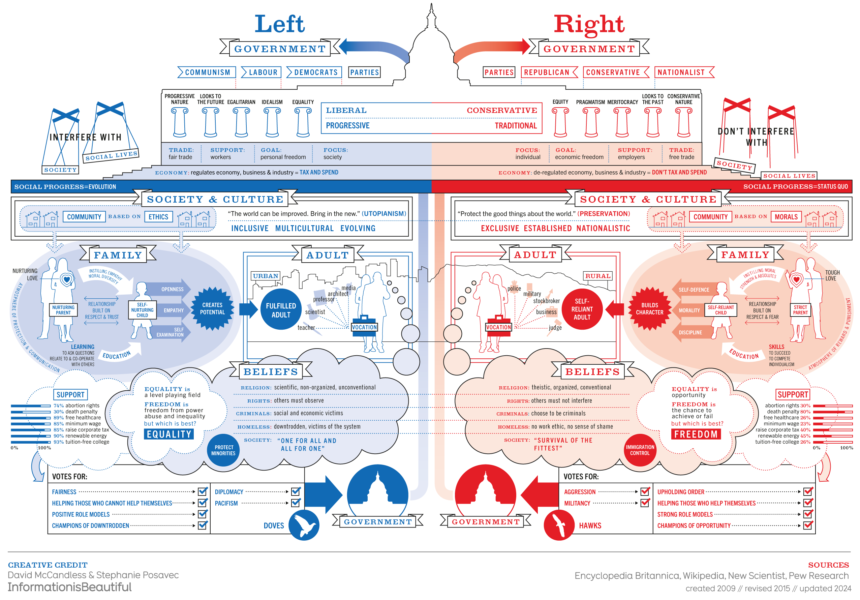
The divide is no longer adequately described as Democrats versus Republicans, liberals versus conservatives, or believers versus nonbelievers. It is a deeper struggle over national identity, religious authority, constitutional limits, cultural change, economic opportunity, and the boundaries of belonging.
At the heart of this struggle are several overlapping political and religious constituencies: Christian liberals, moderates, independents, moderate Christian conservatives, and the more ideological currents of Christian nationalism. None is entirely homogeneous, and no individual should be reduced to a political label. Nevertheless, examining their competing assumptions reveals much about America’s current predicament.
1. The American Left: Christian Liberalism and the Moral Argument for Inclusion
The Christian Left occupies an important, sometimes underappreciated position in American public life. Its adherents may interpret the teachings of Jesus through the principles of compassion, social justice, economic fairness, care for the poor, protection of vulnerable people, racial equality, and the dignity of every human being.
For these Christians, faith is not primarily a mechanism for controlling government or enforcing religious conformity. It is a moral obligation to serve humanity.
They may support progressive taxation, healthcare access, immigrant protections, environmental stewardship, and civil rights. Many also argue that a nation claiming Christian values must demonstrate those values in its treatment of the poor, prisoners, strangers, and disadvantaged communities.
Yet Christian liberalism has its own internal contradictions.
First, some progressive political movements risk treating traditional religious convictions as inherently backward or illegitimate. This can alienate sincere Christians whose disagreements with progressive policies arise from deeply held moral beliefs rather than prejudice or hostility.
Second, a politics of inclusion becomes contradictory when it demands tolerance for every worldview except those considered socially conservative. Religious liberty must protect beliefs that are unpopular as well as those that are fashionable.
Third, progressive rhetoric can lose credibility when moral aspirations are not accompanied by practical solutions to crime, economic insecurity, immigration management, educational inequality, and the cost of living.
The central challenge for the Christian Left is to reconcile compassion with accountability, inclusion with freedom of conscience, and idealism with practical governance.
A society cannot claim to defend pluralism while treating legitimate disagreement as evidence of moral inferiority. Nor should conservative religious beliefs automatically shield their public consequences from scrutiny.
The appropriate standard is equal citizenship, not ideological conformity.
2. The Moderate: The Endangered Custodian of Political Restraint
Political moderates are often caricatured as indecisive, uninspiring, or unwilling to take a stand. Yet moderation, properly understood, is not the absence of conviction. It is the capacity to hold convictions without surrendering judgment, evidence, and restraint.
Moderates can recognize the value of markets without believing that markets solve every social problem. They can support social safety nets without assuming that every government intervention is effective. They can defend law enforcement while demanding accountability, and support immigration controls while recognizing the humanity of immigrants.
In a functioning democracy, moderation creates room for compromise without requiring surrender of principle.
The difficulty is that America’s political incentives increasingly reward confrontation. Candidates can gain attention by denouncing opponents, media ecosystems can amplify outrage, and party activists can punish representatives who negotiate across the aisle.
The result is a dangerous equation in which compromise is portrayed as betrayal and political disagreement as an existential threat.
Yet compromise is not always virtuous. It can preserve injustice when fundamental rights are at stake. The purpose of moderation is therefore not to split every difference mechanically, but to distinguish between matters that require principled resistance and those that permit practical negotiation.
Gallup’s 2024 ideological measurements, published in January 2025, found that 34% of American adults identified as moderate, compared with 37% who identified as conservative and 25% as liberal. These categories describe self-identification, not a unified political bloc, but they demonstrate that moderation remains a substantial part of the American electorate.
The question is whether moderates can translate their numbers into constructive political influence.
Their responsibility is to resist the temptation to equate civility with silence. They must challenge extremism within their own parties, defend democratic procedures even when inconvenient, and insist that public policy be judged by evidence and outcomes rather than partisan loyalty.
A democracy needs citizens who know when to stand firm and when to compromise. Without both capacities, politics becomes either permanent warfare or passive surrender.
3. The Independent: Freedom from Party Loyalty, but Not from Responsibility
The independent voter embodies one of the most important possibilities in American democracy: the ability to evaluate candidates and policies without unconditional allegiance to either major party.
Independence, however, is not a political philosophy in itself. Some independents are conservative, others progressive, and many combine positions that do not fit comfortably into either party. Some are highly informed and deliberately reject party labels; others are disengaged or distrustful of the political system altogether.
Their strength lies in their potential to scrutinize both parties.
An independent citizen can ask Democrats whether their social and economic policies deliver measurable results. The same citizen can ask Republicans whether their promises of fiscal responsibility, personal liberty, public safety, and limited government are consistently reflected in practice.
Independents can also resist the pressure to excuse misconduct by their preferred candidate simply because the alternative is less attractive.
But independence has weaknesses. Distrust of established institutions can become indiscriminate cynicism. Rejecting both parties does not guarantee sound judgment, and voting against a candidate without examining the alternative is not necessarily independent thinking.
Nor is refusing to choose always an act of principle. When consequential decisions are being made, civic responsibility requires engagement with evidence, institutions, and the foreseeable effects of public policy.
Pew Research Center’s 2026 political typology reinforces the complexity beneath the two-party divide: its analysis identifies nine groups based on political and cultural values, including groups with mixed partisan allegiances and differing levels of political engagement.
This complexity challenges the assumption that Americans can be understood simply by placing them in two opposing camps.
The independent’s greatest contribution is not permanent opposition to both parties. It is independent judgment: the willingness to reward competence, reject corruption, question ideological dogma, and change one’s position when the evidence changes.
4. Moderate Conservative Christians: Faith, Tradition, and Constitutional Government
Moderate conservative Christians occupy a distinct space between secular progressivism and religious nationalism. They may believe that Christianity provides a moral foundation for family life, personal responsibility, charity, community service, and public ethics, while also accepting that the United States is a religiously diverse constitutional republic.
Many defend traditional understandings of marriage, parental authority, religious liberty, and the protection of unborn life. Others differ on these questions. What distinguishes constitutional conservatism from religious nationalism is not simply the strength of one’s faith or one’s commitment to traditional values, but how one understands the legitimate exercise of state power.
A moderate Christian conservative can advocate a policy inspired by religious conviction while recognizing that citizens of other faiths, or no faith, retain equal constitutional standing.
Such a conservative can believe that Christianity has contributed profoundly to American history without insisting that Christianity must possess exclusive political authority.
This distinction matters because religious conviction and democratic pluralism are not necessarily incompatible.
The American constitutional tradition protects religious exercise while limiting the government’s power to establish religion. The First Amendment provides the framework within which people can express, practise, debate, and peacefully disagree about their beliefs.
The challenge for moderate conservatives is to apply these principles consistently.
Religious liberty must not become a privilege available only to Christians. Traditional values must be argued for within the democratic process rather than imposed through the assumption that one religious community owns the nation. And a commitment to law and order must include respect for constitutional limits on government.
Moderate conservative Christians can help bridge America’s cultural divide if they defend both religious freedom and the equal citizenship of people who disagree with them.
Their test is whether they can remain faithful to their convictions without confusing political power with spiritual authority.
5. The Extreme Right and Christian Nationalism: When Faith Becomes a Claim to Political Ownership
Christian nationalism is among the most contested questions in contemporary American politics. The term requires careful definition because it does not describe all conservative Christians, all evangelicals, all Republicans, or everyone who believes Christianity has a role in public life.
Broadly, Christian nationalism refers to political ideas that closely bind American national identity to Christianity and, in stronger forms, seek a privileged place for Christianity in government, law, or national belonging. Its supporters do not all agree on what those ideas should mean in practice.
Some argue that the country should recover what they regard as its Christian moral heritage. Others favor a stronger role for biblical principles in legislation. More restrictive versions envision a nation in which Christianity receives official status or non-Christian perspectives have diminished standing.
The analytical distinction is between Christianity as a source of moral conviction and Christianity as a basis for political supremacy.
A Christian may reasonably advocate policies informed by faith. The constitutional difficulty arises when religious identity becomes a qualification for full citizenship, when public authority is used to privilege one faith, or when democratic institutions are expected to submit to a particular religious interpretation regardless of constitutional protections.
The danger of confusing a nation with the kingdom of God
Christianity teaches that human beings are morally accountable and that political power is not the ultimate measure of righteousness. Yet Christian nationalism can blur the distinction between religious faith and national loyalty.
When a political movement presents itself as the exclusive guardian of God’s will for America, criticism of its leaders may be portrayed as an attack on Christianity itself. Political opponents can then be recast not merely as people with different policies, but as enemies of the nation’s sacred identity.
This creates a serious accountability problem.
No political party possesses a monopoly on Christian virtue. No president is beyond scrutiny because supporters believe that God favors his political project. No electoral victory establishes that a particular administration has received divine approval.
The same standard must apply to every administration, whether Republican or Democratic.
Moreover, the American republic is not a church. Its constitutional legitimacy rests on laws, institutions, elections, and the rights of citizens not on a claim that one religious constituency possesses a superior title to govern.
What does the evidence tell us?
Pew Research Center’s April 2026 survey of 3,592 American adults offers useful evidence about the distinctions within public opinion. It found that:
• 17% supported declaring Christianity the nation’s official religion, up from 13% in 2024.
• 43% preferred that the government promote Christian moral values without formally declaring Christianity the national religion.
• 38% preferred neither an official Christian religion nor government promotion of Christian values.
• 79% said churches and other houses of worship should not endorse political candidates.
• 66% said religious institutions should keep out of day-to-day political matters.
These findings reveal an important distinction: wanting Christian moral values to influence public life is not the same as wanting an officially Christian state.
The figures also suggest that Americans are divided over the appropriate relationship between religion and government, even though most oppose churches endorsing candidates.
The term Christian nationalism should therefore not be used as a blanket accusation against religious conservatives. The more productive inquiry is whether a particular belief or political action respects equal citizenship, constitutional government, and freedom of conscience.
The hypocrisy test
Any political movement that invokes Christianity should be examined against the moral standards it claims to represent.
Does it demonstrate honesty, humility, compassion, justice, and accountability? Does it respect the dignity of political opponents? Does it defend religious freedom for those outside its own tradition? Does it acknowledge that national power is temporary and that public officials remain subject to the law?
These questions are equally relevant to Christian liberals, moderate conservatives, and secular political movements that claim the moral high ground.
The central danger is not that Christians participate in politics. It is that any political faction may use sacred language to place its own power beyond legitimate scrutiny.
6. The Moderate Conservative Christian Versus the Christian Nationalist: A Crucial Distinction
These two constituencies are frequently conflated, but their underlying political assumptions can differ substantially.
Question
Moderate Christian conservatism
Strong Christian nationalism
National identity
America has a significant Christian heritage, alongside a diverse population
American identity should be closely tied to Christianity
Religious liberty
Protects Christians and other religious communities under common constitutional principles
Stronger versions seek privileged public or legal status for Christianity
Government
Should reflect constitutional limits and democratic accountability
May seek a more explicitly Christian ordering of public authority
Political opposition
Legitimate within democratic competition
Can, in more exclusionary forms, be treated as a threat to a Christian national identity
Religious conviction
Informs political judgment
May be used to justify a special claim to national authority
These are broad analytical distinctions, not descriptions of every individual in either group. Christian nationalist movements vary, and conservative Christianity does not automatically imply Christian nationalism.
The distinction matters because the political debate is often framed as a battle between religious people and secular people. That framing misses the fact that many Christians themselves disagree about how faith should relate to the state.
Pew’s 2026 political typology identified Faith First Conservatives as one of nine distinct political groups, representing 12% of U.S. adults in its analysis. The group is characterized by strong conservative political commitments and particular emphasis on religion, morality, and social traditionalism. It is not synonymous with every Christian conservative, nor does the classification by itself establish support for every form of Christian nationalism from Pew Research Center
This is an important corrective to political stereotyping. Religious identity, ideological conservatism, Republican affiliation, and Christian nationalism overlap in some cases, but they are not interchangeable categories.
7. The Left’s Contradictions and the Right’s Contradictions
A critical analysis of American politics must resist the temptation to examine only the failings of one ideological camp.
The progressive Left faces questions about whether its pursuit of equality can accommodate religious disagreement, whether its policies adequately balance rights with public responsibilities, and whether its language of tolerance is applied consistently.
Some progressive activists treat traditional Christian views as inherently hostile, even when those views are expressed peacefully and without a demand for state coercion. Such an approach risks narrowing the very pluralism that progressive movements often seek to defend.
The Right faces a different but equally important set of questions. Can it defend limited government while expanding state power to enforce particular religious or cultural preferences? Can it champion individual liberty while restricting freedoms it considers morally objectionable? Can it invoke constitutional patriotism while treating political opponents as less authentically American?
These are questions of consistency, not allegations that every member of either camp behaves in these ways.
The central problem is selective principle: defending liberty when it benefits one’s own constituency and abandoning it when another constituency seeks the same protection.
Democracy cannot operate reliably if constitutional rights are regarded as privileges to be extended to friends and withdrawn from opponents.
Nor should criticism of the Left be treated as an endorsement of the Right, or criticism of Christian nationalism as hostility toward Christianity. Each political position should be assessed on its arguments, evidence, consequences, and consistency with constitutional principles.
The United States needs a public culture in which people can criticize progressive excesses without endorsing religious coercion, defend traditional values without embracing exclusion, and support social justice without dismissing religious liberty.
8. The Independent and Moderate Center: Is There Still Common Ground?
The political center is not a single ideology, and it is not necessarily a virtuous middle ground between two extremes. Nevertheless, it may offer an important arena for rebuilding agreement around shared democratic principles.
Gallup’s 2024 findings showed that moderates represented 34% of adults, while conservatives represented 37% and liberals 25%. The moderate share had fallen from 43% in 1992. Gallup.com
Pew’s more detailed 2026 analysis likewise found that many Americans belong to groups with mixed political values rather than fitting neatly into either partisan camp.
Together, these findings suggest that the conventional red-versus-blue framework does not fully capture the complexity of the electorate.
But the existence of moderates and independents does not automatically resolve polarization. Citizens who share moderate labels may disagree sharply on abortion, immigration, taxation, foreign policy, gun rights, religious liberty, and the role of government.
The challenge is to identify the principles on which meaningful cooperation remains possible.
These include:
• Acceptance of legitimate election results and constitutional procedures.
• Equal protection under the law, regardless of religion or political affiliation.
• Freedom of religious belief, practice, conversion, and nonbelief.
• Accountability for public officials and consistent application of the law.
• Honest debate grounded in evidence rather than manufactured outrage.
• Economic opportunity and public services assessed by their actual results.
• A willingness to recognize legitimate grievances without automatically accepting every proposed remedy.
The center must also avoid becoming an excuse for moral passivity. When constitutional rights are threatened, neutrality can protect the status quo rather than democracy. When compromise is possible, however, the refusal to negotiate can make government needlessly dysfunctional.
The objective should not be to eliminate disagreement. It should be to make disagreement compatible with common citizenship.
9. American Exceptionalism: From Moral Aspiration to Partisan Slogan?
American exceptionalism has historically contained several competing ideas.
One is that America’s constitutional experiment offers a distinctive model of self-government. Another is that the country has a special responsibility to defend liberty and human rights internationally. A third, more triumphalist version suggests that America’s power or history proves its inherent superiority.
These ideas should not be confused.
The United States has made extraordinary contributions to science, technology, higher education, economic development, democratic thought, and international security. Its constitutional institutions have also created mechanisms through which citizens can challenge government authority.
Yet the American historical record includes slavery, racial segregation, the dispossession of Indigenous peoples, discrimination, and periods in which democratic rights were unequally distributed.
Acknowledging these realities does not require rejecting the American experiment. It requires distinguishing between the ideals the country professes and the extent to which its institutions have fulfilled them.
Indeed, the capacity to confront historical injustice through democratic debate, constitutional reform, and institutional accountability is itself an important test of a nation’s commitment to its ideals.
The contemporary challenge is that exceptionalism can become a substitute for self-examination.
If America assumes that its institutions are inherently superior, it may become less willing to recognize their weaknesses. If patriotism is equated with loyalty to a political leader, criticism can be misrepresented as disloyalty. If national greatness is measured only by military power, economic output, or diplomatic influence, the quality of domestic democratic life may be neglected.
The same danger exists when national identity is defined exclusively through religious heritage or through a secular ideology that treats religious citizens as outsiders.
A country cannot credibly champion freedom abroad while treating constitutional restraints at home as optional. Nor can it claim moral leadership merely because it possesses extraordinary wealth and military strength.
Exceptionalism is most defensible as a responsibility to live up to declared principles, not as a permanent exemption from criticism.
10. The Global Consequences of America’s Domestic Division
America’s internal political struggles do not remain within its borders.
Allies assess the reliability of American commitments. Adversaries examine divisions in American society and government. International investors consider political stability, policy continuity, and institutional credibility. Democratic movements around the world observe whether American leaders respect the constitutional restraints they often recommend to other countries.
When foreign policy changes dramatically with each administration, allies may question the durability of commitments. When political leaders portray international cooperation as weakness or compromise, the debate over national interest becomes more difficult to separate from domestic partisan identity.
Conversely, excessive confidence in American power can encourage policies that underestimate other nations’ interests, histories, and strategic calculations.
The solution is not for America to abandon its interests or pretend that all countries share its values. It is to combine national self-interest with strategic judgment, institutional continuity, and respect for international obligations.
The domestic connection is straightforward: a political system that cannot sustain a workable consensus on its own constitutional principles may struggle to project a consistent vision abroad.
For a country whose global influence has rested partly on the appeal of its institutions, this is a significant challenge.
11. What Is Left of American Exceptionalism?
What remains is neither nothing nor everything that American rhetoric claims.
The United States retains important constitutional institutions, a tradition of political contestation, religious diversity, scientific and economic capacity, and a citizenry whose political views are more complex than the two-party narrative suggests.
But these strengths are not self-sustaining. They depend on citizens and leaders who respect institutional limits, distinguish public service from personal power, and recognize that political opponents remain fellow citizens.
The question is not whether America should be Christian or secular, liberal or conservative, progressive or traditionalist. The constitutional question is how people with deeply different beliefs can share political authority without one group claiming ownership of the republic.
Christian liberals must defend pluralism even when traditional religious beliefs offend their sensibilities. Christian nationalists must confront the constitutional implications of seeking religious privilege. Moderate conservatives must distinguish faith-based conviction from state-enforced conformity. Moderates must defend principle rather than compromise for its own sake. Independents must replace reflexive distrust with informed civic judgment.
None of these constituencies has a monopoly on patriotism, morality, or wisdom.
The measure of American exceptionalism should therefore be neither the dominance of one party nor the cultural victory of one religious or ideological movement. It should be the country’s continuing capacity to protect liberty, uphold constitutional government, correct its mistakes, and permit people who disagree profoundly to remain equal citizens.
That is a demanding standard. It is also more meaningful than the claim that America is exceptional simply because it is America.
Conclusion: A Republic Must Be Bigger Than Its Political Tribes
America’s political crisis is, at its deepest level, a struggle over whether the republic belongs equally to all its citizens or primarily to whichever ideological coalition holds power.
The Christian Left, moderate conservatives, independents, and Christian nationalists approach this question from different assumptions. Their differences are real, and some cannot be reconciled through compromise alone. Yet constitutional democracy provides a framework within which those differences can be contested without denying one another’s basic rights.
The founders’ constitutional settlement did not require citizens to share one theology. It established a government constrained by law, with explicit protections for religious exercise and no federal establishment of religion.
That framework remains relevant precisely because Americans disagree.
The country does not need citizens to abandon their faith, traditions, convictions, or criticisms. It needs them to distinguish those commitments from an unrestricted claim to political authority.
A Christian republic in which citizenship is conditional on religious conformity would contradict the principle of equal religious liberty. A secular republic that marginalizes peaceful religious expression would also betray its pluralistic promise. A conservative government that rejects constitutional restraints and a progressive government that applies liberty selectively would face the same fundamental problem: the weakening of the principles that make democratic coexistence possible.
American exceptionalism will not be preserved by patriotic slogans, religious symbolism, military power, or economic success alone. It will be tested by whether the nation can apply its constitutional principles consistently when doing so is politically inconvenient.
The enduring question is not whether America is better than other nations.
It is whether America can continue to demonstrate that a diverse society, divided by religion, race, class, culture, and ideology, can govern itself without surrendering liberty to domination or unity to uniformity.
The true test of American exceptionalism is not whether America can command the world, but whether it can govern itself justly.
Dr. Akin Awofolaju