

By Ibrahim BUNU
ibrahimbunu2520@gmail.com
The Life, Presidency, Supreme Court, Hidden Contradictions and Leadership Lessons of America’s Most Unusual Public Servant
INTRODUCTION: THE MAN WHO REACHED THE WHITE HOUSE — BUT WANTED THE COURT
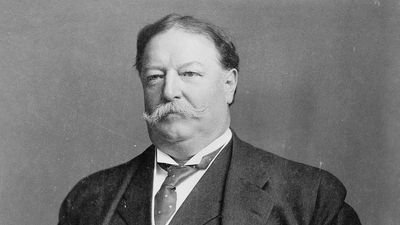
William Howard Taft occupies a unique place in American history.

He was the 27th President of the United States, serving from 1909 to 1913.
He later became the 10th Chief Justice of the United States, serving from 1921 until 1930.
No other American has ever occupied both offices.
But the extraordinary thing about Taft is not merely that he held both positions.
It is that the presidency was arguably not the office he wanted most.
Taft had spent much of his professional life preparing for the judiciary. He was fundamentally a lawyer, judge and constitutional thinker. His temperament was cautious, analytical and institution-oriented.
The presidency demanded something different.
It demanded political aggression.
It demanded coalition management.
It demanded the ability to persuade Congress, manage factions, dominate public debate and sometimes fight political battles before they became institutional crises.
Taft was not naturally built for that environment.
The Supreme Court, however, was different.
There, his legal temperament became an advantage.
This is the central paradox of his life:
The qualities that weakened Taft as a political president helped strengthen him as a judicial leader.
And that is where the deeper story begins.
PART ONE
THE MAKING OF WILLIAM HOWARD TAFT
William Howard Taft was born on September 15, 1857, in Cincinnati, Ohio.
He came from a family deeply connected to law and public service.
His father, Alphonso Taft, was a lawyer, Republican political figure, U.S. Secretary of War and later U.S. Attorney General under President Ulysses S. Grant.
The younger Taft therefore grew up inside a culture where public service, law, education and political responsibility were taken seriously.
Taft graduated from Yale in 1878, second in his class.
He subsequently studied law and was admitted to the bar in 1880.
His early career moved through several legal and judicial positions:
* lawyer;
* prosecutor;
* judge of the Cincinnati Superior Court;
* U.S. Solicitor General;
* judge of the U.S. Court of Appeals for the Sixth Circuit.
By the time he reached national prominence, Taft was already something unusual in American politics:
a professional jurist who happened to possess considerable political connections.
(Miller Center)
PART TWO
THE WOMAN BEHIND THE AMBITION: HELEN “NELLIE” TAFT
One of the most important parts of Taft’s story is frequently overshadowed by his political career:
his wife, Helen Herron Taft, known as Nellie.
They married in 1886.
Nellie was highly educated, intellectually ambitious and politically interested.
Taft personally preferred the judiciary.
Nellie wanted something larger.
She believed her husband was capable of reaching the White House.
That created an interesting tension.
Taft wanted the Supreme Court.
Nellie saw the presidency as a possibility.
This is important because Taft’s journey toward the presidency was not simply the story of a man relentlessly chasing presidential power.
It was partly the story of a talented judge being persuaded to accept a political destiny that was not necessarily his deepest personal ambition.
Miller Center historians note that Taft repeatedly preferred judicial advancement, while Nellie encouraged him toward the presidency. (Miller Center)
THE FIRST LESSON
Sometimes the position a person eventually occupies is not necessarily the position for which his personality is best suited.
That distinction becomes crucial in understanding Taft.
PART THREE
THE PHILIPPINES: THE FIRST GREAT TEST
In 1900, President William McKinley asked Taft to go to the Philippines.
The United States had acquired the Philippines after the Spanish-American War.
Taft became the first civilian governor of the islands in 1901.
This period is essential to understanding the later Taft presidency.
He worked on:
* civil administration;
* courts;
* public education;
* transportation;
* public health;
* government institutions;
* land issues.
He also negotiated with the Vatican concerning large church landholdings and helped facilitate the acquisition and redistribution of substantial church property.
Taft believed that American administration could prepare Filipinos for eventual self-government.
But here lies one of the uncomfortable truths about Taft.
He could be simultaneously administratively reformist and politically paternalistic.
He believed in institution-building, but he did not believe that Filipinos were immediately ready for full self-government.
That contradiction is important.
Taft’s imperial worldview reflected the assumptions of his era: America could govern another people while claiming that it was preparing them for eventual political maturity.
The Philippines would not achieve full independence until 1946.
(Miller Center)
THE DEEPER LESSON
Taft demonstrates that:
Institution-building does not automatically equal political freedom.
A government can build schools, courts, roads and administrative systems while simultaneously maintaining political control over the people it governs.
That is a lesson worth remembering whenever development is discussed without examining sovereignty.
PART FOUR
THEODORE ROOSEVELT AND THE STRANGE SUCCESSION
Taft’s relationship with Theodore Roosevelt is one of the great political relationships in American history.
Roosevelt was energetic, charismatic, confrontational and extraordinarily comfortable with political combat.
Taft was cautious, legalistic and conciliatory.
Yet Roosevelt trusted Taft.
Taft served as Roosevelt’s Secretary of War from 1904 to 1908.
He became one of Roosevelt’s closest advisers.
Roosevelt eventually decided that Taft should succeed him.
The political logic was straightforward.
Roosevelt had promised not to seek another elected term in 1908.
Taft was acceptable to conservatives but had enough Progressive credentials to inherit Roosevelt’s coalition.
Roosevelt therefore invested heavily in Taft’s campaign.
Taft won the 1908 presidential election decisively.
He received 321 electoral votes against William Jennings Bryan’s 162.
(Miller Center)
But here was the fundamental problem:
Roosevelt had chosen Taft because he believed Taft would continue Roosevelt’s political legacy.
Taft, however, was not Roosevelt.
That sounds obvious.
Politically, it was devastating.
PART FIVE
THE WHITE HOUSE: WHEN A JUDGE ENTERED A POLITICAL ARENA
Taft became president on March 4, 1909.
His presidency immediately faced an impossible expectation.
He had to be:
Taft — but also Roosevelt.
That was never going to work indefinitely.
Taft wanted orderly administration.
Roosevelt wanted activist political leadership.
Taft believed government should administer laws effectively.
Roosevelt believed the president should actively shape the national political agenda.
Miller Center’s assessment is particularly useful here: Taft’s executive philosophy was primarily administrative rather than legislative. He was much more comfortable implementing law than personally driving a political reform agenda through Congress. (Miller Center)
That distinction became the source of much of his trouble.
PART SIX
THE PAYNE-ALDRICH TARIFF: THE POLITICAL WOUND
One of Taft’s first major battles involved tariff reform.
Taft had called Congress into special session to reduce tariff rates.
But powerful Republican protectionists resisted.
The final Payne-Aldrich Tariff did not deliver the level of reduction that progressives expected.
Taft nevertheless signed it.
His subsequent praise of the legislation became politically damaging.
Progressives concluded that Taft had betrayed reform.
This was not simply a policy disagreement.
It became a question of trust.
And politics is often less about the policy itself than about whether your coalition believes you still represent it.
(Miller Center)
THE LESSON
A political leader can survive losing a policy battle.
It is much harder to survive losing the confidence of the coalition that put him in office.
PART SEVEN
THE BALLINGER-PINCHOT AFFAIR: THE CRISIS THAT BROKE THE ROOSEVELT ALLIANCE
The second major political disaster was the confrontation involving Interior Secretary Richard Ballinger and conservationist Gifford Pinchot.
The issue involved public lands and conservation.
Pinchot believed the administration was abandoning Roosevelt’s conservation legacy.
He attacked Ballinger.
Taft defended Ballinger and eventually dismissed Pinchot.
The controversy exploded.
Taft was increasingly portrayed as abandoning Roosevelt’s Progressive principles.
Roosevelt became furious.
The friendship deteriorated.
The political relationship collapsed.
The Republican Party began dividing between:
Taft conservatives
and
Roosevelt progressives.
(Miller Center)
THIS WAS MORE THAN A PERSONAL FEUD
This is where a superficial reading of history fails.
The Taft-Roosevelt conflict was not simply:
“Two friends fell out.”
It was a conflict over what the Republican Party should become.
Roosevelt believed the presidency should be an engine of reform.
Taft believed government should operate through established legal and institutional processes.
In other words:
Roosevelt represented political energy.
Taft represented institutional legality.
America needed both.
But the Republican Party could not reconcile them.
PART EIGHT
THE GREAT IRONY: TAFT WAS A STRONGER ANTITRUST PRESIDENT THAN ROOSEVELT IN SOME RESPECTS
Here is something frequently lost in popular accounts of Taft.
The image of Taft as a completely passive conservative is misleading.
His administration aggressively pursued antitrust enforcement.
Miller Center notes that Taft’s antitrust campaign actually exceeded Roosevelt’s in important respects. (Miller Center)
His administration brought numerous antitrust cases, including the famous action against Standard Oil.
This creates an important historical paradox.
Roosevelt accused Taft of betraying progressivism.
Yet Taft’s administration continued significant elements of Roosevelt’s reform agenda.
The problem was not necessarily that Taft abandoned reform altogether.
The problem was that he lacked Roosevelt’s political storytelling ability.
Roosevelt could turn government action into political theatre.
Taft often allowed complicated legal and administrative decisions to speak for themselves.
That was a serious political weakness.
PART NINE
FOREIGN POLICY: “DOLLAR DIPLOMACY”
Taft’s foreign policy also deserves more serious examination.
His administration promoted what became known as Dollar Diplomacy.
The idea was to use American financial and commercial power to advance American strategic interests overseas.
Instead of relying primarily on military intervention, Washington would encourage American investment and financial involvement abroad.
But the policy did not eliminate coercion.
American troops were still used.
For example, Taft sent Marines to Nicaragua when political instability threatened the U.S.-backed government.
His administration also became deeply involved in Central America and the Caribbean.
The policy therefore contained a contradiction:
America wanted to replace bullets with dollars — but sometimes needed bullets to protect the dollars.
(Miller Center)
That is one of the most important strategic lessons from Taft’s foreign policy.
Economic power and military power are not always separate instruments.
They can reinforce one another.
PART TEN
THE 1912 ELECTION: WHEN THE REPUBLICAN PARTY IMPLODED
By 1912, the conflict had become irreversible.
Roosevelt challenged Taft for the Republican nomination.
Taft won the official Republican nomination.
Roosevelt refused to accept defeat.
He created the Progressive Party, popularly known as the Bull Moose Party.
The Republican vote was divided.
Woodrow Wilson won the presidency.
The final outcome is one of the clearest examples in American political history of how internal party division can be more damaging than external opposition.
Taft lost.
Roosevelt lost.
Wilson won.
The Republican Party had effectively defeated itself.
(Miller Center)
THE POLITICAL LESSON
A political movement can possess enormous electoral strength and still destroy itself through internal succession battles.
That lesson is universal.
It applies to political parties, governments, movements, churches, professional organizations and civil society groups.
PART ELEVEN
AFTER THE PRESIDENCY: THE HUMILIATION THAT PRECEDED THE REVIVAL
Taft left office in 1913.
For many former presidents, leaving the White House represents the end of political influence.
For Taft, it became a period of reconstruction.
He returned to Yale and taught constitutional law.
He lectured.
He wrote.
He remained active in public affairs.
He also became an advocate for international peace and supported the idea of a League of Nations.
He had lost the presidency.
But he had not lost his desire to serve.
(Supreme Court of Ohio)
And then came the moment he had wanted for much of his adult life.
PART TWELVE
1921: TAFT FINALLY GETS THE JOB HE WANTED
Chief Justice Edward Douglass White died in 1921.
President Warren G. Harding nominated William Howard Taft to become Chief Justice.
The Senate confirmed him the same day.
Taft took the judicial oath on July 11, 1921.
He had finally reached the office he had wanted for decades.
And something remarkable happened:
Taft became happier.
The political expectations that had weighed on him as president were largely gone.
He was now operating in the environment for which his personality was best suited.
Law.
Institutions.
Procedure.
Constitutional interpretation.
Administration.
Judicial reasoning.
(Supreme Court Historical Society)
PART THIRTEEN
THE CHIEF JUSTICE TAFT: THE PART OF HIS LIFE THAT CHANGED HIS HISTORICAL REPUTATION
Taft was not merely a symbolic Chief Justice.
He became an institutional reformer.
He was deeply concerned about the Supreme Court’s workload.
The federal judiciary was becoming overwhelmed by cases.
Taft understood something that many politicians overlooked:
An institution can possess enormous constitutional authority and still become ineffective if its internal machinery is badly designed.
He pushed for reforms.
In 1925, Congress passed legislation commonly known as the Judiciary Act of 1925, giving the Supreme Court greater discretion over which cases it would hear.
The Supreme Court itself has described Taft as the person mainly responsible for securing this reform. (Supreme Court)
This changed the modern Supreme Court.
The Court became more capable of selecting cases of national importance rather than being forced to hear an overwhelming number of appeals.
PART FOURTEEN
TAFT BUILT THE MODERN JUDICIAL ADMINISTRATIVE MACHINE
Taft also pushed for better administration of the federal judiciary.
At his request, Congress created a conference structure involving senior federal judges to address judicial administration.
That institution eventually developed into the modern Judicial Conference of the United States.
(Supreme Court Historical Society)
This is one of the least appreciated parts of Taft’s legacy.
Presidents receive monuments.
Chief justices receive biographies.
But bureaucratic and institutional reforms often disappear into history.
Taft’s greatest achievement may therefore be something many ordinary Americans never see:
he helped build the machinery through which the federal judiciary operates.
PART FIFTEEN
THE TAFT COURT WAS NOT SIMPLY “LIBERAL” OR “CONSERVATIVE”
The Taft Court was complicated.
Taft wrote 253 opinions during his tenure as Chief Justice, approximately one-sixth of the Court’s decisions during that period. Many reflected a cautious conservative approach to government power. (Miller Center)
Some of its decisions remain controversial.
The Court struck down federal child-labor legislation in Bailey v. Drexel Furniture Co.
It also produced decisions restricting government regulation and labor protections.
In Truax v. Corrigan, Taft’s Court struck down a provision involving labor picketing.
The Court’s jurisprudence therefore reflected a strong concern for constitutional limitations on government power and property rights.
(Miller Center)
Yet the Court also decided important cases involving civil liberties and constitutional rights.
This is why Taft’s judicial legacy cannot simply be reduced to:
“Taft was conservative.”
That is too simple.
The better description is:
Taft believed strongly in constitutional boundaries, judicial authority and institutional stability.
PART SIXTEEN
THE DARKER SIDE OF THE TAFT COURT
A serious biography cannot romanticize Taft.
Some decisions of the Taft Court are deeply uncomfortable from a modern perspective.
The Court upheld racial segregation in certain contexts and accepted constitutional doctrines that permitted substantial state control over racial and social relations.
It also upheld compulsory sterilization in Buck v. Bell, a decision now widely regarded as one of the most disturbing episodes in American constitutional history.
The Court also struck down a minimum-wage law for women.
(Justia Law)
This reveals another important lesson:
Institutional competence does not automatically produce moral correctness.
A highly organized judiciary can still produce decisions that later generations consider profoundly unjust.
That is why institutions require not only procedure but also moral accountability.
PART SEVENTEEN
TAFT AND THE POWER OF THE PRESIDENCY
There is another important dimension to Taft’s judicial thinking.
In Myers v. United States, Taft wrote for the Court in a decision concerning the president’s authority to remove executive officials.
The decision strongly supported presidential removal power.
This is fascinating because Taft had spent four years in the presidency struggling with executive authority.
As Chief Justice, he was now defining the constitutional boundaries of that authority.
In other words:
The former president became one of the men defining what the presidency legally meant.
(Miller Center)
That is an extraordinary transformation.
PART EIGHTEEN
THE HUMAN BEING BEHIND THE INSTITUTIONS
History often reduces Taft to his size.
He was a large man, and his weight became a source of endless public jokes.
At times he weighed more than 300 pounds.
Newspapers and political opponents mocked him.
Stories circulated about him supposedly becoming stuck in the White House bathtub.
But the bathtub story is often repeated with little historical discipline and has become part of American folklore.
The more important truth is that Taft was not particularly ashamed of his physical appearance.
He also enjoyed golf and became the first U.S. president to play the game regularly enough to help popularize it nationally.
His golfing habit, however, became political ammunition against him.
Critics used it to portray him as detached from the seriousness of governing.
(Miller Center)
This tells us something about politics that remains relevant:
public perception can transform an ordinary personal habit into a political weapon.
PART NINETEEN
NELLIE TAFT’S STROKE
Another largely overlooked tragedy occurred during Taft’s presidency.
In 1909, Helen “Nellie” Taft suffered a stroke.
Her speech was impaired.
Yet she remained an important figure in Taft’s political life.
The Tafts’ relationship was unusual.
She was ambitious and politically interested.
He was more cautious.
She pushed him toward the presidency.
But she also suffered the physical and emotional burdens of being the wife of a president under intense political pressure.
(Miller Center)
The Taft story therefore is not simply about a man who reached power.
It is also about the family system surrounding power.
PART TWENTY
THE “THINGS RARELY SAID” ABOUT TAFT
1. TAFT MAY HAVE BEEN BETTER SUITED TO POWER THAN TO POLITICS
This is perhaps the most important distinction.
Power and politics are not identical.
Taft understood institutions.
He understood law.
He understood administration.
But political leadership requires something else:
the ability to mobilize people around a narrative.
Roosevelt possessed that gift.
Taft did not possess it to the same degree.
This does not mean Taft was unintelligent.
It means he was operating in a profession whose emotional requirements were different from his natural temperament.
2. HIS “FAILURE” AS PRESIDENT WAS PARTLY A JOB-MISMATCH PROBLEM
Imagine appointing the world’s best judge to run a political campaign every day.
The person may be brilliant.
But brilliance in one environment does not guarantee excellence in another.
Taft was essentially a judge sitting in the presidency.
He wanted decisions to be rational.
Politics rarely works that way.
Politics involves:
* emotion;
* loyalty;
* symbolism;
* timing;
* faction;
* public perception;
* personal relationships;
* coalition management.
Taft often underestimated these forces.
3. ROOSEVELT NEEDED TAFT — AND THEN COULD NOT ACCEPT TAFT
This is the tragedy of their relationship.
Roosevelt needed someone who could inherit his coalition.
But the man he chose had his own temperament.
The moment Taft became president, he ceased being Roosevelt’s subordinate.
He became president of the United States.
That changed the relationship fundamentally.
The political lesson is profound:
When you elevate someone to succeed you, you must be prepared for the possibility that succession creates independence.
4. TAFT DID NOT DESTROY ROOSEVELT’S LEGACY AS COMPLETELY AS HISTORY SOMETIMES SUGGESTS
The popular story is:
Roosevelt = reform.
Taft = betrayal.
That is incomplete.
Taft pursued antitrust action.
His administration enacted significant regulatory legislation.
His problem was not simply policy.
It was political communication and coalition management.
He could accomplish things without receiving political credit for them.
That distinction matters enormously in leadership.
5. TAFT UNDERSTOOD SOMETHING MANY POLITICIANS DO NOT: INSTITUTIONS OUTLIVE PERSONALITIES
Roosevelt was a personality.
Taft became an institution builder.
His work on the judiciary had consequences long after his political reputation had faded.
The Judiciary Act of 1925 and judicial administration reforms helped reshape the federal judicial system.
(Supreme Court)
That is the difference between:
building a political brand
and
building a durable institution.
6. TAFT’S BIGGEST SUCCESS CAME AFTER HIS BIGGEST FAILURE
This is perhaps the most psychologically important part of his life.
He lost the presidency.
His former mentor became his political enemy.
His party fractured.
His reputation suffered.
But he did not disappear.
He returned to teaching.
He continued public service.
He remained intellectually active.
And eventually he obtained the position he had wanted all along.
This is a powerful lesson:
A political defeat does not necessarily mean the end of a person’s public usefulness.
Sometimes failure redirects a person toward the role in which he can make his greatest contribution.
7. TAFT’S LIFE DESTROYS THE IDEA THAT EVERY SUCCESSFUL LEADER MUST BE CHARISMATIC
Taft was not Roosevelt.
He was not an extraordinary orator.
He was not a theatrical political performer.
He was not a natural political fighter.
Yet he became:
* President;
* Chief Justice;
* federal appellate judge;
* Solicitor General;
* Secretary of War;
* governor of the Philippines;
* professor of constitutional law.
His life therefore demonstrates another form of leadership:
institutional leadership.
Not every leader needs to dominate a room.
Some leaders change the machinery inside the room.
PART TWENTY-ONE
TAFT AND THE NIGERIAN LESSON
This is where Taft becomes especially interesting for Nigeria.
Nigeria frequently evaluates leaders according to personality.
Who is strong?
Who is charismatic?
Who commands crowds?
Who speaks forcefully?
Who controls political structures?
But Taft’s life suggests another question:
Who builds institutions that continue working after the leader has left?
That question is much harder.
A politician can build a political structure around himself.
An institution-builder creates structures that survive him.
Taft’s judicial career demonstrates this distinction.
LESSON ONE: KNOW THE OFFICE YOU ARE BUILT FOR
Taft wanted the Supreme Court.
He became president.
The presidency brought him enormous prestige but considerable frustration.
The Supreme Court brought him professional satisfaction.
The lesson is simple:
Do not confuse status with suitability.
The highest office is not necessarily the right office for every talented person.
LESSON TWO: SUCCESSION IS DANGEROUS
Roosevelt’s succession strategy produced one of the most spectacular political ruptures in American history.
The lesson for political movements is clear:
A successor must be allowed to become himself.
If the predecessor expects the successor to remain permanently loyal to the predecessor’s personality, conflict is almost inevitable.
LESSON THREE: POLITICAL CAPITAL CAN DISAPPEAR QUICKLY
Taft entered office with Roosevelt’s enormous political capital.
Within a few years, the Republican Party was divided.
That teaches an uncomfortable truth:
Inherited popularity is not the same thing as personal political legitimacy.
A successor has to earn his own coalition.
LESSON FOUR: COMMUNICATION IS GOVERNANCE
Taft’s administration could point to genuine accomplishments.
But Roosevelt was much better at making the public understand what those accomplishments meant.
This is a critical modern leadership lesson.
If government does something important but cannot explain it:
the political opposition gets to define the story.
LESSON FIVE: BUILD SYSTEMS, NOT JUST LOYALISTS
Taft’s most durable contribution came through institutional reform.
He worked to make the judiciary function more efficiently.
This is a powerful lesson for any country.
A nation should not depend entirely on:
* the wisdom of one president;
* the integrity of one minister;
* the courage of one judge;
* the competence of one permanent secretary.
The goal should be to build systems where good performance becomes institutional rather than accidental.
LESSON SIX: LAW WITHOUT JUSTICE CAN BECOME A TECHNICAL MACHINE
Taft’s judicial career also contains a warning.
Institutional efficiency is not enough.
A court can be orderly.
Its procedures can be sophisticated.
Its judges can be brilliant.
And yet its decisions can still produce injustice.
The history of the Taft Court’s racial, labor and social decisions demonstrates why institutional legitimacy must ultimately be connected to justice and human dignity. (Justia Law)
LESSON SEVEN: A COUNTRY NEEDS BOTH ROOSEVELTS AND TAFTS
This may be the deepest lesson.
Roosevelt represented:
energy, political mobilization, reform and executive activism.
Taft represented:
law, administration, institutional stability and judicial discipline.
A functioning democracy needs both.
Too much Roosevelt without Taft can produce institutional instability.
Too much Taft without Roosevelt can produce administrative stagnation.
The real challenge is not choosing one personality type.
It is building a system in which:
political energy operates within institutional boundaries.
PART TWENTY-TWO
THE FINAL YEARS
By the late 1920s, Taft’s health was deteriorating.
He resigned as Chief Justice in February 1930.
He died on March 8, 1930, in Washington, D.C., at the age of seventy-two.
He was buried at Arlington National Cemetery.
His funeral was the first presidential funeral broadcast on radio.
His death closed an extraordinary career.
But his historical significance did not disappear.
He remained the only person who had occupied both the American presidency and the chief justiceship.
(Miller Center)
FINAL AUTOPSY OF WILLIAM HOWARD TAFT
If we strip away the jokes about his weight, the bathtub mythology, the Roosevelt feud and the simplistic description of him as a failed president, we discover a much more complicated man.
Taft was:
ambitious but not naturally political.
powerful but uncomfortable with political combat.
conservative in important respects but also an aggressive antitrust president.
an imperial administrator who nevertheless believed in institution-building.
a defeated president who became a consequential Chief Justice.
a political failure in some respects who became an institutional success.
And perhaps most importantly:
he was a man who discovered that the office he actually wanted was not the office that history initially gave him.
THE GREAT TAFT PARADOX
Taft entered the White House carrying Roosevelt’s expectations.
He left it carrying the scars of political disappointment.
He entered the Supreme Court carrying something different:
experience.
The presidency had taught him the limits of political power.
The judiciary gave him the opportunity to build institutional power.
And he used that opportunity.
That is why the fairest assessment of Taft is not:
“He was a bad president.”
Nor is it:
“He was an underrated genius.”
The truth is more interesting.
William Howard Taft was a highly capable institutionalist placed in a political office that demanded a different temperament.
His presidency exposed his weaknesses.
His chief justiceship exposed his strengths.
And together, the two careers reveal one of the most important principles of leadership:
The person who is unsuccessful in one arena may become extraordinary when placed in the institution that matches his deepest abilities.
Taft’s life therefore leaves us with a final question.
When we judge leaders, are we judging their intelligence?
Their character?
Their political skill?
Their institutional competence?
Their ability to communicate?
Or simply whether they succeeded in the particular office they occupied?
Because William Howard Taft teaches us that these are not the same thing.
He lost the presidency.
He won the institutional battle.
And history ultimately gave him something almost no other American received:
the experience of sitting on both sides of constitutional power — as the man who exercised it and as the judge who interpreted its limits.
That is the real story of William Howard Taft.
— Ibrahim BUNU
ibrahimbunu2520@gmail.com
Sources used for the historical reconstruction
The principal references are the University of Virginia’s Miller Center, the Supreme Court Historical Society, the U.S. Supreme Court, and Cornell’s Legal Information Institute. These sources are particularly useful because they allow Taft to be examined both as a political figure and as a jurist, rather than relying on the familiar popular biography alone.