By Otunba (Dr.) Abdulfalil Abayomi Odunowo
When institutions are given room to do their job, the figures will, sooner or later, speak louder than politics
In Nigeria, criticism of government usually moves faster than proof of progress.
That’s understandable. Nigerians have lived through decades of broken promises, weak institutions and corruption. Citizens therefore have every right to scrutinise those entrusted with public power.

But accountability has to cut both ways.
When government falls short, we should say so plainly. When institutions deliver, intellectual honesty requires us to admit it.
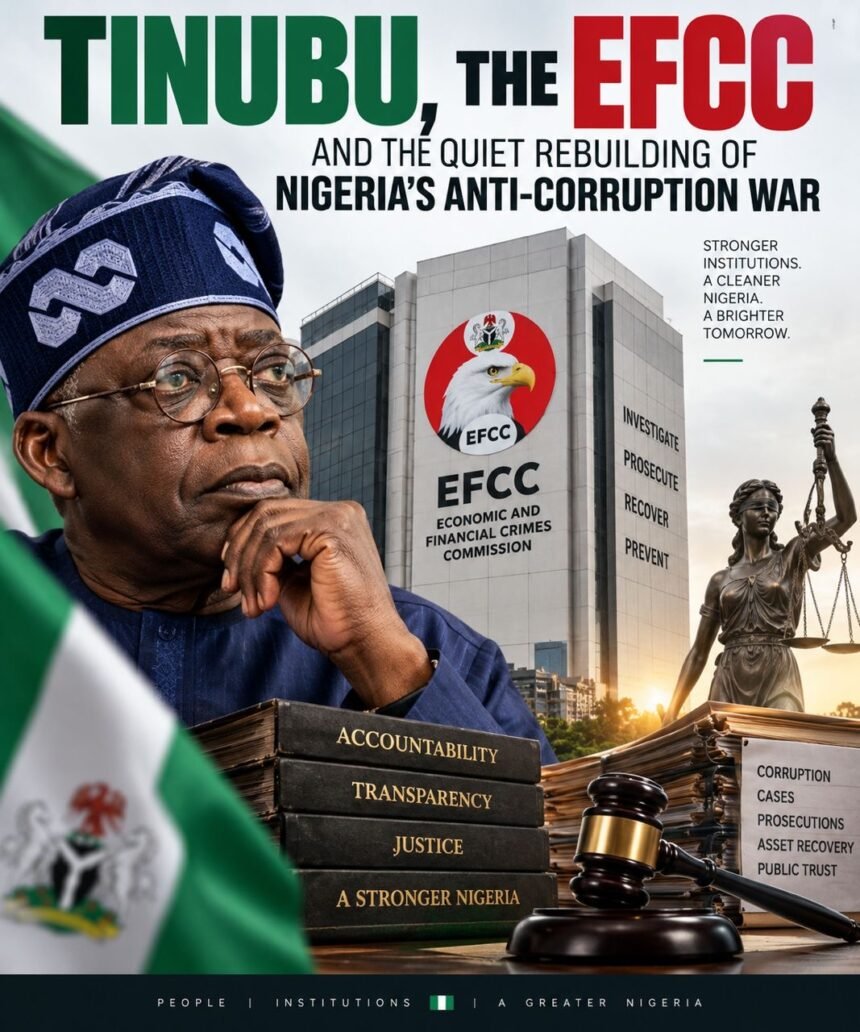
The recent performance figures attributed to the Economic and Financial Crimes Commission under President Bola Ahmed Tinubu’s administration deserve exactly that kind of scrutiny.
Between October 2023 and July 2026, the EFCC reported receiving 49,673 petitions, investigating 39,615 cases, filing 14,476 cases before the courts and securing 10,872 convictions.
It also reported recovering more than ₦1.233 trillion and $684.48 million, aside from recoveries in other currencies and assets.
These are not trivial numbers.
They point to investigations carried out, prosecutions pursued, convictions secured and vast financial resources recovered for the Nigerian people.
THE NUMBERS MERIT ATTENTION
Politics often tempts us to read every development through the lens of whether we support or oppose the government of the day.
Corruption, though, ought not to wear a party badge.
Neither should the fight against it.
If an anti-corruption agency investigates thousands of cases, secures thousands of convictions and recovers assets worth hundreds of billions of naira, Nigerians should be willing to recognise that progress regardless of political affiliation.
The EFCC’s reported record during this period suggests that something consequential is taking shape within Nigeria’s anti-corruption architecture.
That doesn’t mean corruption has vanished.
It certainly doesn’t mean the EFCC is now flawless.
But it does mean the institution is producing measurable outcomes that deserve public notice.
TINUBU DESERVES SOME CREDIT
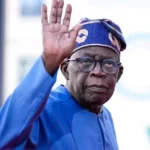
President Bola Ahmed Tinubu should receive fair credit for the institutional climate in which these results have been achieved.
Presidents are often blamed, and rightly so, when agencies under their watch become ineffective, politically compromised or institutionally weakened.
Fairness, then, demands the same standard in reverse: presidents should also get credit when key institutions show stronger capacity to carry out their statutory responsibilities.
The appointment of Ola Olukoyede as EFCC Chairman placed the Commission under leadership that has stressed investigation, prosecution, asset recovery and prevention.
But EFCC leadership alone doesn’t explain everything.
An anti-corruption institution needs political breathing room.
It needs resources.
It needs institutional support.
And, above all, it needs confidence that politically sensitive investigations won’t simply be shut down because powerful interests are involved.
That is where the Tinubu administration must be judged.
WHEN POWERFUL NAMES REACH THE COURTROOM
Perhaps one of the most telling aspects of the EFCC’s recent activity is not just the volume of cases prosecuted but the stature of the individuals whose matters have reached the courts.
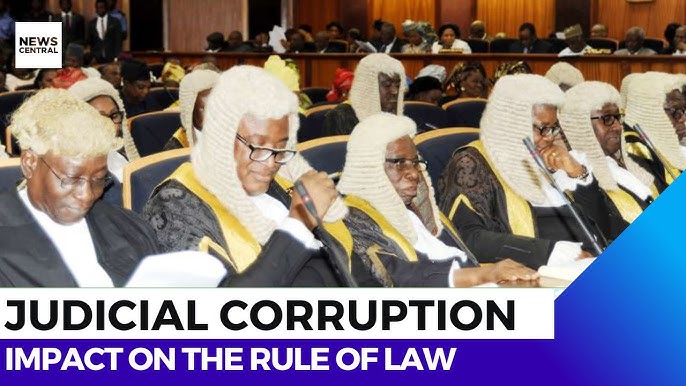
The Commission has reported pursuing 36 high-profile cases involving former governors, former ministers, heads of government agencies, figures from the banking and financial sectors and other senior officials.
Among the cases drawing notable public attention are proceedings involving former Kogi State Governor Yahaya Bello, former Anambra State Governor Willie Obiano, former Kwara State Governor Abdulfatah Ahmed, former Central Bank Governor Godwin Emefiele, and former Attorney-General of the Federation Abubakar Malami.
One crucial distinction must be made.
Being charged is not the same thing as being convicted.
Every defendant is entitled to the constitutional presumption of innocence and the opportunity to defend himself or herself before an independent court.
Even so, an important democratic principle is at stake:
Public office must never become a shield against investigation.
A functioning republic must be able to ask hard questions of governors, ministers, bankers, heads of agencies and other powerful individuals whenever credible allegations concerning public resources arise.
No democracy can credibly fight corruption if there is a class of Nigerians considered simply too powerful to investigate.
FROM PERSONALITY TO INSTITUTIONS
One of Nigeria’s long-running problems has been the over-personalisation of government.
We too often judge governance almost entirely through the personality of the President.
But nations that endure are built by institutions.
A President will leave office.
A minister will leave office.
An EFCC chairman will, in time, leave office.
What must remain are institutions capable of functioning regardless of who occupies those offices.
President Tinubu therefore has a chance to leave behind something potentially more enduring than individual prosecutions: a stronger anti-corruption institution.
That would be a legacy worth defending.
The real accomplishment will not simply be that the EFCC recovered ₦1.233 trillion or hundreds of millions of dollars during one period.
The bigger achievement would be creating an environment where anyone contemplating the diversion of public resources understands that the likelihood of detection, prosecution and recovery has risen dramatically.
RECOVERY MUST ALSO MEAN ACCOUNTABILITY
There is, however, another obligation.
Recovering public money is only half the task.
Nigerians must be able to track the money.
Where did recovered funds come from?
How much was recovered?
Where were the funds lodged?
What became of recovered properties?
How were forfeited assets disposed of?
And, ultimately, how did those recoveries benefit the Nigerian people?
The stronger the EFCC becomes, the greater the transparency that should be expected from the Commission itself.
The Tinubu administration should therefore institutionalise even more robust public reporting of recovered assets.
That would turn anti-corruption enforcement into public confidence.
THE NEXT PHASE MUST BE PREVENTION
There is another lesson Nigeria has to learn.
The best anti-corruption agency is not necessarily the one that makes the highest number of arrests.
It is the institution that helps build a system in which corruption becomes steadily harder to commit.
Technology can play a decisive role.
Government procurement should become more transparent.
Beneficial ownership of companies seeking public contracts should be easier to establish.
Suspicious transactions should be detected more quickly.
Public expenditure should become increasingly traceable.
Artificial intelligence and data analytics can potentially identify unusual payment patterns long before billions vanish from government accounts.
The anti-corruption battle must therefore move, bit by bit, from arrest and recovery to detection and prevention.
COMMENDATION WITHOUT COMPLACENCY
Supporting President Tinubu does not mean pretending that every problem in Nigeria has been solved.
It hasn’t.
Supporting the EFCC does not mean pretending the Commission cannot improve.
It can, and it must.
Constructive support means recognising progress while demanding higher standards.
The reported EFCC figures provide grounds for cautious optimism.
49,673 petitions.
39,615 investigations.
14,476 court cases.
10,872 convictions.
More than ₦1.233 trillion recovered.
More than $684 million recovered.
Behind every statistic, there should ultimately be one aim: protecting the resources belonging to approximately 200 million Nigerians.
TINUBU’S GREATER OPPORTUNITY
President Bola Ahmed Tinubu came into office promising difficult reforms and institutional renewal.
Economic reforms will naturally dominate discussions about his presidency because Nigerians feel the economy every single day.
But presidential legacies are not built on economics alone.
They are also built on institutions.
If President Tinubu can leave Nigeria with an EFCC that is stronger, more professional, technologically sophisticated, politically independent and bold enough to investigate both friend and foe, that will amount to an important contribution to Nigerian democracy.
The President should therefore continue to give the Commission the political and institutional space it needs to operate.
And the EFCC must repay that confidence by proving one principle beyond dispute:
There must be no sacred cows.
Not APC.
Not PDP.
Not ADC.
Not former governors.
Not serving ministers.
Not politically connected businessmen.
Not friends of government.
Not opponents of government.
The law must recognise only evidence.
That, in the end, is how President Tinubu can turn today’s impressive numbers into tomorrow’s institutional legacy.
Nigeria does not simply need another anti-corruption campaign.
Nigeria needs an anti-corruption system strong enough to outlast the President who helped strengthen it.
If the momentum reflected in these figures continues, history may yet record that one of the less celebrated but deeply consequential achievements of the Bola Ahmed Tinubu presidency was helping Nigeria’s anti-corruption institutions rediscover their teeth.
And that would be an achievement worthy of commendation.
Otunba (Dr.) Abdulfalil Abayomi Odunowo
National Chairman, Asiwaju Ahmed Tinubu Support Group (AATSG)