By Sola Adeola
Governance Analyst, Abuja
Bluelinescom@gmail.com
08071313200
Leadership is often measured by the power a person wields, the wealth he accumulates, or the influence he commands. Yet history teaches us that the greatest leaders are remembered not for what they possessed but for the lives they transformed.
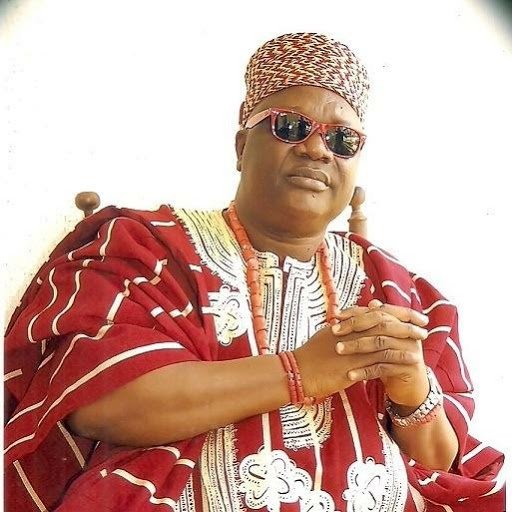
It is against this backdrop that His Royal Majesty, Oba Adedokun Omoniyi Abolarin, Aroyinkeye I, the Orangun of Oke Ila in Ifedayo Local Government Area of Osun State, deserves national attention and admiration.
A first class traditional ruler, lawyer, educator and renowned humanitarian, Oba Abolarin has redefined the meaning of kingship by demonstrating that the highest calling of a monarch is service to humanity.
In a country where millions of children remain out of school because their parents cannot afford the cost of education, the Orangun of Oke Ila chose not to lament the problem. Instead, he built a solution.

On 24 September 2014, he founded Abolarin College, a completely free full boarding secondary school established with one bold mission to fight poverty through education.
What makes the institution extraordinary is its admission philosophy. Across Nigeria, admission into good schools is often determined by wealth and privilege. At Abolarin College, the reverse is true. The school deliberately seeks brilliant children from genuinely indigent families, irrespective of tribe, religion or state of origin.
No child is rejected because of poverty. Rather, poverty is precisely why the child is welcomed.
This philosophy is revolutionary.
It is an emphatic declaration that the circumstances of a child’s birth should never determine the opportunities available to that child.
Education at Abolarin College is genuinely free. Students pay no tuition. They receive free boarding accommodation, meals, uniforms, shoes, books, internet access, computer education and a nurturing environment where learning flourishes. They are also exposed to entrepreneurship, agriculture, leadership development and multilingual education in English, Yoruba and French, equipping them for responsible citizenship in a global society.
Today, the vision is producing measurable results.
The college has educated hundreds of young Nigerians. Scores of its graduates have progressed to universities across Nigeria, while its pioneer graduating class recorded an impressive performance in the Unified Tertiary Matriculation Examination, with several students securing opportunities to continue their education.
These are not ordinary statistics.
They represent children who might otherwise have been denied the opportunity to fulfil their potential simply because their parents were poor.
Today, many are university students preparing to become doctors, lawyers, engineers, teachers, entrepreneurs, public servants and professionals in different fields.
Perhaps the most inspiring aspect of this remarkable story is that Oba Abolarin does not simply fund the school.
He teaches there.
Before ascending the throne, he had a background in teaching and education and later became a lawyer. Despite the enormous responsibilities associated with his position as a first class traditional ruler, he still walks into classrooms to teach, mentor and counsel his students.
His presence reminds every child that leadership is not about status but about service.
This is servant leadership at its finest.
These children are not his biological sons and daughters, yet he has become a father to hundreds of them. He has restored dignity to families that had lost hope and has given vulnerable children an opportunity to rewrite their future.
His throne has become a platform for social transformation.
In the days of our forefathers, kings were revered and honoured. Their subjects served them, respected their authority and looked to the throne for protection, justice and leadership. The Oba occupied a position of great dignity, and service naturally flowed from the people to the king.
But Oba Abolarin has turned that expectation around.
He has chosen to serve the people who would ordinarily be serving him.
Rather than sit on his throne and expect his subjects to bring their service to him, he has chosen to use his throne to serve humanity. He identified poverty as one of the greatest enemies confronting his people and chose education as his weapon against it.
What a remarkable expression of leadership.
Those who should be serving him, he has chosen to serve.
Those who should be looking up to the king for direction now have a king who is looking out for them.
He has shown that the greatness of a king is not measured by how many people bow before him, but by how many lives he is able to lift.
His crown gives him authority, but his service gives that authority meaning.
This is the kind of kingship that deserves national recognition. A king who could demand service has chosen instead to serve. A king who could enjoy the privileges of the throne has chosen to use the throne as an instrument for fighting poverty and transforming the lives of children.
Oba Abolarin has shown us that the highest expression of kingship is not to be served, but to serve.
His philosophy of kingship is evident not merely in speeches but in the daily reality of Abolarin College. His commitment demonstrates that traditional institutions can become powerful instruments for human development when those entrusted with them see leadership as a responsibility to serve.
His vision has also attracted the confidence and support of individuals and organisations that recognise the value and integrity of his humanitarian mission. This itself teaches an important lesson. When leaders demonstrate genuine commitment to humanity, others are often inspired to join them in creating lasting change.
The humanitarian vision of Oba Abolarin deserves to be viewed beyond Osun State and beyond Nigeria.
His philosophy reflects the thinking of some of the world’s greatest advocates of education and social transformation. Nelson Mandela understood the transformative power of education. In the same spirit, Oba Abolarin has chosen to invest not merely in possessions but in human beings.
Like great philanthropists around the world who have devoted their resources and influence to expanding educational opportunities, he understands that educating one child can transform an entire family, while educating generations of children can transform a nation.
Yet what distinguishes him is the unique combination of roles he plays.
He is simultaneously a traditional ruler, lawyer, educator, founder, benefactor, mentor and classroom teacher.
It is rare to find a monarch who not only establishes a school for disadvantaged children but also personally teaches and mentors those children.
Imagine if every traditional ruler in Nigeria established or supported an institution like Abolarin College.
Imagine if every wealthy Nigerian sponsored the education of children whose only disadvantage was being born into poverty.
Imagine if public office holders measured success not merely by the number of projects commissioned but also by the number of young lives transformed.
Nigeria’s educational landscape would look very different.
Oba Abolarin has demonstrated that the fight against poverty cannot be won through rhetoric alone. It requires deliberate investment in people, especially children.
Every graduate of Abolarin College represents a victory over poverty, ignorance and hopelessness.
For this reason, I respectfully call on the appropriate authorities responsible for recommending and conferring Nigeria’s National Honours to give serious consideration to His Royal Majesty, Oba Adedokun Omoniyi Abolarin, Aroyinkeye I, for a Presidential National Honour.
Such recognition would not merely honour one exceptional monarch. It would affirm that service to humanity remains one of the highest expressions of patriotism.
It would also encourage other traditional rulers, political leaders, business executives and philanthropists to invest in education as one of the most enduring legacies they can leave behind.
This kind of service deserves to be celebrated while the person behind it is still alive to witness the nation’s appreciation.
We must develop a culture of recognising Nigerians who quietly solve problems, lift people out of poverty and transform communities without waiting for political appointments or government funding.
When future generations write the history of compassionate leadership in Nigeria, the name of Oba Adedokun Omoniyi Abolarin deserves to stand prominently among those who used their positions not for personal glory but for human transformation.
His crown commands respect.
His compassion commands admiration.
But it is the lives he has rescued from the limitations imposed by poverty through the power of education that will remain his greatest legacy.
In my considered opinion, His Royal Majesty, Oba Adedokun Omoniyi Abolarin, Aroyinkeye I, deserves national recognition, not simply because he is a king, but because he has used his kingship to restore hope where hope might otherwise have disappeared.
A crown may be inherited.
A throne may be occupied.
But a legacy of transformed human lives must be earned.
Oba Abolarin has earned his.