

By Okoi Obono-Obla
Every Nation is an Artificial Construct: Reassessing the “Colonial Mistake” Narrative in Nigeria
The notion that nations are “natural” entities, organically arising from homogeneity of race, ethnicity, or ancestry, is a historical fallacy. Political communities across the globe are invariably products of contingent processes—conquest, migration, intermarriage, federating unions, and amalgamations—rather than primordial purity. Indeed, no nation is undilutedly homogeneous, nor is any race or ethnic group insulated from centuries of interbreeding, displacement, and adaptation to economic, climatic, and political pressures.
Against this backdrop, the argument advanced by ethnic separatists in Nigeria—that the country is merely a colonial contrivance imposed by Britain through the amalgamation of diverse groups—fails to withstand comparative historical scrutiny. Nigeria’s formation is not exceptional; it is emblematic of the broader trajectories by which modern states have emerged. The United Kingdom itself illustrates this reality: an amalgam of English, Scots, and Welsh peoples, with distinct genealogical traditions and cultural lineages. Scottish mytho‑historical accounts even trace their dynastic origins to Egypt, underscoring the complex interweaving of identities that underpins national formation.

This perspective aligns with Benedict Anderson’s theory of Imagined Communities, which posits that nations are not primordial but “imagined political communities” sustained by shared narratives, symbols, and institutions. Members of a nation will never know most of their compatriots, yet they conceive of themselves as part of a collective whole. Similarly, Ernest Gellner’s modernist theory of nationalism underscores that nations are products of modernity, arising from the functional demands of industrial society for cultural standardization. In Gellner’s words, “It is nationalism which engenders nations, and not the other way round.” Nigeria’s artificiality, therefore, is not a defect but a universal condition of nationhood.
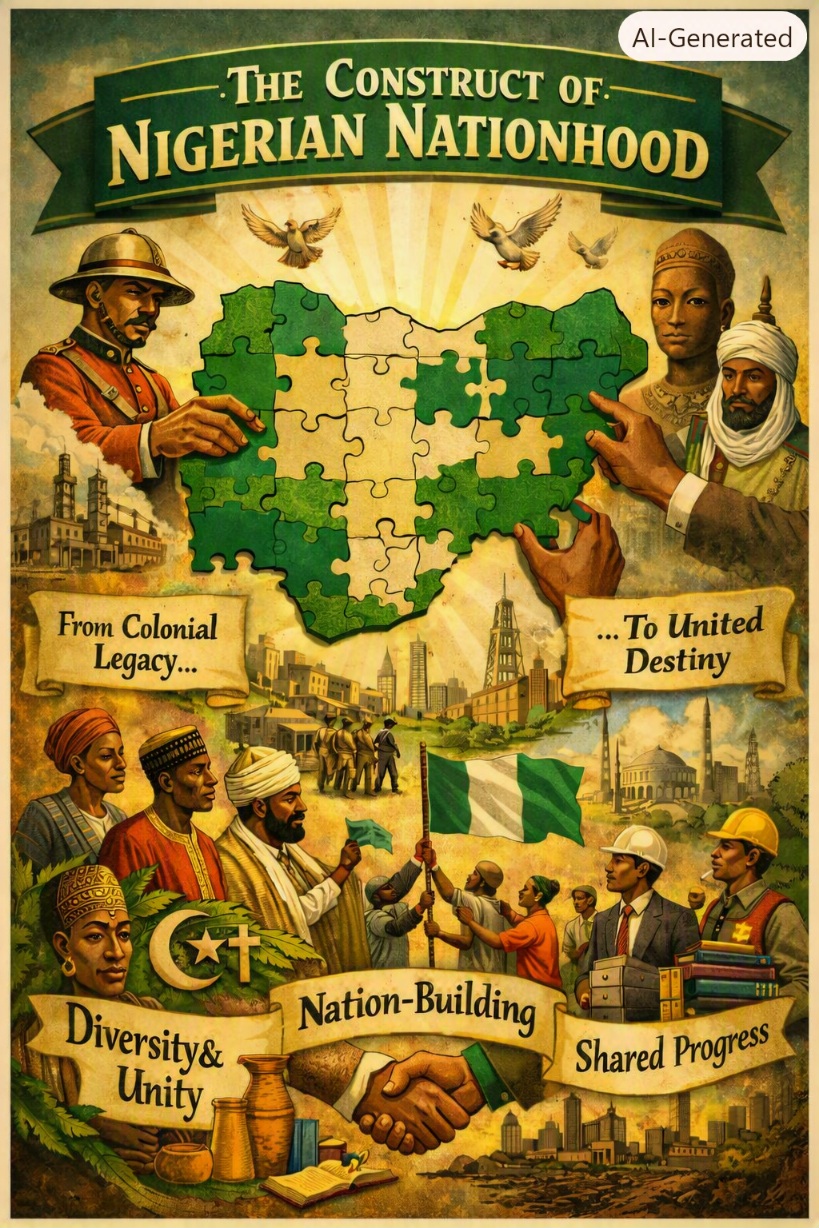
To predicate Nigeria’s dissolution on the grounds of artificiality is historically naïve. All nations are artificial constructs. What sustains them is not mythical bloodline purity or primordial unity, but the collective will to forge a shared destiny. The imperative, therefore, is not nation‑breaking but nation‑building—cultivating institutions, fostering civic solidarity, and nurturing a common commitment to coexistence.
Conclusion: The discourse on Nigeria’s legitimacy must shift from colonial determinism to civic responsibility. Nations endure not because they are “natural,” but because their peoples choose to sustain them. Nigeria’s future lies in deepening its project of nationhood, rather than retreating into the illusory comfort of ethnic exclusivism. Anderson and Gellner remind us that the artificiality of nations is their very strength: it allows diverse peoples to imagine, construct, and sustain a common destiny.