By Eneojo Herbert Idakwo
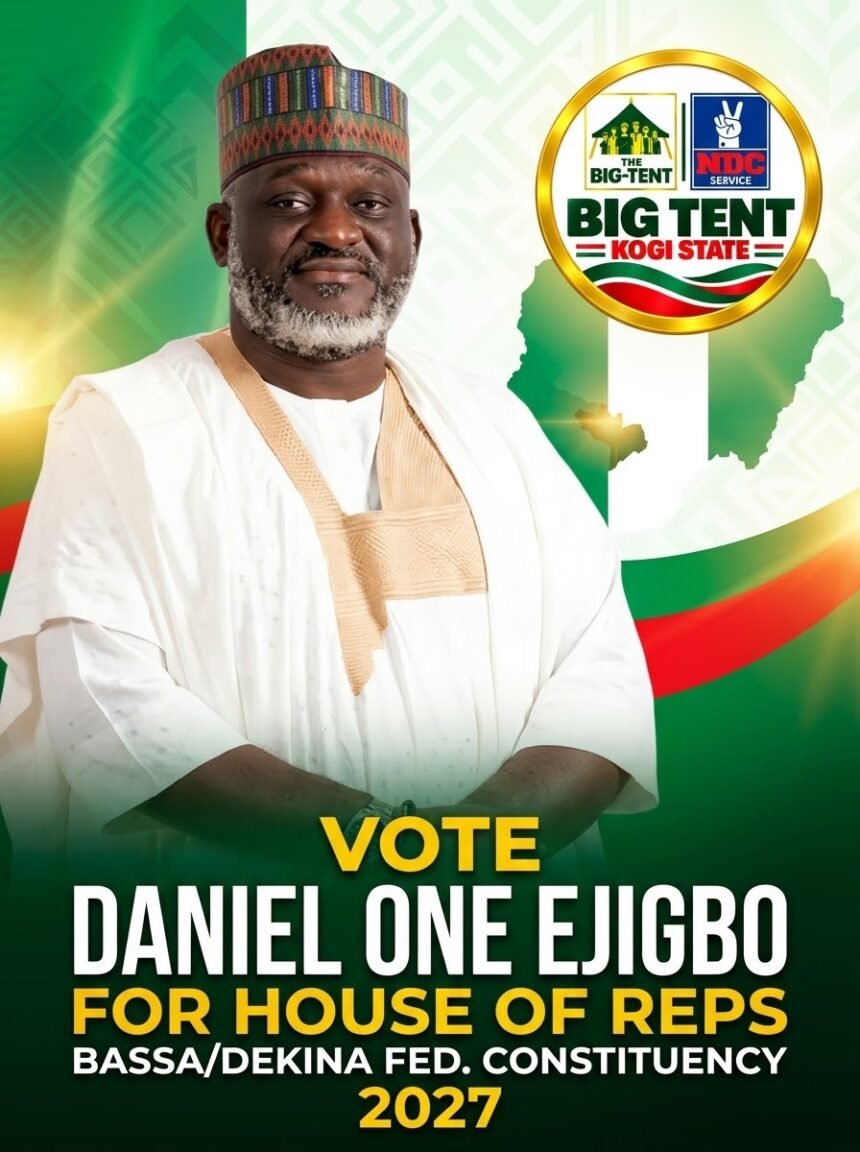
In a constituency where the expectations of the people have long exceeded the returns from political representation, the search for a new kind of leadership is becoming increasingly urgent. Bassa/Dekina Federal Constituency needs a representative who understands the workings of government, appreciates the realities of grassroots life, and knows how to translate political access into development. It is against this backdrop that Daniel One Ejigbo is positioning himself as a new chapter for the constituency.
Ejigbo’s political appeal rests on a combination of institutional experience, administrative exposure and grassroots development work. He is not approaching the contest as a learner in the business of governance. Having spent nearly 11 years within the National Assembly system, working around legislative strategy, lobbying and rural development, he has acquired an understanding of how government works, how legislative priorities are shaped, and how constituency interests can be advanced within the corridors of power.
That experience matters. Legislative representation requires more than occupying a seat or making speeches. It demands the ability to engage ministries, committees, agencies, development partners and other institutions whose decisions influence the lives of ordinary citizens. A representative who understands these processes is better positioned to pursue projects, influence policy and build partnerships that serve the constituency.
His experience in executive administration further strengthens this proposition. As Commissioner for Rural Development in Kogi State between 2018 and 2023, serving two terms, Ejigbo was involved in coordinating rural development interventions across the state’s 21 local government areas. The portfolio placed him at the intersection of infrastructure, community needs, rural access and agricultural development, areas that remain central to the economic survival of Bassa and Dekina communities.
His role in the World Bank-backed Rural Access and Agricultural Marketing Program (RAAMP) in Kogi State is particularly relevant. Rural roads are more than physical infrastructure. For farming communities, they determine whether produce reaches markets on time, whether transport costs remain manageable, whether healthcare is accessible and whether rural economies can grow beyond subsistence. Experience with a programme of this nature provides useful insight into the relationship between infrastructure, agriculture and local economic development.
For Bassa/Dekina, where agriculture, rural enterprise and human capital hold enormous potential, these are important considerations in assessing a candidate’s capacity.
Ejigbo’s candidacy under the Nigeria Democratic Congress (NDC) also brings an opportunity to reconsider what constituents should demand from their elected representatives. Political loyalty and party identity may influence electoral choices, but the quality of representation must ultimately be measured by performance, accessibility, accountability and the ability to advance the collective interest.
The constituency needs a voice that can speak with confidence in Abuja and remain answerable to the people at home. It needs representation that understands the difference between legislative visibility and legislative value, between political activity and measurable progress.
Daniel One Ejigbo is presenting himself as a candidate whose experience can bridge these two worlds. His challenge is to turn that experience into a clear, credible and people-centred agenda for Bassa and Dekina, one that addresses roads, agriculture, education, youth opportunities, rural development and the long-standing expectations of his people.
Elections offer communities an opportunity to reconsider their choices and direction. For Bassa/Dekina, this may be an opportunity to place experience, competence and a genuine understanding of grassroots development at the centre of the conversation.
A new chapter does not begin with a campaign slogan. It begins with the people making a deliberate choice about the kind of leadership they want and the standard by which they intend to judge it.
Daniel One Ejigbo is making the case that Bassa/Dekina can do better, and that experience, when properly applied, can become a pathway to meaningful grassroots impact.