By Okoi Obono-Obla
One reason governance in Nigeria is wobbling is the tendency to pressure leaders in government to pander to whims and caprices, or to govern according to each person’s own idea of how things should be done.
Yet, at the end of the day, when the leader who has been given the mandate falls, history falls squarely on that leader alone — on nobody else.
Our skewed perspective of government is to exert pressure on it to embark on projects that are bigger than its capacity to handle, or on projects that are best suited for the private sector to undertake, with government providing regulatory support and an enabling environment.

This is one reason abandoned or half-completed projects litter the landscape. Playing to the gallery to impress sycophantic cheerleaders has, over the years, pushed governments to embark on ill-conceived or poorly thought-out projects that have no bearing on improving the macro-economy of the state.
Examples abound, but for clarity, let me mention just a few: the Calabar International Convention Centre, Tinapa, the Obudu International Cargo Airport, the flyover at Odukpani, and the Monorail.
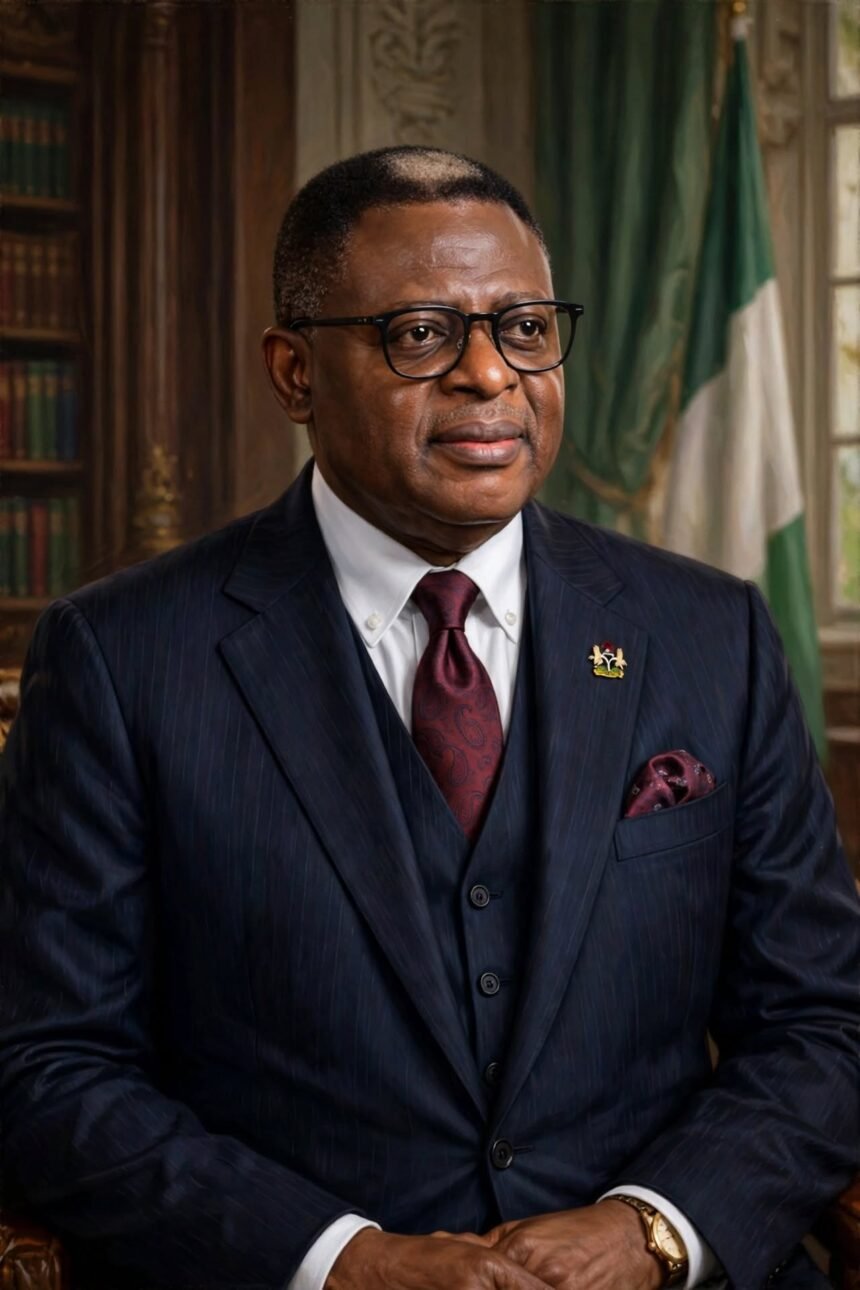
I am glad that Governor Bassey Edet Otu exhibited the traits of his own man. On his assumption of office in May 2023, he inherited an economy in serious fiscal distress — heavily indebted, with low revenue, stalled assets, and demoralised institutions.
It would have worsened further if he had made the mistake of succumbing to the pressure of portfolio businessmen and emergency contractors who usually throng Government Houses at the beginning of successive administrations with fancy, well-crafted but hollow proposals for signature projects — proposals which in the end turn into nothing but white elephant projects that add no value, leaving government worse off and in debt.
Instead, he resisted that pressure. He undertook a meticulous process of reordering the economy of the state, addressing the fundamental problems, and revamping and resuscitating it to position the economy on a sound footing for the next destination.
That is why, at the inauguration of the Cross River State APC Campaign Council for the 2027 general elections, his scorecard did not read like a list of new white elephants. It read like the record of a man who first stopped the bleeding, then cleared the ground.
1. Fiscal Responsibility: Discipline Before Display
Domestic debt reduced by over ₦70 billion — from over ₦204 billion to about ₦132.3 billion as of March 2026 — with zero new loans taken.
IGR jumped from ₦21.1 billion in 2022 to ₦46.3 billion in 2024.
This is not glamorous. You cannot commission debt reduction with a ribbon. But every naira saved from debt service is a naira that can now go to salaries, gratuities, roads, schools, and productive investment. That is what fiscal discipline means in practice.
2. Asset Recovery & Security: Reclaiming What Belonged To The People
Tinapa reclaimed from AMCON. Nearly ₦1 billion recovered from Etung Cocoa Estates. Security significantly improved.
These were not new projects. They were recoveries. A government that cannot protect and recover its own assets has no business building new ones.
3. Public Welfare & Reform: Putting People Back On The Payroll Of Dignity
Employment embargo lifted. Over 3,000 local government workers restored to payroll. Gratuities delayed for nearly two decades paid.
This is the human side of reordering the economy. A state cannot preach prosperity while its own workers are abandoned and its retirees are left to die waiting for what they earned.
4. Infrastructure & Growth: Revival, Not Abandonment
Obudu Cargo Airport runway rebuilt. Cally Air expanded. Obudu Ranch and Garment Factory revived via Public-Private Partnerships. Major ICT and agricultural expansion undertaken.
With due respect, those who complain that Governor Bassey Otu has no projects are mistaken. The disagreement is not really between projects and no projects. It is between revival and rehabilitation on one hand, and new mega-projects on the other.
Revival is cheaper, faster, and less risky than starting from zero. And in this case, it is wiser — because it allows the private sector to do what the private sector does best, while government provides regulation, stability, and an enabling environment.
That is the essence of the People First Agenda: fix the foundation first, then raise the roof.
“You do not change a farmer who has cleared the farm just when it is time to plant. You do not abandon a builder who has laid the foundation when it is time to raise the roof.”
Continuity is critical for sustainable development.
The test of this strategy will not be in the first term alone, but in whether fiscal discipline now translates into productive investment, jobs, and shared prosperity in the second term.
That is the next destination. From economic recovery to shared prosperity.
Let’s move Cross River from economic recovery to shared prosperity!
@ Obono-Obla is a lawyer ; Public Analyst and former Special Assistant to the President.