by Prof. Adeyemi Ademowo
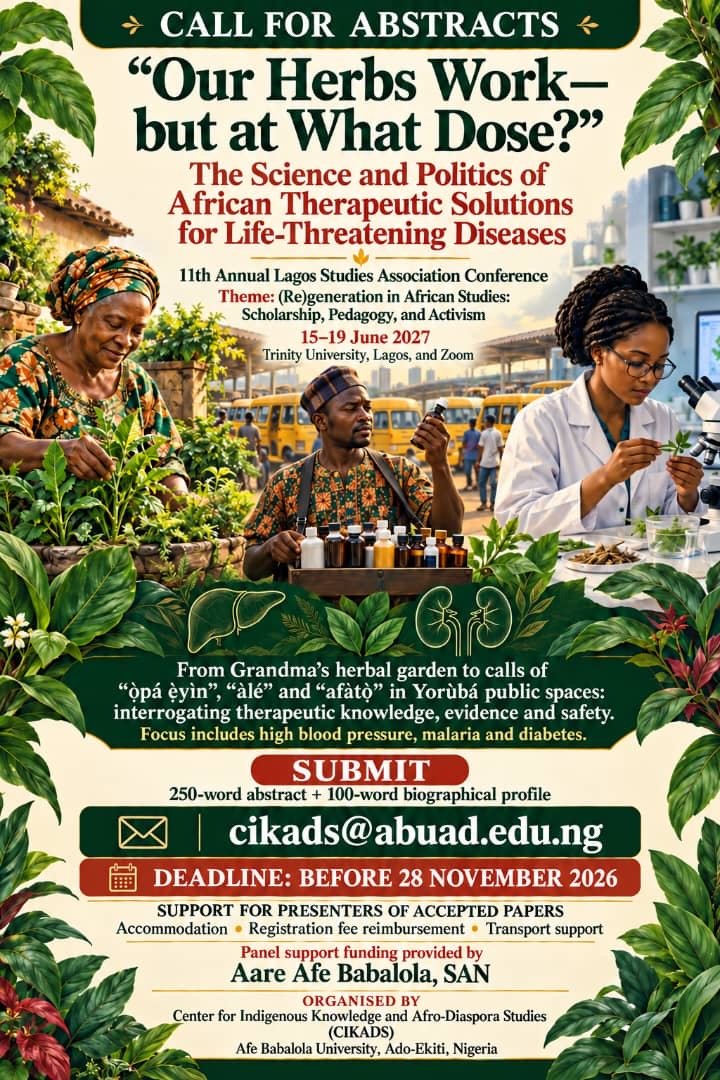
11th Annual Lagos Studies Association Conference
Theme: (Re)generation in African Studies: Scholarship, Pedagogy, and Activism
15–19 June 2027 | Trinity University, Lagos, and Zoom
*Panel Description*
From Grandma’s herbal garden to the calls of “ọ̀pá ẹ̀yìn”, “àlé” and “afàtọ̀” in motorparks, markets and other Yorùbá public spaces, herbal preparations form part of everyday encounters with illness, bodily wellbeing and the search for relief. Across diverse African settings, therapeutic knowledge circulates through household care, apprenticeships, community networks, practitioners’ consulting rooms and commercial markets. Accompanying these preparations are inherited instructions, personal testimonies, sales pitches and declarations of potency. But when we say “our herbs work”, what precisely do we mean, and how do we know?
This panel interrogates the science and politics of African therapeutic solutions for life-threatening diseases, with special but not limited attention to high blood pressure, malaria and diabetes. It treats “solutions” as propositions to be examined rather than evidence of established cures. It invites contributions that take indigenous therapeutic knowledge seriously while asking searching questions about effectiveness, composition, preparation, dosage, treatment duration and safety.

The question of dose provides a practical and conceptual starting point. How are quantities determined, communicated and adjusted? What happens when instructions such as a handful of leaves, a cup of a preparation or treatment until symptoms subside encounter demands for precise measurement and reproducible outcomes? How do knowledge holders account for differences in ingredients, extraction methods, patients’ circumstances and concurrent treatments? What constitutes potency, and how are claims of therapeutic benefit assessed beyond personal testimony and commercial persuasion?
The panel also examines the politics of therapeutic authority. Who defines credible evidence, sets standards and authorises recognition? How do indigenous knowledge holders negotiate relationships with biomedical researchers, regulatory institutions and commercial actors? What forms of collaboration enable rigorous investigation while recognising intellectual contributions, protecting community interests and distributing benefits fairly? How might both institutional dismissal and uncritical appeals to cultural authenticity obstruct meaningful inquiry?
Grandma’s herbal garden and the motorpark marketplace offer connected entry points into these debates. The former invites attention to household experimentation, women’s expertise and intergenerational transmission; the latter foregrounds public performance, therapeutic advertising, accessibility and trust. Their relationship to laboratories, clinics and regulatory institutions opens questions about how knowledge is translated, tested, standardised, commercialised and regenerated.
We welcome interdisciplinary contributions grounded in particular preparations, documented practices, historical research, ethnographic encounters, laboratory investigations, clinical studies or critically examined experiences of therapeutic use. Collaborative contributions involving scholars, biomedical researchers and indigenous therapeutic knowledge holders are especially encouraged. The panel’s practical orientation centres on examining concrete claims and evidence rather than promoting products.
*Possible Topics for Papers*
– Therapeutic claims concerning high blood pressure, malaria, diabetes and other life-threatening diseases.
– Potency, dosage, preparation methods and standardisation.
– Liver and kidney safety, adverse effects and herb–medicine interactions.
– Grandma’s herbal garden, women’s expertise and intergenerational knowledge.
– Motorpark hawking, testimonials, therapeutic advertising and public trust.
– Indigenous concepts of illness, healing, effectiveness and treatment limits.
– Biomedical validation, regulation and the politics of scientific authority.
– Collaborative research, knowledge ownership and equitable benefit sharing.
– Commercialisation, therapeutic accountability and communication of uncertainty.
*Submission Guidelines*
Please submit a 250-word abstract and a 100-word biographical profile to cikads@abuad.edu.ng.
*Submission deadline*: Before 28 November 2026
Submissions are welcome from scholars, researchers and indigenous therapeutic knowledge holders, including collaborative contributions.
*Support for Accepted Papers*
Presenters of accepted papers will receive accommodation, reimbursement of conference registration fees, and transport support.
(Panel support funding provided by Aare Afe Babalola, SAN)
*Organised by:*
Center for Indigenous Knowledge and Afro-Diaspora Studies (CIKADS), Afe Babalola University, Ado-Ekiti, Nigeria