By Okoi Obono-Obla
In my earlier post titled Yakurr Unity in Diversity: Why I Focus on Ugep and The True Role of the Onun Eko, I attempted to situate the institution of Onun Eko within its proper historical context.
This elicited a vital clarification from Assisine Ogban, the renowned traditional historian and cultural anthropologist from Agwagwune in Biase Local Government Area, who always provides deeper insights whenever I write on historical and anthropological issues concerning Ugep, Yakurr and the Cross River Basin generally.
On the origin and meaning of the title, Chief Ogban stated:
“Thank you, my brother. ONUN EKOR is an Agwagwune word and its meaning is well defined by the function of the office (WAR). Onun is a singular word, referring to one person in authority. Inun is the plural word, referring to many Chiefs with different authorities and institutional functions.
There are different categories of ‘Onun’ and ‘Inun’:
1. Onun Usor
2. Onun Etogbor
3. Onun Ima
4. Onun Egob
5. Onun Ebrambi
6. Onun Ibomi
7. Onun Abu, etc.
And each is in accordance with your specific function.”
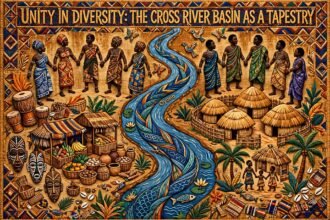
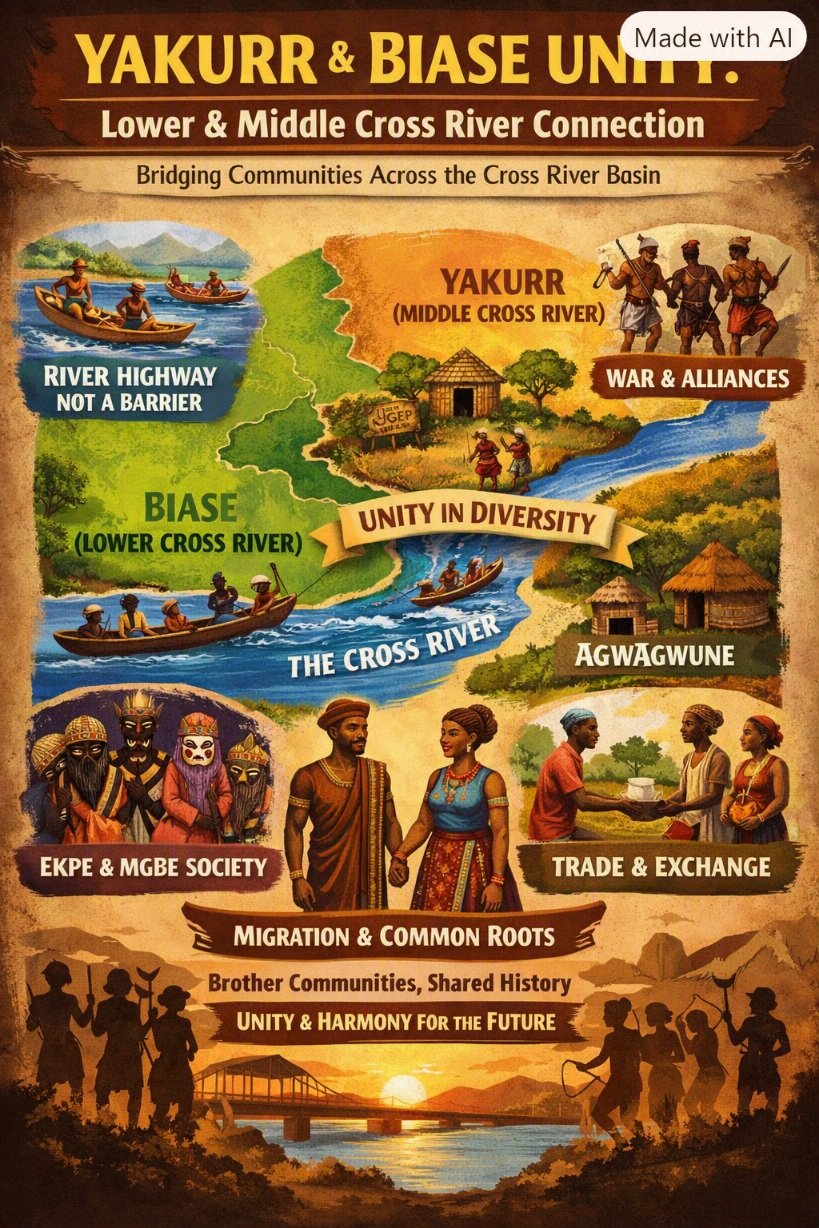
This authoritative explanation situates our history correctly within the Lower and Middle Cross River continuum. Ugep and Yakurr as a whole belong to the Middle Cross River cultural cluster, while Agwagwune and Biase belong to the Lower Cross River cluster. Yet, they were never separate worlds.

The Strongest Proof of Unity: The Incest Taboo
The most profound evidence of this deep connectedness lies in our own customary law.
In the immediate past, our ancestors strictly forbade any intimate relationship between a person from Ugep and a person from Agwagwune. Such a relationship with the opposite sex was considered a taboo; indeed, it was outlawed, regarded as incestuous, and forbidden.
Why? Because the two communities did not see themselves as neighbours, but as blood brothers – children of the same ancestry. You cannot marry your own blood.
Although the advent of westernization and Christianity has drastically eroded this customary practice, its historical significance remains powerful. It shows that our forebears had established a sociological order based on consanguinity, not just proximity.
Forces Behind This Striking Acculturation
This level of acculturation between seemingly different communities was driven by:
1. The Cross River as a Unifying Highway: The river facilitated trade, migration, and constant contact between the riverine Lower Cross River (Agwagwune) and the agrarian Middle Cross River (Ugep).
2. Warfare and Military Alliance: The shared institution of Onun Ekor – the War Chief – was a product of mutual defence pacts against slave raiders and external aggression.
3. The Ekpe/Mgbe Regulatory System: A common system of governance, justice, and diplomacy that made a chief in Agwagwune recognizable and respected in Ugep.
4. Economic Symbiosis and Intermarriage: Centuries of trade in fish, salt, yams and palm oil, cemented by inter-community kinship ties, created one integrated economy and culture.
It is therefore clear to every discerning person that the historical, sociological, and anthropological connectedness between Agwagwune and Ugep, and between Biase and Yakurr, is profoundly rooted in antiquity.
This is the cordiality and brotherhood which we must now resurrect, re-enact, and recalibrate in modern times for our betterment – promoting harmonization, unity, peace, and integration for development.