

By Okoi Obono-Obla
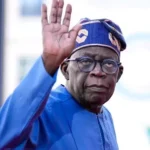
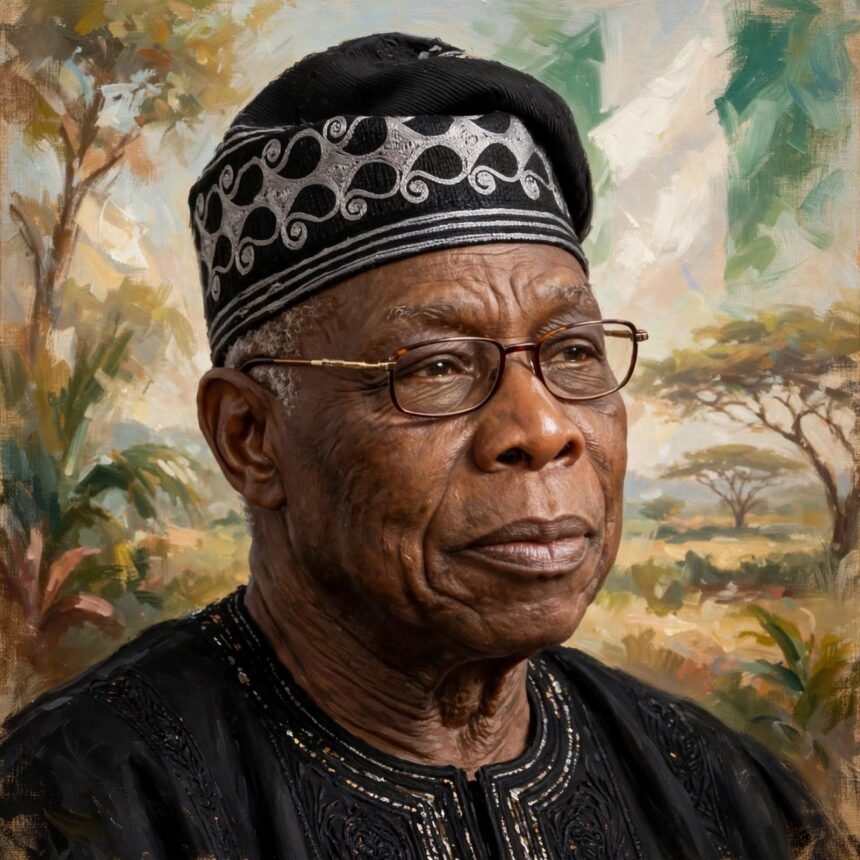
Former President Olusegun Obasanjo’s recent claim at the Financial Times Africa Summit that President Bola Tinubu’s reforms have made Nigeria the “poverty capital of the world” is economically flawed, historically inaccurate, and dangerously shortsighted.
First, the arithmetic is wrong. Obasanjo argues that because the naira moved from N500 to N1,500 to a dollar, every Nigerian has been made 300 percent poorer. That is not economics; that is rhetoric. Devaluation does not impoverish a nation by the percentage of the currency movement. What it does is correct a distorted price. For years, Nigeria operated a multiple exchange rate regime where a privileged few accessed dollars at N500 while the real economy — importers, manufacturers, students, small businesses — paid N800, N1,000 and more on the parallel market. The N500 rate was a fiction. Unifying the rates did not create poverty; it exposed the poverty that subsidized exchange rates were hiding.
Second, the “poverty capital” label is lazy analysis. Nigeria has been contending for that title since 2018, long before the current reforms, precisely because we refused to reform. You cannot subsidize fuel, subsidize the naira, subsidize electricity that is not supplied, borrow to pay salaries, and then claim that stopping those subsidies is what made us poor. We were already poor. The World Bank’s poverty headcount for Nigeria has been rising since 2015. Reform did not invent it.

This is where India provides the complete refutation of Obasanjo’s position.
India was, for half a century, the true poverty capital of the world. From independence until 1991, it followed the same model Obasanjo appears to romanticize: state control, import substitution, overvalued currency, license raj, and massive subsidies in the name of the poor. The result was what economists called the Hindu rate of growth — 3.5 percent — and over 400 million people in abject poverty.
In 1991, facing a balance of payments crisis not unlike Nigeria’s in 2023, India did what Tinubu is now doing. It devalued the rupee sharply, removed import licensing, ended industrial licensing, and opened to trade and foreign investment. At that time, Indian opposition leaders said exactly what Obasanjo is saying today: you have impoverished Indians overnight.
History judged them wrong.
Three decades of market-based reforms dramatically reduced poverty and expanded India’s middle class. Extreme poverty fell from 16.2 percent in 2011 to 2.3 percent in 2023. At one point, 138 million Indians were raised above the poverty line in just seven years. India’s GDP went from a poor, slow-growing economy to the third largest in the world by purchasing power parity and today the fastest-growing major economy. India’s deeper integration with the global economy — trade rising from 17 percent of GDP in 1991 to 60 percent — unleashed the creation of new jobs and higher-paying jobs, which is what actually takes people out of poverty, not cheap dollars for the elite.
India moved from politics of poverty to politics of prosperity because it had the courage to endure the short-term pain of reform.
Nigeria is in 1991 moment. The pain is real. Inflation is high. Purchasing power has been squeezed. No serious person denies that. But to argue that the correction itself is the disease is to confuse the chemotherapy with the cancer.
The real question Obasanjo should have asked in London is not whether devaluation is painful — it is — but whether Nigeria can ever become prosperous without it. India answered that question: No.
Tinubu’s reforms will not be judged by the naira rate on the day of devaluation, but by whether, like India, we follow through with the second and third order reforms — power sector viability, port and logistics efficiency, security of farms and supply chains, education and skills, and targeted transfers to the poorest while the economy adjusts.
To call reform a path to poverty because of temporary hardship is to ensure Nigeria never leaves poverty. Obasanjo presided over one reform moment himself. He should know better.