By Okoi Obono-Obla
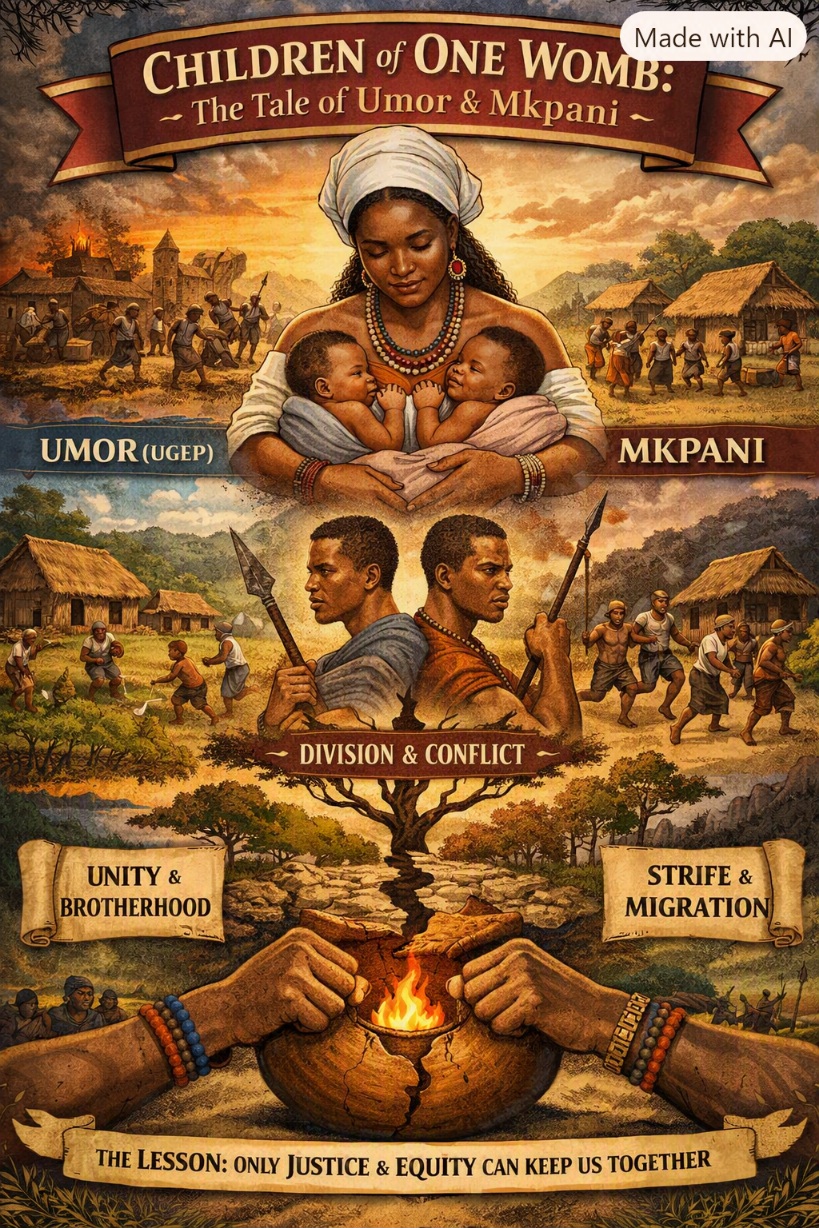
In the beginning, Umor and Mkpani were children of the same womb. Their story is an allegory of our common humanity – how one people can split and become two towns, and how human beings often indulge in bitter and unhealthy politicking in the struggle for what is available in every community.
As Aristotle taught us long ago, man is by nature a political animal – zoon politikon. He observed that human beings can only find fulfillment by living together in the polis, the organized community. Yet it is precisely within this community that our most complex contradictions emerge.
This is what David Easton captured in his classic definition of politics as the “authoritative allocation of values” in a society. Politics, for Easton, is the process by which a community decides who gets what, when, and how. In every human community, resources – including land and other factors of production – are limited, while wants are unlimited. Every segment of that community seeks something from the common patrimony in order to sustain itself. When that struggle for allocation is managed without distributive and equitable justice, men engage one another in a deadly manner, and quarrels and bitterness inevitably ensue.

The story of Umor and Mkpani illustrates this eternal conundrum.
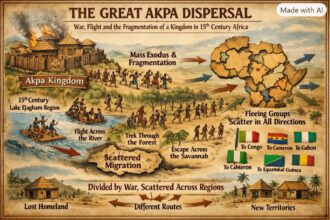
The first wave of migrants from Umorwen – comprising Umor, Idomi and Yakurr-Ibe, also known as Lekanakpakpa or Akpa – were forced to flee their ancestral homeland around Lake Ijagham, in what is today the South West Province of Cameroon. This was in about the first quarter of the 15th century, when constant raids by Portuguese and Arab slave merchants ravaged the land and created grave insecurity. That conflagration disintegrated their country, and the people took the painful decision to migrate to somewhere they could find peace and security.
When these migrants arrived in Ukpawen, in present-day Ijiman community in Ugep, they probably met the Aro people. This is evident in the name of the settlement they founded. The original name was Ukpawen, but it was the Aro who changed it to Iji-ma, which means “Give me a machete.”
There is also Ijiman in Agoi Ekpo and in Adim. Could it be that the Aros were present in all these territories which today fall within Biase and Yakurr Local Government Areas of Cross River State? But that is a story for another day.
What is central to our story is the genesis of the conflict that split Umor, now Ugep, and Yakurr-Ibe, now Mkpani. Like children of one womb, the children of these communities played together. But as is usual with human beings living in the polis, their play soon descended into pranks, and those pranks degenerated into a deadly conflict.
That conflict triggered another wave of migration – the movement that led to the founding of the present-day Mkpani community.
Conclusion
The tragedy of Umor and Mkpani is the tragedy of all political communities. It reminds us that from a single ancestry, scarcity and the failure of fair leadership can create lasting divisions. When leaders fail to understand politics as Easton defined it – as a moral responsibility to ensure the authoritative but just allocation of values – brother turns against brother. Aristotle warned us that without virtue and justice in the polis, man, though a political animal, becomes the worst of all animals. The lesson from the split of Ugep and Mkpani is that only distributive and equitable justice can keep children of the same womb together.