By Okoi Obono-Obla
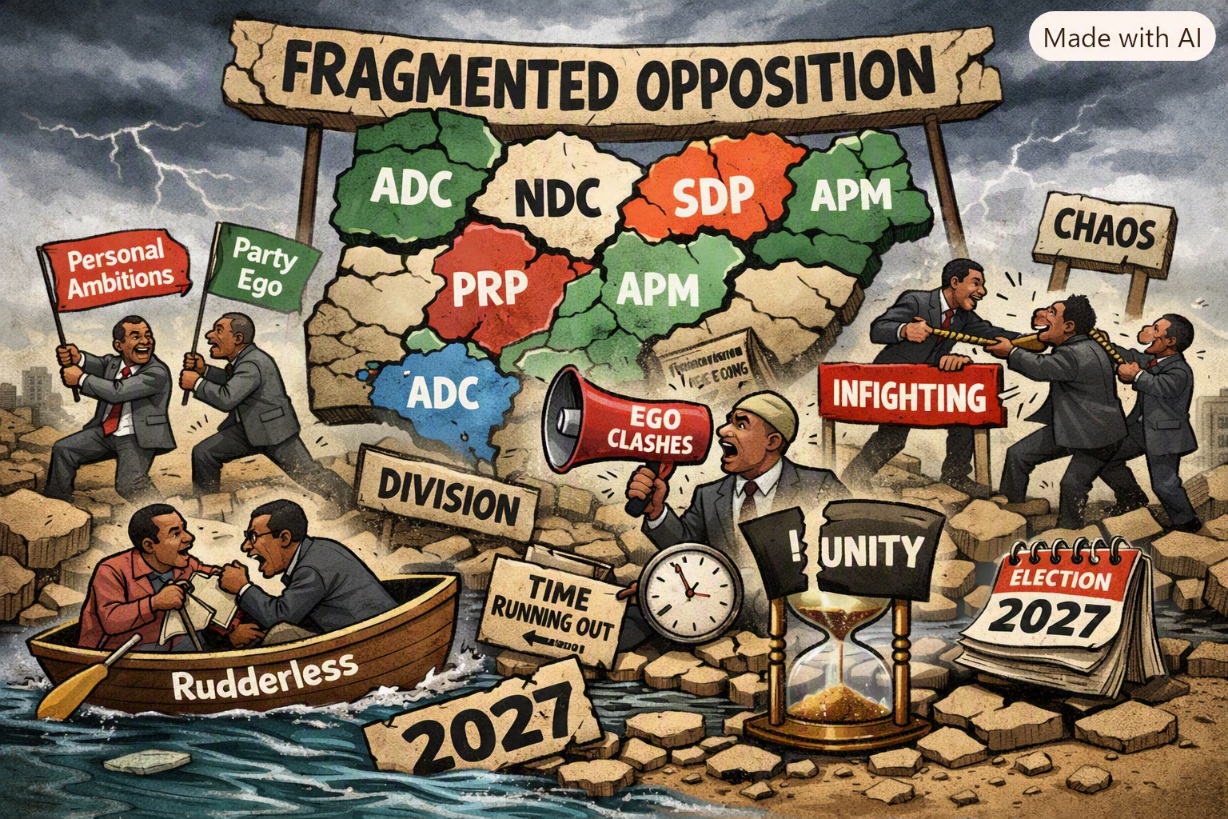
The scenario earlier forecasted concerning the division within the African Democratic Congress (ADC) has now glaringly unfolded. The crisis erupted when members of the opposition coalition moved en masse into the party, supplanted its leadership, hijacked its structures, and installed their own executives. This internal conflict has reached a new height with the nomination of presidential candidates by rival factions.
On 24 May 2026, the Dumebi faction held its national convention in Abuja and adopted its 2023 presidential candidate, Dumebi Kachikwu, as its flagbearer for the 2028 presidential election. Mr. Kachikwu, from Delta State in the South-South geopolitical zone, has consistently dismissed the Senator David Mark faction as opportunistic usurpers and vowed never to allow them to take control of the party.
Meanwhile, the Senator David Mark faction is holding its presidential primaries today, 24 May 2026, to select its candidate for the 2027 elections. The contenders include Atiku Abubakar, Rt. Honourable Rotimi Amaechi, and Mohammed Hayatu-Deen. This development suggests that the ADC may forward two presidential candidates to the Independent National Electoral Commission (INEC), as stipulated by Section 29(1) of the Electoral Act 2026.
INEC’s Likely Interpretation of Section 29:
Section 29(1) of the Electoral Act requires political parties to submit the names of their candidates to INEC within a stipulated timeframe. However, the law presumes that such submission comes from a single, recognized leadership of the party. In the case of factional disputes, INEC traditionally relies on judicial pronouncements and the party’s constitution to determine which faction has the legitimate authority to nominate candidates. Given the Federal High Court’s restraining order against the Senator David Mark faction, INEC may be compelled to reject any candidate submitted by that faction, unless the order is overturned on appeal. This interpretation would align with INEC’s duty to uphold the rule of law and avoid recognizing parallel candidacies that could undermine electoral integrity.
Complicating matters further, the Federal High Court in Abuja, presided over by Justice Joyce Abdulmalik, has restrained the Senator David Mark faction from holding any convention, congress, conference, or meeting for the purpose of nominating candidates or electing executives. Despite this ruling, the faction has proceeded with its primaries, deepening the party’s internal crisis.
Conclusion:
In conclusion, the ADC faces a dire future. The distractions and divisions within its ranks may prove to be a significant albatross on its performance in the 2027 general elections, leaving the party vulnerable at a critical moment in Nigeria’s political landscape. INEC’s interpretation of Section 29 will be pivotal, and unless the factions reconcile or the courts provide clarity, the ADC risks entering the elections with weakened legitimacy and fractured support.