
By Okoi Obono-Obla
Lagos: A Unique Entity in Nigeria’s Constitutional Evolution:
Lagos has always held a distinctive place in Nigeria’s constitutional and political history. In 1861, Lagos was formally annexed by Britain and became the Colony of Lagos, decades before other parts of present-day Nigeria came under British control. The British completed the conquest of the Northern Protectorate around 1900 and the Southern Protectorate by 1902. These two protectorates were administered separately from Lagos, which remained a colony on its own.
On January 1, 1914, the British colonial administration under Governor-General Sir Frederick Lugard amalgamated the Colony of Lagos, the Protectorate of Northern Nigeria, and the Protectorate of Southern Nigeria into a single entity known as the Colony and Protectorate of Nigeria. Lagos served as the administrative capital of this new colonial state.
When regionalism was introduced in 1946 (not 1945, as sometimes misstated) through the Richards Constitution, Nigeria was divided into three regions: Northern, Western, and Eastern. Lagos, however, was treated separately and later designated as the Federal Capital Territory, never being part of the Western Region. Alhaji Musa Yar’Adua indeed served as Minister of Lagos Affairs until the military coup of January 15, 1966.
Following the coup, General Aguiyi Ironsi abolished Nigeria’s federal structure through Decree No. 34 of 1966, introducing a unitary system and replacing regions with “groups of provinces.” On May 27, 1967, General Yakubu Gowon created 12 states from the former regions and provinces, and Lagos was carved out as Lagos State, with Ikeja as its capital.
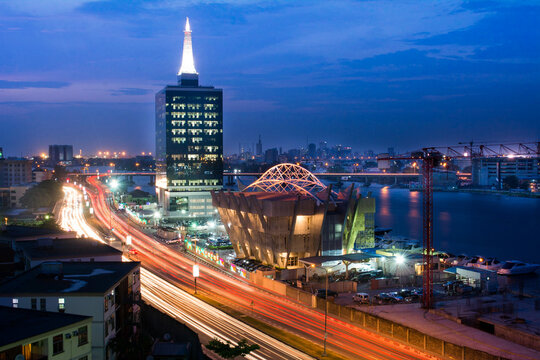
From 1861 through the military era, Lagos was consistently treated as unique in constitutional arrangements. In the post-1999 democratic era, Nigeria adopted the informal division into six geopolitical zones, with Lagos placed in the South-West. Yet Lagos remains more than a regional entity—it is a miniature Nigeria, a melting pot of all ethnic groups, and today functions as the economic capital of Nigeria, boasting one of the largest economies in Africa.
Given this history, it is neither unusual nor improper for any Nigerian president to prioritize infrastructural development in Lagos. Investments in Lagos—whether in ports, transport corridors linking the East, Midwest, Southeast, and beyond—are investments in Nigeria itself. Lagos’ mosaic of peoples and its role as the nation’s economic hub make it a reflection of Nigeria’s unity and diversity.
Conclusion:
Allegations that development in Lagos is sectional or parochial ignore the city’s unique constitutional history and its central role in Nigeria’s economy. Lagos is Nigeria, and Nigeria is reflected in Lagos. To invest in Lagos is to invest in the nation.