By Ibrahim Bunu
Ibrahimbunu2520@gmail.com
PART TWO: THE FINAL AUTOPSY OF BABANGIDA’S LEGACY, THE UNTOLD STORY BEHIND THE INTERVIEW AND THE QUESTIONS NIGERIA STILL Has NOT ANSWERED
TL;DR — THE CONVERSATION IS NOT THE HISTORY

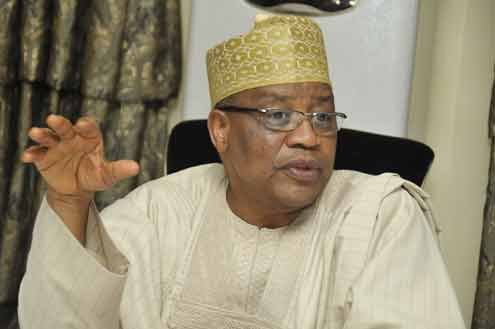
General Ibrahim Badamasi Babangida has spoken again.
And Nigerians are listening.
They should.
But there is a danger in listening to history through the voice of the man who made it.
A former ruler naturally remembers events from the position from which he experienced them.
He remembers the pressures.
He remembers the meetings.
He remembers the intelligence reports.
He remembers the conspiracies.
He remembers the decisions that had to be made at 2 a.m.
He remembers the men who surrounded him.
He remembers the threats to the Nigerian state.
But citizens remember something else.
They remember the consequences.
They remember the inflation.
They remember Structural Adjustment.
They remember political uncertainty.
They remember coups.
They remember executions.
They remember Dele Giwa.
They remember Mamman Vatsa.
They remember the mysterious world of military intelligence.
They remember political parties created and destroyed.
They remember transition programmes repeatedly postponed.
And above all:
they remember June 12.
That is why the latest Babangida conversation must not be consumed merely as an interview.
It should be treated as historical evidence requiring cross-examination.
Not because Babangida should not be heard.
He absolutely should.
But because no participant in history should be allowed to become the sole narrator of history.
1. THE FIRST RULE OF HISTORICAL ANALYSIS
There is a simple rule:
A memoir is evidence. It is not automatically the verdict.
When a former ruler explains his decisions decades later, his recollections are valuable.
They provide:
* motives;
* intentions;
* perceptions;
* institutional memories;
* names;
* relationships;
* political calculations;
* personal explanations.
But memory is not the same thing as archival truth.
The historian therefore asks:
What did Babangida say?
Then:
What documents say?
Then:
What did other participants say?
Then:
What happened afterwards?
And finally:
Which version best fits the available evidence?
That is the standard this review must apply.
2. WHO WAS BABANGIDA IN NIGERIAN HISTORY?
To understand Babangida, we must first understand the extraordinary position he occupied.
He was not simply another military ruler.
He became one of the central architects of Nigeria’s political order between 1985 and 1993.
He came to power through the August 1985 coup that removed Major-General Muhammadu Buhari.
His administration subsequently attempted to combine:
military authoritarianism + economic reform + political engineering + controlled democratisation.
That combination is what makes his legacy so complicated.
Babangida was simultaneously:
reformer and authoritarian;
democratisation advocate and military ruler;
institution builder and political manipulator;
moderniser and centraliser;
transition manager and transition postponement specialist.
These contradictions are not side issues.
They are the Babangida story.
3. THE “MARADONA” QUESTION
Babangida became famous for political manoeuvring.
The nickname “Maradona” captured the perception that he could dribble around political obstacles and opponents.
Academic scholarship on Nigeria’s democratic transition explicitly notes that Babangida acquired that reputation after taking power in 1985. (Cambridge)
But there is a deeper question:
Was Babangida merely politically clever—or was political ambiguity itself an instrument of governance?
That distinction matters.
A politician who changes strategy to survive elections is one thing.
A military ruler who controls:
* political parties;
* electoral institutions;
* constitutional arrangements;
* security agencies;
* transition timetables;
* appointments;
* decrees;
possesses a fundamentally different kind of power.
There is no equal contest.
4. THE FIRST GREAT CONTRADICTION: THE MAN WHO PROMISED DEMOCRACY WHILE CONTROLLING THE ROAD TO DEMOCRACY
This is perhaps the central contradiction of Babangida’s political legacy.
His government did not simply reject democracy.
Quite the opposite.
It developed an elaborate transition programme.
The Nigerian National Library holds Babangida-era official publications documenting the transition programme, including timetables, political addresses, constitutional review processes, local elections and other stages of the planned return to civilian government. (Nigeria Repository)
So the historical record does not support the simplistic claim:
“Babangida was against democracy.”
That is too crude.
The more accurate question is:
What kind of democracy was Babangida prepared to permit—and who was going to control its boundaries?
That is where the story becomes uncomfortable.
5. DEMOCRACY BY DESIGN
Babangida’s transition programme was highly managed.
Political activity was permitted and restricted according to government decisions.
Political associations were screened.
The government eventually moved toward a two-party system.
The government itself created the framework under which the parties would operate.
Scholarship on the transition describes the 1989 decision to establish two parties by government fiat, with the military government providing initial support. (Cambridge)
This raises a profound question:
Can democracy be genuinely democratic when the military government decides who may participate, which parties may exist and what political structure citizens must operate within?
The answer is complicated.
The system may produce elections.
But elections alone do not automatically create liberal democracy.
Democracy also requires:
* institutional independence;
* political competition;
* freedom of association;
* predictable rules;
* civilian supremacy;
* judicial independence;
* freedom of expression;
* credible electoral administration.
This is where Babangida’s record becomes deeply contested.
6. THE POLITICAL BUREAU: A GENUINE SEARCH OR CONTROLLED EXPERIMENT?
One of the most important features of Babangida’s political project was the Political Bureau.
The bureau was established to gather views from Nigerians about the political future of the country.
Its work was significant.
It travelled.
It received submissions.
It debated constitutional arrangements.
It examined political systems.
It considered federalism, representation, local government, political parties and national integration.
The official historical record shows how deeply the Political Bureau and transition programme were embedded in the regime’s political planning. (dokumen.pub)
But the question historians must ask is:
How much of the Political Bureau’s recommendations did the military government genuinely accept—and how much was selectively incorporated into an already predetermined transition architecture?
This distinction matters.
Consultation is not necessarily empowerment.
A government can ask citizens what they want and still reserve the right to determine the final answer.
7. THE ECONOMIC QUESTION: STRUCTURAL ADJUSTMENT
Any serious assessment of Babangida must confront the economy.
Nigeria entered the Babangida era facing enormous economic pressures.
The administration adopted Structural Adjustment Programme (SAP) policies.
The logic was broadly to restructure the economy, reduce distortions, encourage market mechanisms and address the country’s external and fiscal problems.
Supporters argue that SAP attempted to rescue an economy facing severe structural problems.
Critics argue that the programme imposed extraordinary social costs.
The debate remains one of the most important unresolved questions of the era:
Did Babangida save Nigeria from economic collapse—or transfer the burden of economic adjustment disproportionately onto ordinary Nigerians?
A serious answer requires data.
Not nostalgia.
Not ideology.
We must examine:
* inflation;
* exchange rates;
* unemployment;
* real wages;
* public debt;
* agricultural production;
* industrial output;
* imports;
* exports;
* education;
* health;
* poverty;
* manufacturing capacity.
Then compare:
Nigeria before SAP
with
Nigeria during SAP
and
Nigeria after SAP.
Only then can Nigerians judge the policy.
8. THE NAIRA QUESTION
One of the defining consequences of the era was the transformation of the Nigerian exchange-rate regime.
The naira experienced substantial depreciation.
This produced winners and losers.
Exporters could benefit from some adjustments.
Import-dependent industries suffered.
Consumers experienced rising prices.
The ordinary Nigerian encountered something more immediate than macroeconomic theory:
the purchasing power of his salary was falling.
This is why historical analysis must never become excessively elite.
A former ruler may remember:
“We restructured the economy.”
The market woman remembers:
“My money stopped buying what it used to buy.”
Both are historical truths.
The job of the historian is to connect them.
9. THE HUMAN COST OF ECONOMIC REFORM
This is where the Babangida era should be evaluated beyond statistics.
Ask:
What happened to:
* the urban poor?
* civil servants?
* students?
* workers?
* small businesses?
* manufacturers?
* farmers?
* pensioners?
Economic reform is not successful merely because economists approve its theoretical architecture.
It must ultimately be judged by whether the society becomes:
more productive, more resilient and more prosperous.
10. THEN CAME THE QUESTION OF POLITICAL CONTROL
Babangida’s government did not merely organise elections.
It also controlled political participation.
The United States’ 1989 human-rights report, for example, documented restrictions surrounding political participation and the government’s management of the transition process. (ECOI)
The government eventually dissolved existing political associations and moved toward creating two parties.
That is an extraordinary historical fact.
Imagine the contradiction:
A military government says it is preparing Nigerians for democracy—
while simultaneously deciding:
which democratic political architecture Nigerians will inherit.
This is why Babangida’s transition programme must be understood as managed democratisation.
11. THE JUNE 12 QUESTION
Now we reach the issue that no serious historical assessment can avoid.
June 12, 1993.
The presidential election.
The election widely associated with Chief MKO Abiola.
And the annulment that followed.
This was not merely another political dispute.
It became one of the defining wounds of Nigeria’s Fourth Republic political memory.
Babangida has offered explanations over the years.
He has discussed:
* national security;
* political tensions;
* military divisions;
* electoral disputes;
* pressures surrounding the election;
* the consequences of the result.
But history must ask a much harder question:
Who ultimately made the decision to annul the election?
And another:
Why was an election that Nigerians had participated in allowed to proceed to the point where its result became politically impossible to accept?
And another:
What exactly was the security threat that justified the annulment?
And another:
Could the crisis have been managed without destroying the credibility of the transition?
These questions remain central.
12. THE DEEPER JUNE 12 QUESTION
The debate should not be reduced to:
“Did Babangida personally want Abiola to win?”
That is too narrow.
The deeper institutional question is:
Could the military establishment tolerate a civilian president whose political legitimacy came directly from an election outside military control?
That is much more profound.
The problem with military transition programmes is structural.
The military controls the state.
Then the military promises to return power.
But at the moment of transfer, the military must surrender:
* command;
* privileges;
* political influence;
* institutional protection;
* economic access;
* strategic control.
That creates an enormous incentive for resistance.
Therefore June 12 must also be studied as a conflict between:
military institutional power
and
civilian democratic legitimacy.
13. BABANGIDA’S “STEPPING ASIDE”
In August 1993, Babangida stepped aside.
He handed power to an Interim National Government headed by Ernest Shonekan.
But the military did not disappear from politics.
Three months later, General Sani Abacha removed the interim government.
This sequence is crucial.
Because it demonstrates that:
The transition had not successfully transferred the centre of political sovereignty from the military to the electorate.
The political system remained vulnerable to military intervention.
14. THE ABACHA SHADOW
Babangida and Abacha are often treated as separate historical chapters.
They should not be completely separated.
Abacha had been one of Babangida’s most important military colleagues.
The two regimes were not identical.
But the institutional environment created during military rule mattered.
The deeper question is:
Did Babangida’s transition programme dismantle military political power—or merely reorganise it?
That question deserves serious scholarship.
15. MAMMAN VATSA: THE QUESTION OF TRUST
No examination of Babangida’s government can ignore the execution of Major-General Mamman Vatsa and others after the 1985 coup-plot allegations.
Vatsa was not an ordinary officer.
He was a senior military officer and a longstanding associate of Babangida.
His execution became one of the most controversial episodes of the regime.
The historical question is not simply:
“Was Vatsa guilty?”
It is:
Was the process transparent enough to convince the Nigerian public that justice—not political elimination—had been done?
That distinction matters.
In authoritarian systems, even legitimate security prosecutions can become politically suspect because the institutions themselves lack sufficient independence.
16. THE DELE GIWA QUESTION
Then there is Dele Giwa.
On 19 October 1986, the journalist and founder of Newswatch died after receiving a parcel bomb.
The assassination became one of Nigeria’s most enduring political mysteries.
Decades later, Nigerians still ask:
Who sent the bomb?
Who ordered it?
Who knew?
Why was accountability never satisfactorily established?
This is not a minor historical footnote.
A functioning democracy cannot tolerate the assassination of journalists without an authoritative explanation.
The unresolved nature of the case became part of the psychological architecture of the Babangida era:
The feeling that there were things Nigerians could not safely ask.
17. THE CULTURE OF FEAR
This may be one of the most important dimensions of military rule.
Authoritarian power does not operate only through arrests.
It operates through uncertainty.
People begin asking:
Who is watching?
Who is reporting?
Who has connections to government?
Who can make a telephone call?
Who can disappear?
That uncertainty itself becomes a political instrument.
Therefore the historical assessment of Babangida should include not only laws and decrees but the psychology of governance.
18. THE OIC CONTROVERSY
Another major issue was Nigeria’s relationship with the Organisation of Islamic Cooperation (OIC).
The controversy became extraordinarily sensitive because Nigeria is religiously plural.
The question was not merely diplomatic.
It became a question about:
What kind of state is Nigeria?
A secular constitutional state?
A Muslim-influenced state?
A Christian-influenced state?
A religiously neutral federation?
The controversy exposed a deeper problem:
Nigeria’s religious balance is not merely theological—it is political.
Babangida’s handling of the issue contributed to continuing suspicion among sections of the population.
The lesson remains relevant today:
Government must communicate exceptionally carefully when foreign religious institutions intersect with domestic constitutional identity.
19. THE “EVIL GENIUS” PROBLEM
Babangida has been described with many labels.
Maradona.
Evil Genius.
Political strategist.
Military reformer.
Democratiser.
Manipulator.
The danger is allowing any nickname to replace analysis.
A man cannot be reduced to a nickname.
Neither should his record.
The right question is:
What institutions did he leave behind?
What policies survived him?
What political culture did he create?
What habits of power did his government normalise?
20. THE BABANGIDA METHOD
If we examine the regime carefully, a pattern appears.
STEP ONE
Create a political process.
STEP TWO
Allow participation.
STEP THREE
Study the competing interests.
STEP FOUR
Adjust the rules.
STEP FIVE
Delay difficult decisions.
STEP SIX
Reorganise the political field.
STEP SEVEN
Create new institutions.
STEP EIGHT
Move toward transition.
STEP NINE
Encounter a political crisis.
STEP TEN
Reconfigure the transition.
This is why Babangida became so difficult to predict.
His regime was continuously adapting.
The political system was therefore never completely settled.
21. WAS BABANGIDA A REFORMER?
Yes.
But not in the simplistic sense.
He pursued reforms in:
* banking;
* agriculture;
* public administration;
* political institutions;
* local government;
* economic management;
* diplomacy;
* military organisation.
But reform without institutional accountability can become dangerous.
The question therefore becomes:
Reform by whom, for whom, and under what checks?
22. WAS BABANGIDA A DICTATOR?
He ruled through military authority.
That fact cannot be erased.
Nigeria did not have constitutional civilian democratic government during his tenure.
Political participation operated under military decrees and restrictions.
Therefore, regardless of his intentions:
Babangida was a military ruler presiding over a non-democratic constitutional order.
This is not an insult.
It is a classification.
The more interesting question is how he used that authoritarian power.
23. THE CENTRAL CONTRADICTION
Here is the paradox:
Babangida wanted to create a democratic Nigeria.
But he did not trust Nigerians enough to allow them to determine the political process completely on their own terms.
He wanted democracy.
But controlled democracy.
He wanted political parties.
But regulated parties.
He wanted elections.
But supervised elections.
He wanted civilian rule.
But retained military influence over the transition.
That contradiction ultimately became unsustainable.
24. THE JUNE 12 AUTOPSY
The most important question is therefore not simply:
“Why did Babangida annul June 12?”
It is:
“Why did the political architecture he created make the annulment possible?”
That is the deeper historical question.
Because systems matter more than personalities.
A democratic system should be able to survive one person’s disagreement with an election.
A system that cannot do that is not institutionally democratic.
25. WHAT DID NIGERIA LOSE?
June 12 cost Nigeria enormously.
It contributed to:
* political instability;
* protests;
* repression;
* economic uncertainty;
* international isolation;
* distrust of government;
* deepening regional suspicion;
* further military intervention.
The eventual consequence was the Abacha era.
And Abacha’s regime produced another generation of trauma.
26. THE MOST IMPORTANT QUESTION FOR BABANGIDA TODAY
After all these decades, Nigerians do not necessarily need another defence.
They need documentation.
The country needs answers to questions such as:
* Who exactly participated in the annulment decision?
* What intelligence was presented?
* What did the military leadership believe would happen if the election result stood?
* What were the arguments inside the ruling council?
* What role did individual commanders play?
* What role did civilian advisers play?
* What happened inside the final meetings?
* What alternatives were considered?
* Who opposed annulment?
* Who supported it?
* What happened to the election materials?
* What happened to the political negotiations?
* What communications occurred with Abiola?
* What assurances were made?
* What changed at the last moment?
These are not questions for gossip.
They are questions for the historical archive.
27. BABANGIDA’S LEGACY CANNOT BE JUDGED ONLY BY INTENTION
Suppose Babangida genuinely believed he was saving Nigeria.
That is historically important.
But intention cannot erase consequence.
A leader may sincerely believe:
“I am preventing national collapse.”
History must still ask:
Did the policy prevent collapse—or postpone it?
A leader may sincerely believe:
“I am preparing Nigeria for democracy.”
History must still ask:
Did Nigerians actually receive democratic power?
A leader may sincerely believe:
“I protected national unity.”
History must still ask:
Did the policy strengthen national trust?
That is the difference between autobiography and history.
28. THE IBRAHIM BABANGIDA PARADOX
This is perhaps the fairest summary:
He was too democratic to be called simply anti-democratic.
But:
He was too authoritarian to be called a democrat in the constitutional sense.
He was:
too reformist to be dismissed as merely reactionary;
yet
too controlling to be celebrated as a liberal reformer.
He created institutions.
He manipulated institutions.
He promoted transition.
He delayed transition.
He encouraged political participation.
He restricted political competition.
He pursued economic restructuring.
He imposed enormous social costs.
He spoke about national unity.
His government also operated within a political environment of deep ethnic, regional and religious distrust.
That contradiction is the real Babangida story.
29. WHAT SHOULD NIGERIANS LISTEN FOR IN HIS INTERVIEW?
When Babangida explains historical events, do not listen only to the words.
Listen for five things.
1. WHAT DOES HE ACCEPT?
These are potentially the most valuable admissions.
2. WHAT DOES HE DENY?
These reveal where historical controversy remains alive.
3. WHAT DOES HE BLAME ON OTHER PEOPLE?
This identifies the regime’s internal attribution of responsibility.
4. WHAT DOES HE NOT MENTION?
Silence can be historically significant—but it must not be treated as proof of guilt.
5. WHAT DOES HE REFRAME?
This is perhaps the most important.
A former leader may not deny an event.
He may simply change the frame through which the event is understood.
30. THE MOST DANGEROUS HISTORICAL ERROR
The greatest mistake would be to watch the interview and say:
“IBB has finally explained everything.”
No.
He has provided one of the most important perspectives.
But Nigeria needs multiple perspectives.
From:
* military officers;
* politicians;
* civil servants;
* journalists;
* diplomats;
* intelligence officials;
* activists;
* academics;
* workers;
* students;
* ordinary citizens.
Only then can Nigeria move from:
memory
to
history.
31. THE SECOND DANGER: DEMONISING BABANGIDA
The opposite extreme is equally dangerous.
It is intellectually lazy to portray every policy of the Babangida administration as evil.
Nigeria’s problems existed before Babangida.
Some reforms addressed genuine structural problems.
Some institutions created during the era had lasting significance.
Some Nigerians genuinely remember the period positively.
Those memories should not be dismissed.
A serious historical essay must allow uncomfortable facts to coexist.
32. THE THIRD DANGER: ROMANTICISING BABANGIDA
But nostalgia is not history either.
The passage of time can soften memory.
The Nigeria of today can look back at the 1980s and early 1990s and remember:
* relatively cheaper living;
* stronger public institutions in some areas;
* military discipline;
* infrastructure;
* national ambition.
But nostalgia can forget:
* repression;
* political restrictions;
* economic hardship;
* unresolved killings;
* executions;
* arbitrary government;
* uncertainty;
* June 12.
Therefore:
We must remember the whole period, not merely the parts we miss.
33. THE REAL LEGACY OF BABANGIDA
Babangida’s greatest legacy may not be one policy.
It may be a political culture.
A culture in which:
politics became increasingly strategic;
institutions became instruments of political management;
transition became a process rather than a destination;
military power became deeply embedded in civilian politics;
elite negotiation became central to national decision-making;
and Nigerians learned to distrust official explanations.
That last point may be the most damaging.
Once citizens begin assuming that government never tells the whole truth, every subsequent government inherits a credibility deficit.
34. THE QUESTION OF HISTORICAL ACCOUNTABILITY
Nigeria has never fully completed the difficult process of documenting its military era.
We have biographies.
We have memoirs.
We have newspaper archives.
We have academic studies.
We have documentaries.
We have political speeches.
But we still lack a comprehensive national historical process that places the competing records side by side.
This is why interviews like Babangida’s matter.
They provide primary-source material.
But they should be preserved, transcribed and compared.
35. WHAT NIGERIA SHOULD DO WITH BABANGIDA’S TESTIMONY
Do not cancel it.
Do not worship it.
Archive it.
Transcribe it.
Cross-reference it.
Compare it with:
* official documents;
* military records;
* newspaper archives;
* diplomatic cables where available;
* court records;
* academic research;
* testimonies from other participants.
Then build a comprehensive historical record.
That is how mature nations handle difficult history.
36. THE FINAL AUTOPSY
General Ibrahim Badamasi Babangida remains one of the most consequential and controversial figures in Nigerian history.
His story cannot be reduced to:
“Evil Genius.”
Nor:
“Great Reformer.”
Nor:
“Democrat.”
Nor:
“Dictator.”
All of those labels contain fragments of the story.
None contains the whole story.
The real Babangida story is a story of power, uncertainty, reform, control, ambition, fear, political engineering and unfinished transition.
He inherited a Nigeria struggling with:
* economic crisis;
* political instability;
* military intervention;
* ethnic distrust;
* religious suspicion;
* institutional weakness.
He attempted to redesign the country.
But in redesigning it, he also reinforced some of the very political habits that later weakened democratic trust.
That is the paradox.
37. AND NOW, BABANGIDA MUST ANSWER HISTORY
After decades have passed, the most valuable thing General Babangida can give Nigeria is not another political defence.
It is documentation.
Tell Nigerians:
Who decided?
Who objected?
Who supported?
Who advised?
Who knew?
Who changed their minds?
What intelligence was available?
What did you believe?
What did you fear?
What did you regret?
What would you do differently?
And most importantly:
What truth about Nigeria’s history have you never previously told the Nigerian people?
That is the interview Nigerians should want.
Not merely:
“What do you remember?”
But:
“What do you now understand differently?”
Because memory tells us what happened from someone’s perspective.
Reflection tells us what the person has learned from what happened.
And history needs both.
38. IBRAHIM BABANGIDA’S LAST TEST
There is still one final opportunity for Babangida.
Not to rewrite history.
But to help Nigeria complete it.
He is one of the few living people who sat inside the room when some of the most consequential decisions in modern Nigerian history were made.
That gives him something more valuable than political influence.
It gives him historical responsibility.
The country does not need him to protect his reputation.
Nigeria needs him to protect the historical record.
And there is a profound difference between the two.
FINAL WORD
General Ibrahim Badamasi Babangida has spoken.
Now Nigeria must listen.
But Nigeria must also verify.
Because history becomes dangerous when the person who held power becomes the only person allowed to explain power.
The final verdict on Babangida does not belong to Babangida.
It belongs to history.
And history is not written by one man’s memory.
It is written from the collision of:
documents + testimony + evidence + consequences + competing memories + institutional records.
That is why the proper Nigerian response to “IBB Speaks” should not be:
“We believe him.”
Nor:
“We reject everything he says.”
It should be:
“Let us hear him—and then let us check the record.”
Because the Nigeria of tomorrow cannot afford a history built entirely on nostalgia.
Neither can it afford a history built entirely on resentment.
It needs something harder.
Something more uncomfortable.
Something more honest.
THE TRUTH.
And perhaps the greatest lesson of the Babangida years is this:
A nation can survive a bad government.
A nation can survive economic hardship.
A nation can even survive military dictatorship.
But when citizens lose confidence that the truth can be established about what happened to them, the damage can survive for generations.
That is why IBB Speaks matters.
Not because General Ibrahim Babangida has the final word.
But because after nearly four decades, Nigeria still has questions.
And until those questions are answered with evidence rather than mythology, the historical file remains open.
IBB HAS SPOKEN.
NOW LET HISTORY CROSS-EXAMINE HIM.
By Ibrahim Bunu
Ibrahimbunu2520@gmail.com