by Mohammed Bello Doka
27 August, 2026.
The Nigerian government, its army of social media defenders and so-called data boys have repeated the same mantra so many times that many Nigerians have begun to accept it as truth: fuel subsidy was a scam, a fraud that never benefited the poor, a system that only enriched the wealthy. If that is indeed the case, then Nigerians are entitled to ask the most obvious and damning question that no government official has dared to answer: if fuel subsidy was a scam, why has no one ever been held accountable?
For decades, Nigeria bled trillions of naira under the guise of fuel subsidy. Former EFCC chairman AbdulRasheed Bawa documented how subsidy payments ballooned from N200 billion in 2006 to N2.1 trillion by 2011. He confirmed that the system was structurally rigged to enable massive corruption, with everyone from marketers to regulators and even security agencies profiting from the multi-trillion-naira scheme. Femi Otedola revealed that over N2 trillion was siphoned through questionable subsidy claims under the Goodluck Jonathan administration, with depot owners as the primary beneficiaries. Aliko Dangote himself spoke of an “oil mafia” of traders, shippers and local beneficiaries who fought to stop his refinery because they saw it as a threat to billions of naira in profits. Arise TV anchor Rufai Oseni put it bluntly: the biggest beneficiaries of subsidy are not Nigerians but crony capitalists with big infrastructure and contracts.

So the government admits subsidy was a scam. Its officials admit fraud was entrenched. Businessmen and anti-corruption chiefs have named names and exposed the rot. Yet not a single powerful figure has been convicted. Not a single cabal member has been publicly named, shamed or jailed. The government claims it saved N15.8 trillion from subsidy removal between June 2023 and December 2025. But where is the accountability for the trillions stolen before? Where are the prosecutions? Where are the prison sentences?
The government has never informed Nigerians about who benefited from the scam, who the people behind it are, or what punishment has been meted out to them. Is the government afraid of the subsidy cabal? Has she forgiven them after some shady deal? Or is the government lying to us? There must be an answer. The silence is deafening and it speaks volumes.
If the solution to fraud in a system is abolishing the system itself, then by that logic, the entire government must be dissolved. Consider the evidence. The National Assembly, which lectures Nigerians on fiscal discipline, was caught spending N110 billion on 465 SUVs and support allowances for lawmakers, a sum a court declared unlawful, describing it as “self-dealing and conflict of interest”. Three National Assembly directors were re-arraigned over an alleged N337 million fraud. SERAP sued the Senate President and House Speaker over N18.6 billion in unaccounted National Assembly complex funds. The legislature that demands Nigerians tighten their belts is busy looting with both hands.
The executive branch is no better. The Nigerian National Petroleum Company Limited claimed it spent N17.5 trillion in a single year to secure oil pipelines. Public affairs commentator Mahdi Shehu described the subsidy removal policy itself as the “biggest scam, theft and corruption in the history of Nigeria,” arguing that subsidy removal did not curb corruption but nurtured and protected it. Former Vice President Atiku Abubakar exposed how NNPC recorded approximately N4.84 trillion in 2023 and N7.13 trillion in 2024 as “energy-security expenses,” arguing that whether the government calls it subsidy, under-recovery, shortfall or energy security, public resources are still being used to bridge the gap. The government, he said, transfers the burden of economic adjustment to households while providing fiscal support to major petroleum investors. Subsidy is only evil when poor Nigerians benefit from it.
Even the judiciary, which Nigerians look to for justice, has not escaped scrutiny. Transparency International’s 2025 Corruption Perceptions Index ranked Nigeria 142nd out of 180 countries, with a dismal score of 26 out of 100. The report identified judicial corruption as a systemic weakness, with allegations of nepotism, bias and undue influence continuing to erode public confidence. The report also cited investigative findings alleging bribery and extortion involving federal lawmakers. Corruption is not a problem confined to the subsidy regime; it is embedded in every arm of government.
Yet Nigerians are told that removing subsidy is the solution. The African Democratic Congress has rightly described this as punishing the poor for the crimes committed by the rich. A report presented by Dr. Mohammed Shuaibu of the University of Abuja revealed that after subsidy removal, poverty increased from a baseline of about 50 per cent to 63 per cent. Household consumption declined across the board, with low-income households bearing the brunt of rising prices. The International Monetary Fund estimates that 63 percent of Nigerians now live below the national poverty line, while approximately 27 million people face acute food insecurity. Inflation averaging 16 percent continues to erode real incomes. Transport costs have amplified, food prices have skyrocketed, and the cost of production has risen across the economy.
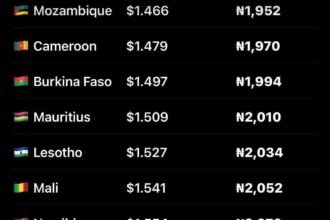
Meanwhile, fuel prices have climbed from below N800 per litre to as high as N1,400 per litre. The government and its supporters tell us this is progress. They tell us that buying fuel at N1,400 is better than buying it at N197 because N197 was a scam. This is the kind of logic that can only come from people who have never had to choose between feeding their children and getting to work. These are the same data boys who cannot afford a decent meal lecturing Nigerians on why poverty is good for them. These are the same social media warriors who have never struggled to pay school fees telling mothers that their suffering is necessary for “macroeconomic stability.” The Minister of Humanitarian Affairs tells us it took China 40 years to reduce poverty, as if that excuses the immediate suffering of millions. Nigerians are not China. Nigerians are hungry now. Nigerians are suffering now.
The double standard is breathtaking. When the government wants to protect oil investors, it offers tax credits, concessions and fiscal incentives. When poor Nigerians ask for relief from crushing energy costs, they are told subsidy is a scam. As Atiku pointed out, the government can protect a multibillion-dollar oil investment from risk, yet it says protecting the Nigerian worker from crushing hardship is bad economics. The government can bend policy to make every barrel profitable for foreign investors but cannot bend policy to make a single litre of fuel affordable for the Nigerian people.
Nigerians have had enough of this deception. We have had enough of being told that our suffering is necessary, that our pain is progress, that our poverty is a price worth paying. We have had enough of governments that steal trillions and call it subsidy, then steal trillions more and call it energy security. We have had enough of leaders who enrich themselves and their cronies while telling us to make sacrifices. We have had enough of data boys who have never known hunger lecturing us on economics.
If fuel subsidy was a scam, prosecute the scammers. Name the beneficiaries. Recover the stolen funds. Jail the thieves. If you cannot do that, then stop telling Nigerians that removing subsidy was the answer. Because the only thing that has been proven beyond doubt is that the real scam was never the subsidy. The real scam is a government that steals from the poor, protects the rich, and expects us to thank them for it.
Mohammed Bello Doka can be reached via bellodoka82@gmail.com