By Ibrahim Bunu
Email: ibrahimbunu2520@gmail.com
There is a point in every controversial national issue when emotion must give way to evidence.
The renewed controversy over United States records concerning President Bola Ahmed Tinubu, the FBI, the DEA, alleged narcotics investigations and the long-running Freedom of Information Act litigation has now reached precisely that point.

Nigerians deserve the truth.
But truth requires something more demanding than repeating either the opposition’s allegations or the Presidency’s denials. It requires separating what a court has actually established, what government records actually say, what remains alleged, what has already been litigated, and what the yet-to-be-released records might—or might not—contain.
That distinction is extremely important.
Because there are now two equally dangerous forms of misinformation surrounding this matter.
One side sometimes presents the existence of an FBI/DEA investigation as if it were already a judicial conviction of Bola Tinubu for drug trafficking.
The other side sometimes presents the 1993 forfeiture and subsequent litigation as if there were absolutely nothing legitimate for Nigerians to ask about.
Both positions go beyond the evidence.
What follows is an attempt to put the entire matter in its proper legal and factual context.
1. FIRST: THE CASE IS REAL
Let us begin with what nobody should dispute.
The FOIA litigation is real.
The plaintiff, American transparency activist Aaron Greenspan, filed multiple Freedom of Information Act requests seeking records concerning Bola Ahmed Tinubu and others from several United States agencies. The federal case is Greenspan v. Executive Office for U.S. Attorneys, Civil Action No. 23-1816 (BAH), before U.S. District Judge Beryl A. Howell in the District of Columbia. The case was filed in June 2023 and remains recorded as an open matter in available docket information. (FOIA Project)
The requests involved agencies including the FBI, DEA, CIA, IRS, the Executive Office for U.S. Attorneys and the State Department.
However, it is important to understand that not all of those agencies remain in the same position in the litigation.
The 2025 court opinion explains that the litigation was narrowed and that the remaining dispute principally concerned the FBI, DEA and CIA, including their responses to requests concerning Tinubu and Abiodun Agbele. The IRS, State Department and EOUSA were dismissed from the litigation after the parties narrowed the issues. (CounselStack Law)
Therefore, headlines suggesting that an American court simply ordered the entire “DOJ, FBI and DEA Tinubu file” to be dumped publicly without qualification are legally imprecise.
The actual legal process is considerably more complicated.
1. WHAT DID JUDGE BERYL HOWELL ACTUALLY RULE?
This is the most important legal point.
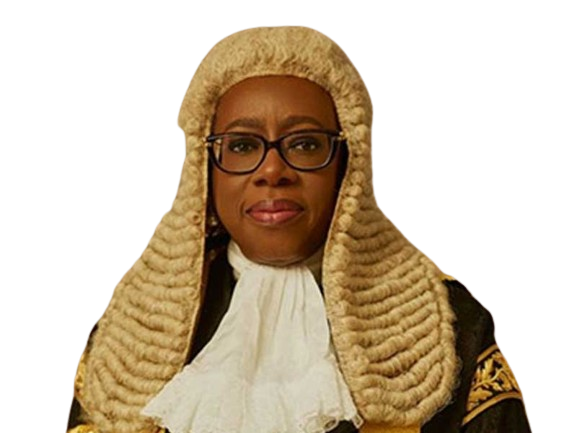
On April 8, 2025, Judge Howell ruled that the FBI and DEA could no longer use the particular “Glomar” response to refuse even to confirm or deny the existence of responsive records concerning Tinubu.
The CIA was treated differently.
The court sustained the CIA’s Glomar position.
The court’s ruling therefore was not:
“Release every document about Tinubu immediately and without redaction.”
That is not what the judgment said.
Rather, the court held that the FBI and DEA’s refusal to confirm or deny the existence of records concerning Tinubu was legally inadequate under the circumstances presented.
The distinction is crucial.
(CounselStack Law)
1. WHAT IS A “GLOMAR” RESPONSE?
This phrase has become central to the Nigerian debate, yet it is frequently misunderstood.
A Glomar response essentially means:
“We can neither confirm nor deny that such records exist.”
It is not necessarily an admission that records exist.
It is a legally recognised FOIA mechanism used where merely confirming the existence or non-existence of records could itself cause harm protected by a FOIA exemption.
The doctrine originates from litigation involving the CIA and the Hughes Glomar Explorer.
In ordinary language, therefore:
A Glomar response is not the same thing as saying “there is no file.”
Nor is it the same thing as saying:
“There is a secret criminal conviction.”
It is a legal withholding mechanism.
And Judge Howell’s 2025 decision was fundamentally about whether that mechanism could continue to be used in the particular circumstances of this case. (CounselStack Law)
1. WHY DID JUDGE HOWELL REJECT THE FBI AND DEA’S GLOMAR POSITION?
This is where the case becomes legally significant.
Judge Howell found that the United States Department of Justice had already publicly acknowledged facts sufficient to undermine the agencies’ argument that even acknowledging an investigation existed would improperly reveal protected information.
The court examined a publicly filed affidavit by IRS Special Agent Kevin Moss connected to the 1993 forfeiture proceedings.
According to the court, that affidavit described an investigation into money laundering connected to a Chicago heroin distribution organisation and referred to information supplied by IRS, DEA and FBI agents.
The court concluded that the DOJ’s own public filings had effectively acknowledged that Tinubu was a subject of a criminal investigation involving, among other agencies, the FBI and DEA. (CounselStack Law)
That is a major legal finding.
But notice the wording carefully.
The court established the existence of a criminal investigation.
It did not thereby establish that Tinubu was convicted of drug trafficking.
Those are two completely different propositions.
1. INVESTIGATION IS NOT CONVICTION
This is perhaps the single most important point Nigerians must understand.
A person can be:
* investigated;
* interviewed;
* named in an investigative file;
* suspected;
* associated with other suspects;
* subjected to a search;
* investigated for financial transactions;
* or have assets subjected to forfeiture proceedings
without ultimately being convicted of a criminal offence.
The existence of an investigation establishes that law enforcement had sufficient reason to investigate.
It does not automatically establish guilt.
This is not merely a Nigerian legal principle. It is fundamental to criminal justice everywhere.
Therefore, anybody saying:
“The U.S. court has convicted Tinubu of drug trafficking”
is going beyond the established record.
There is no such conviction established by Judge Howell’s FOIA judgment.
1. BUT THE OPPOSITE CLAIM IS ALSO WRONG
The fact that there was no criminal conviction does not mean Nigerians should dismiss the entire matter as fabricated.
That would also be intellectually dishonest.
There was a genuine 1993 United States forfeiture proceeding.
There were genuine U.S. government investigations.
There were genuine bank accounts associated with Tinubu.
There was a genuine court order involving the forfeiture of approximately $460,000.
And the public record genuinely connects the forfeiture proceedings to allegations involving proceeds of narcotics trafficking and money laundering.
These facts are not inventions of social media.
AFP, for example, has independently confirmed the authenticity of the relevant 1993 court documents and noted that the documents do not establish that Tinubu was indicted or convicted. (Fact Check)
That is the balanced position.
1. WHAT EXACTLY HAPPENED TO THE $460,000?
This part of the story has been distorted repeatedly.
The $460,000 was not a criminal fine imposed after a conviction for drug trafficking.
It arose from a civil forfeiture proceeding involving funds in U.S. bank accounts.
That distinction matters enormously.
The APC and Tinubu’s lawyers made precisely this argument during the Nigerian presidential election litigation: the 1993 case was a civil proceeding involving property, not a criminal prosecution resulting in a personal criminal sentence. (Punch Newspapers)
The Nigerian election courts subsequently considered the issue in the context of constitutional qualification.
The legal distinction between civil forfeiture and criminal conviction was therefore not invented after the fact; it became part of formal Nigerian litigation concerning Tinubu’s eligibility.
A legal analysis published by the Rule of Law and Public Policy Centre similarly records the position that civil forfeiture does not itself amount to a criminal conviction for purposes of constitutional disqualification. (PLAC Nigeria)
So Nigerians must stop calling the $460,000 payment simply a “fine.”
It was a forfeiture.
That does not make the underlying allegations irrelevant.
But it does make the legal character of the event completely different from a criminal conviction.
1. WHAT DID THE 1993 U.S. GOVERNMENT ALLEGE?
Here is where the story becomes uncomfortable for everyone.
The 1993 U.S. forfeiture complaint alleged that certain funds associated with Tinubu were connected to proceeds of narcotics trafficking and financial transactions violating U.S. money-laundering laws.
Judge Howell’s 2025 opinion specifically refers to the Moss affidavit and says it described probable cause to believe that certain accounts controlled by Tinubu were involved in financial transactions violating 18 U.S.C. §§1956 and 1957 and represented proceeds of drug trafficking. (CounselStack Law)
That is a serious allegation.
It should not be sanitised.
But the word “alleged” must remain attached to it unless and until a competent court establishes criminal guilt.
This is the discipline that responsible journalism requires.
1. DID TINUBU GET CONVICTED?
The available evidence says no.
AFP’s examination of the 1993 court documents found that Tinubu was linked to the case and agreed to forfeit $460,000, but the documents did not establish that he was indicted or convicted of drug trafficking. (Fact Check)
That is extremely important.
It means that the following statement is supported:
Tinubu was connected to a 1993 U.S. forfeiture proceeding involving allegations concerning narcotics proceeds and money laundering.
But this statement is not supported by the established record:
“Tinubu was convicted in America for drug trafficking.”
Those are not equivalent statements.
1. THEN WHY DOES THE 2025 JUDGMENT MATTER SO MUCH?
Because it goes beyond the old $460,000 story.
The 2025 judgment tells us that the U.S. government itself had already publicly acknowledged that Tinubu was a subject of a criminal investigation involving the FBI and DEA.
Judge Howell therefore concluded that the agencies could not use the existence of the investigation itself as the basis for a Glomar refusal.
The court also rejected the argument that privacy interests alone justified keeping the existence of the investigation secret, because that fact had already been officially acknowledged.
The court explained that FOIA Exemption 7(C) protects privacy interests in law-enforcement records, but that the agencies had not adequately shown a continuing privacy interest in keeping the fact of Tinubu’s investigation secret when that fact had already been officially disclosed. (CounselStack Law)
That is the legal foundation of the disclosure battle.
1. BUT HERE IS THE PART MANY PEOPLE ARE NOT TELLING NIGERIANS
Lifting a Glomar response does not mean that every page becomes automatically public.
This is perhaps the most important correction to the current political propaganda.
FOIA contains exemptions.
Government agencies may still redact or withhold portions of records where specific statutory exemptions apply.
The court’s ruling does not magically abolish:
* national-security protections;
* privacy protections for third parties;
* protection of confidential sources;
* law-enforcement-sensitive information;
* investigative techniques;
* information protected by other statutes;
* or other legitimate FOIA exemptions.
The court’s job is to determine whether the agency has legally justified withholding.
Therefore, even after the court orders processing and disclosure, some portions can remain redacted or withheld.
This is normal FOIA procedure.
1. AND THERE IS ANOTHER VERY IMPORTANT DISTINCTION: CIA VS FBI/DEA
The public conversation often lumps all U.S. intelligence and law-enforcement agencies together.
The 2025 judgment did not.
Judge Howell sustained the CIA’s Glomar response concerning Tinubu.
Why?
Because the plaintiff had not demonstrated that the CIA had officially acknowledged responsive records concerning Tinubu.
The judge specifically rejected the argument that because the CIA had publicly released information about Nigerian heroin trafficking generally, that automatically proved the existence of CIA records specifically concerning Tinubu.
The court said, in substance, that logical deduction is not the same thing as official acknowledgment. (CounselStack Law)
That distinction should put a serious brake on claims that the court has already established that Tinubu was a CIA asset.
It has not.
Claims about Tinubu being a CIA asset require separate evidence.
They should not be inferred merely because the CIA’s position differed from the FBI and DEA’s position.
1. WHAT ABOUT THE CLAIM THAT THE FILES PROVE TINUBU WAS A CIA ASSET?
At present, that should be treated as an allegation, not an established fact.
This is one of the areas where online political narratives have outrun the court record.
Judge Howell’s judgment actually illustrates why caution is necessary.
The court rejected the plaintiff’s attempt to infer the existence of specific CIA records from general CIA material about Nigerian narcotics trafficking.
In other words:
Evidence that the CIA monitored Nigerian narcotics activity does not, by itself, prove that the CIA maintained a file on Tinubu or that Tinubu was an intelligence asset. (CounselStack Law)
Until documentary evidence establishes that proposition, Nigerians should not treat it as fact.
1. WHAT ABOUT THE NEW 2026 RELEASE DEADLINES?
This is where I urge Nigerians to be especially careful.
There have been reports of continued disputes between the FBI, DEA and the court over the pace of disclosure.
One February 2026 report described Judge Howell ordering the DEA to provide a Vaughn index explaining redactions and withholding, requiring sworn explanations concerning outstanding material, and directing the FBI to produce additional batches of records according to a timetable. That report said the FBI was expected to complete disclosure by June 1, 2026. (Peoples Voice)
However, I have not been able to independently verify from an authoritative current court docket or official U.S. government source the viral August 2026 claim that U.S. Attorney Jeanine Pirro requested 10 additional days and that Judge Howell granted exactly four days, ending August 21.
That distinction matters.
A responsible analyst should never convert an unverified social-media claim into a confirmed judicial fact.
Therefore, as of this analysis:
The broader litigation and judicial orders are real.
The exact August 21, 2026 procedural claim should be treated as unverified until the actual docket entry or an authoritative report confirms it.
1. AND WHY DOES JEANINE PIRRO’S NAME MATTER?
Jeanine Pirro is currently the U.S. Attorney for the District of Columbia under President Donald Trump.
But Nigerians should be careful with the phrase:
“Trump-appointed U.S. Attorney Pirro is releasing Tinubu’s drug files.”
That formulation can create the impression that President Trump personally ordered the release of Tinubu’s records.
That is a much stronger proposition than the evidence currently establishes.
The FOIA litigation predates the current Trump administration.
It was initiated in 2023.
Judge Howell’s key ruling came in 2025.
The legal obligation arises from the court’s interpretation and enforcement of FOIA, not simply from the political preferences of whoever occupies the White House.
That distinction protects the integrity of the story.
1. THIS IS NOT REALLY A “TRUMP VS TINUBU” CASE
Politically, people may attempt to turn this into one.
Legally, it is more complicated.
The central issue is:
How much information must the U.S. government disclose under FOIA, and what information may it lawfully withhold?
That is the legal question.
It existed before the current administration.
It could continue after the current administration.
And it should not be reduced to whether Trump likes or dislikes Tinubu.
The United States and Nigeria have strategic interests that extend beyond individual political personalities.
Security cooperation, counterterrorism, intelligence sharing, trade, migration, regional stability and diplomatic relations all matter.
Consequently, Nigerians should not interpret every FOIA development as evidence of a diplomatic rupture between Washington and Abuja.
1. THE OTHER SIDE OF THE STORY: WHAT DOES THE TINUBU CAMP HAVE A RIGHT TO SAY?
Quite a lot.
The Presidency is entitled to argue that:
1. Tinubu has not been criminally convicted of drug trafficking in the United States.
2. The $460,000 proceeding was a civil forfeiture rather than a criminal conviction.
3. The underlying events date back more than three decades.
4. The 1993 case was resolved through a settlement/forfeiture arrangement rather than a criminal trial producing a conviction.
5. The 2025 FOIA judgment concerned disclosure procedures and exemptions—not a determination that Tinubu committed drug trafficking.
Those are legitimate legal arguments.
They should not be dismissed simply because they come from the Presidency.
1. BUT THE OPPOSITION ALSO HAS A LEGITIMATE ARGUMENT
The opposition is equally entitled to ask:
If there is nothing damaging in the records, why should Nigerians oppose their lawful disclosure?
That is a legitimate political question.
It is not proof of guilt.
But it is a reasonable transparency argument.
If the records are subject to lawful disclosure, the public has an interest in knowing what the U.S. government actually documented.
The answer should not be:
“Believe us.”
The better answer is:
“Let the legally releasable records speak for themselves.”
That principle should apply equally to every Nigerian president.
1. THE MOST DANGEROUS POLITICAL TRICK IS TO CONFUSE “RECORDS” WITH “GUILT”
Suppose the FBI releases 500 pages.
Those pages could contain:
* witness interviews;
* investigative leads;
* intelligence reports;
* bank records;
* correspondence;
* allegations;
* unverified statements;
* internal investigative assessments;
* information supplied by informants;
* records concerning people who were never charged;
* records concerning people who were charged;
* administrative material;
* duplicated records;
* or material completely unrelated to criminal guilt.
An investigative file is not a judgment.
This is fundamental.
A police file can contain accusations that turn out to be false.
An FBI 302 interview is not itself a conviction.
An intelligence report is not necessarily a finding of fact.
A prosecutor’s allegation is not a judicial determination.
A person’s appearance in an investigative document does not automatically establish criminal culpability.
Therefore, when these files eventually emerge, Nigerians must read them, contextualise them and verify them—not simply circulate screenshots.
1. WHAT SHOULD NIGERIANS LOOK FOR WHEN THE RECORDS ARE RELEASED?
There are several questions that matter more than sensational headlines.
Question One:
Was Tinubu merely mentioned, or was he identified as a target, subject, witness or suspect?
Those classifications matter.
Question Two:
What did investigators actually establish independently?
There is a difference between an allegation from an informant and evidence corroborated by investigators.
Question Three:
Was there evidence connecting Tinubu personally to narcotics trafficking?
This must be separated from evidence that his bank account received or held funds allegedly connected to other persons.
Question Four:
What was the evidentiary basis for the forfeiture?
Was it probable cause? Documentary evidence? Witness testimony? Financial tracing? A combination?
Question Five:
Why was the matter settled rather than prosecuted criminally?
The records may or may not answer this.
Question Six:
Was Tinubu ever formally indicted?
This should be established from actual court records, not social-media claims.
Question Seven:
Were charges filed and subsequently dismissed?
Again, the docket—not political commentary—should answer this.
Question Eight:
Were other individuals convicted?
The wider investigation matters because Tinubu’s alleged connection has always been discussed within the context of a broader narcotics investigation.
Question Nine:
What information remains redacted?
Redactions can themselves tell us something about the legal limits on disclosure, although one should never automatically assume that a redaction means the hidden information is damaging.
1. THE 2025 JUDGMENT CONTAINS ANOTHER LESSON FOR NIGERIANS
Judge Howell’s opinion demonstrates that the U.S. government’s own public records can become legally important.
The court did not simply accept the FBI and DEA’s assertion that the matter was private.
It examined what the Department of Justice had already publicly acknowledged.
The judge concluded that DOJ’s own public filings had already disclosed enough about the investigation that the agencies could not continue pretending that merely acknowledging the existence of the investigation would reveal a secret.
That is why the Glomar shield fell.
This is a powerful lesson in government accountability:
Once a government officially puts certain information into the public domain, it becomes much harder for another component of the same government to pretend that the information never existed.
That is one of the central legal principles driving this case. (CounselStack Law)
1. BUT DO NOT MISUNDERSTAND THE JUDGE
Judge Howell did not declare:
“Tinubu is a drug trafficker.”
She did not conduct a criminal trial.
She did not determine beyond reasonable doubt that Tinubu committed narcotics offences.
She was deciding a FOIA dispute.
This distinction cannot be repeated enough.
The court’s findings concerning the existence and disclosure of investigative records should not be converted into a criminal conviction that the court never issued.
1. WHAT DOES THIS MEAN FOR TINUBU POLITICALLY?
This is where the matter becomes more complicated.
Legally, Tinubu can correctly say:
“I was not convicted of drug trafficking in the United States.”
Politically, however, the disclosure controversy does not disappear simply because there was no conviction.
Presidents are held to political standards as well as criminal-law standards.
A public official can survive a legal proceeding and still face legitimate questions about judgment, transparency and personal history.
Conversely, political opponents cannot transform unresolved allegations into proven criminality simply because the allegations are politically useful.
The correct standard is:
Evidence first. Political conclusion second.
1. WHAT SHOULD THE PRESIDENCY DO NOW?
In my view, the strongest political strategy is not aggressive denial.
It is radical transparency within the limits of law.
If records are lawfully releasable, allow them to be released.
If portions are legitimately exempt, explain why.
If allegations are false, identify the documentary evidence disproving them.
If documents contain old allegations already publicly known, explain their context.
If the matter was legally settled decades ago, show the settlement documents.
If no indictment ever existed, produce the relevant evidence.
The Nigerian public does not need another political shouting match.
It needs documents.
1. WHAT SHOULD THE OPPOSITION DO?
The opposition also has responsibilities.
It should stop describing Tinubu as a convicted drug trafficker unless it can produce a criminal conviction establishing that claim.
It should stop presenting every FBI document as automatic proof of guilt.
It should distinguish:
allegation from evidence,
investigation from prosecution,
prosecution from conviction,
and
civil forfeiture from criminal punishment.
If the opposition wants transparency, then it should campaign for transparency—not prejudge the contents of documents that have not yet been released.
That would make its argument stronger, not weaker.
1. AND WHAT ABOUT THE MEDIA?
This story is a test of Nigerian journalism.
There is an enormous temptation to publish:
“TINUBU DRUG FILES FINALLY RELEASED!”
before the documents are actually available.
That would be irresponsible.
The proper headline should distinguish between:
court order,
agency filing,
deadline,
actual release,
document content,
and
interpretation.
These are six different things.
A court ordering an agency to process records is not the same thing as the records being released.
Records being released is not the same thing as records proving criminal guilt.
Records containing an allegation is not the same thing as records establishing that allegation as fact.
This distinction should become the standard for every Nigerian journalist covering this matter.
1. NIGERIANS SHOULD ALSO ASK WHY THIS CASE HAS TAKEN SO LONG
This is a legitimate question.
The FOIA requests date to 2022–2023.
The federal lawsuit was filed in June 2023.
The 2025 judgment addressed the Glomar dispute.
Subsequent proceedings have dealt with processing, redactions, withheld pages and agency timelines.
Available docket reporting shows repeated procedural activity and disputes over production. (FOIA Project)
That means this is not simply a case of:
“Trump ordered the files released and the FBI refused.”
The litigation has been moving through a complicated judicial and administrative process for years.
That history matters.
1. HERE IS THE REAL QUESTION BEHIND THE ENTIRE CONTROVERSY
The question is no longer simply:
“Did Tinubu have a drug case in America?”
We already know that a genuine 1993 forfeiture proceeding existed.
The more important question now is:
“What exactly did U.S. law-enforcement agencies know, document and conclude about Bola Ahmed Tinubu and his connection—if any—to the narcotics investigation?”
That is the question the outstanding records may help answer.
And it is precisely why the records matter.
1. WHAT NIGERIANS MUST NOT DO
Do not believe either extreme.
Do not believe:
“The FBI files prove Tinubu is a drug trafficker.”
That conclusion has not been established.
And do not believe:
“There is no story here because Tinubu was never convicted.”
That is equally misleading.
There is a genuine historical investigation.
There is a genuine forfeiture.
There are genuine government documents.
There is genuine federal litigation.
There is a genuine judicial finding that DOJ had officially acknowledged Tinubu’s involvement as a subject of the investigation.
And there are still records whose contents may provide additional context.
Those are the facts.
1. THE $460,000 QUESTION MUST ALSO BE HANDLED HONESTLY
One cannot simultaneously say:
“The $460,000 forfeiture proves criminal guilt”
and
“The $460,000 forfeiture means absolutely nothing.”
Neither is legally responsible.
The fact that the funds were forfeited in connection with a narcotics-related civil proceeding is significant.
The fact that Tinubu was not convicted of drug trafficking is also significant.
Both facts can be true at the same time.
That is the mature position.
1. THE BIGGER ISSUE IS NOT EVEN TINUBU
There is a bigger Nigerian lesson here.
Nigeria must develop a political culture in which public officials can be subjected to serious scrutiny without every allegation becoming a conviction and without every investigation being dismissed as persecution.
That is the standard we should demand.
Today the allegation concerns Tinubu.
Tomorrow it may concern another president.
Then a governor.
Then a minister.
Then an opposition leader.
The principle should remain the same:
No public official should be above scrutiny.
But equally:
No citizen should be declared guilty without evidence and due process.
That principle must apply even when the person involved is politically unpopular.
1. MY POSITION IS SIMPLE
I do not believe Nigerians should be afraid of the truth.
If the documents contain damaging information, let Nigerians see it.
If they exonerate Tinubu, let Nigerians see that too.
If they contain a mixture of evidence, allegations, intelligence and inconclusive material, let the public and competent analysts examine them.
If legitimate exemptions require redactions, let the government explain the legal basis.
What Nigerians should reject is the culture of political censorship through propaganda—whether the propaganda comes from government or opposition.
1. THE FINAL WARNING ABOUT THE AUGUST 21 CLAIM
This needs to be stated plainly.
As of the time of this analysis, I have not independently verified the specific claim circulating online that:
U.S. Attorney Jeanine Pirro requested an additional 10 days and Judge Beryl Howell granted only four additional days, until August 21, 2026.
Until an actual federal docket entry, court order, DOJ filing or authoritative reporting confirms those precise details, Nigerians should describe them as reported claims, not established facts.
That is not an attempt to protect Tinubu.
It is an attempt to protect the credibility of the truth.
If the August 21 order is subsequently confirmed, it would be significant because it would demonstrate that the court continues to exercise active oversight over the agencies’ compliance with its disclosure orders.
But even then, August 21 would be a procedural milestone—not a judicial declaration that Bola Tinubu is guilty of drug trafficking.
1. WHAT NIGERIANS SHOULD REMEMBER — ONCE AND FOR ALL
Let us reduce this entire controversy to twelve sentences:
One: There was a real U.S. investigation involving a Chicago narcotics network in the early 1990s.
Two: Bola Ahmed Tinubu was connected to the investigation and his identity appeared in the government records.
Three: A U.S. civil forfeiture proceeding resulted in approximately $460,000 being forfeited from funds associated with him.
Four: The forfeiture was not itself a criminal conviction.
Five: Available evidence does not establish that Tinubu was convicted of drug trafficking in the United States.
Six: Aaron Greenspan subsequently used FOIA to seek government records concerning the historical investigation.
Seven: Judge Beryl Howell ruled in April 2025 that the FBI and DEA could not continue using Glomar responses to refuse even to acknowledge responsive records concerning Tinubu under the circumstances of the case.
Eight: The judge’s ruling was based in significant part on official DOJ disclosures already contained in public court documents.
Nine: The same judgment did not compel unrestricted disclosure of every conceivable record, and the CIA’s separate Glomar position concerning Tinubu was sustained.
Ten: Lawful FOIA exemptions can still justify redactions or withholding of portions of records.
Eleven: The precise August 21, 2026 claim concerning Jeanine Pirro has not been independently verified here and should not be presented as established fact until the underlying court record confirms it.
Twelve: When additional records are released, Nigerians must read the actual evidence rather than allowing either the Presidency or the opposition to tell them what the documents supposedly say.
CONCLUSION: LET THE DOCUMENTS SPEAK
The Nigerian public has been trapped for too long between two political extremes.
One says:
“There is nothing to see.”
The other says:
“The documents prove everything.”
Neither position is intellectually sufficient.
The proper position is much simpler:
Release what the law requires to be released.
Redact only what the law legitimately protects.
Publish the underlying documents.
Allow independent experts to examine them.
Separate allegations from findings.
Separate investigations from convictions.
Separate civil forfeiture from criminal punishment.
And then let Nigerians make their own judgment.
President Bola Ahmed Tinubu is entitled to the presumption that he was not criminally convicted where no such conviction has been established.
At the same time, Nigerians are entitled to ask legitimate questions about the historical U.S. investigation and to demand transparency concerning records that a U.S. federal court has determined cannot simply be hidden behind a Glomar response.
These principles are not contradictory.
They are the essence of a serious democracy.
The truth does not need political protection.
If the records are damaging, let them speak.
If the records are exculpatory, let them speak.
If the records are ambiguous, let them speak.
If the records contain allegations that cannot be substantiated, let that also be known.
What Nigeria does not need is another war of propaganda.
Nigeria needs evidence, context, law and accountability.
And that is precisely why the proper demand should not be:
“Convict Tinubu before the documents arrive.”
Nor should it be:
“Protect Tinubu before the documents arrive.”
The demand should be:
LET THE DOCUMENTS COME. LET THE LAW DECIDE. LET THE FACTS SPEAK.
By Ibrahim Bunu
ibrahimbunu2520@gmail.com