By Lawan Musa Danlami ( Baba Lawan)
August 17, 2027
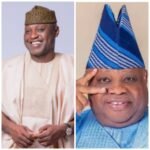
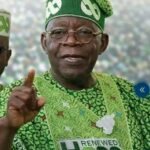
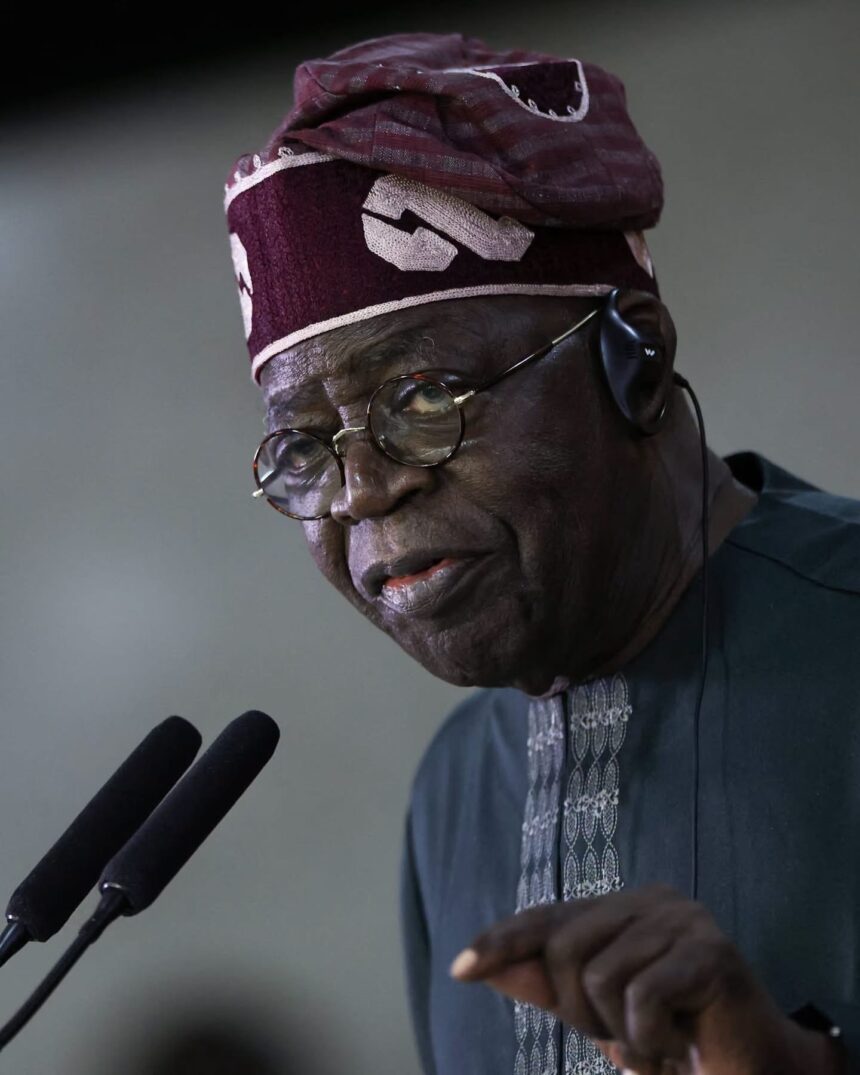
The recent statement attributed to Osun State Governor, Ademola Adeleke, that he supports President Bola Ahmed Tinubu because he is Yoruba, rather than because of any political agreement, deserves more than a passing political reaction. It raises a fundamental question about the character of Nigeria’s democracy and the direction of our national political culture: Should Nigerians support political leaders because of what they represent and accomplish, or simply because they belong to the same ethnic group?
Governor Adeleke is certainly entitled to his political choices. Political alliances are normal in a democracy, and nobody should be condemned merely for supporting a particular politician. However, when ethnicity is presented as a principal reason for supporting a national political leader, the statement becomes bigger than the individual making it. It touches the deeper problem of tribalism, ethnic loyalty, sectionalism and regional politics that have repeatedly weakened Nigeria’s efforts to build a genuine national identity.
There is nothing inherently wrong with being Yoruba, Hausa, Igbo, Fulani, Kanuri, Tiv, Ijaw, Edo or belonging to any of Nigeria’s many ethnic communities. Ethnic identity is an important part of culture. It preserves language, history, traditions and collective memory. The problem begins when cultural identity is transformed into a political principle and when citizens are encouraged to support a leader primarily because that leader belongs to their ethnic group. At that point, ethnicity ceases to be simply a cultural identity and becomes an instrument of political mobilisation.

This is where Nigerians need to be extremely careful.
A Yoruba politician does not automatically become a good leader because he is Yoruba. A Hausa politician does not become competent because he is Hausa. An Igbo politician does not become trustworthy because he is Igbo, just as a Fulani politician does not become a good leader merely because he shares an ethnic identity with his supporters. Leadership must be judged by competence, character, integrity, accountability, justice and measurable results. Political support should therefore be based primarily on what a leader does rather than where he comes from.
This principle becomes even more important when the person being supported is the President of the Federal Republic of Nigeria. The President does not govern Yoruba people alone. He governs Hausa, Fulani, Igbo, Kanuri, Tiv, Ijaw, Ibibio, Nupe and hundreds of other Nigerian communities. The responsibility of a national leader therefore transcends ethnic boundaries. Consequently, the political justification for supporting such a leader should also transcend ethnic boundaries.
The Nigerian intellectual Chinua Achebe devoted considerable attention to the country’s political crisis and the problem of leadership. One of the enduring lessons from Achebe’s political writings is that Nigeria’s difficulties cannot simply be blamed on ethnicity. Leadership failure, corruption, institutional weakness and the absence of accountability are central to the country’s political problems. This distinction is important because ethnic loyalty can sometimes provide politicians with protection from accountability. A politician may fail, yet his supporters defend him because he is “our son.” Another politician may perform well, but citizens reject him because he belongs to another ethnic group. When this becomes normal, democracy is reduced to ethnic arithmetic.
The political scientist Benedict Anderson’s concept of “imagined communities” also provides an important intellectual perspective. Anderson explained how people develop powerful attachments to communities of identity even though members of those communities will never personally know one another. In Nigeria, this idea can be applied to ethnic and national identities. A person can develop a powerful emotional attachment to being Yoruba, Hausa, Igbo or Fulani. There is nothing inherently wrong with that. But when ethnic identity becomes politically superior to national citizenship, the larger Nigerian community becomes weakened.
The danger is obvious. If Yoruba citizens support a politician because he is Yoruba, Hausa citizens support another because he is Hausa, Igbo citizens support another because he is Igbo, and Fulani citizens do the same, politics becomes a permanent competition between ethnic communities. The central question ceases to be “Who can govern Nigeria best?” and becomes “Which ethnic group controls power?”
That is not national development. It is permanent political fragmentation.
Frantz Fanon’s writings on postcolonial societies provide another important warning. Fanon examined the dangers that could arise when postcolonial political elites failed to transform the inherited colonial state into a genuinely national project. Narrow political interests could replace the broader objectives of national liberation and development. In the Nigerian context, this offers a useful warning against allowing political elites to mobilise citizens primarily through ethnic, regional or sectional identities.
Nigeria must not replace colonial domination with internal ethnic competition.
History provides painful evidence of what can happen when identity becomes deeply politicised. Rwanda is perhaps the clearest African example. The 1994 genocide against the Tutsi resulted in the deaths of more than one million people within approximately 100 days. The tragedy was not created overnight. Years of political manipulation, discrimination, propaganda and ethnic division contributed to an environment in which violence became possible. Scholars such as Mahmood Mamdani have examined the historical and political processes through which ethnic identities in Rwanda became increasingly politicised.
The lesson for Nigeria is not that our circumstances are identical to Rwanda. They are not. Nigeria is a different country with a different history. But the warning is universal: dangerous ethnic politics often begins with language, political manipulation and the creation of an “us” and a “them” long before it produces physical violence.
Nigeria has its own historical warnings. The political crisis of the 1960s, the coups and counter-coups, the ethnic massacres, the regional tensions and the Nigerian Civil War demonstrate the destructive potential of ethnic and regional suspicion. The Civil War remains one of the most painful episodes in Nigeria’s history. It reminds us that national unity cannot be taken for granted. It must be continuously constructed through justice, inclusion, responsible leadership and a shared commitment to citizenship.
The experience of Europe before the First World War provides another historical perspective. It would be inaccurate to claim that ethnicity alone caused the First World War. The conflict resulted from a complicated combination of militarism, imperial rivalry, alliance systems, nationalism and political calculations. Nevertheless, extreme nationalism contributed to an environment in which national interests were increasingly placed above broader human interests. The lesson for contemporary societies is that when political identity becomes absolute, compromise becomes difficult and opponents can gradually be viewed as enemies.
The Israeli-Palestinian conflict provides another, although very different, example of how deeply rooted identities can complicate political disputes. The conflict cannot responsibly be reduced to ethnicity alone; it involves nationalism, territory, religion, security, displacement, historical claims and political power. Nevertheless, it demonstrates the enormous difficulty societies face when competing collective identities become deeply intertwined with questions of political power and national survival.
Nigeria should learn from these experiences without pretending that our circumstances are identical to theirs.
Religion also provides Nigerians with strong moral arguments against ethnic superiority. Islam recognises the existence of peoples and tribes but does not establish ethnicity as a measure of human worth. Qur’an 49:13 teaches that humanity was created as different peoples and tribes so that they may know one another, while moral distinction is connected to righteousness rather than ancestry. This principle is highly relevant to Nigerian politics. Being Yoruba is not a moral achievement. Being Hausa is not a moral achievement. Being Igbo is not a moral achievement. Being Fulani is not a moral achievement. These are identities of birth and community. What matters morally is character and conduct.
Christian teachings similarly emphasise the dignity and moral equality of human beings and warn against partiality. Therefore, neither Islam nor Christianity provides a sound religious justification for political tribalism.
Yet religion alone cannot eliminate ethnic politics. Nigeria’s history demonstrates that people can profess religious values while still behaving tribally. What is required is the practical application of the principles of justice, equality and human dignity to political life.
This brings us back to the phrase that has become almost normal in Nigerian politics: “He is our own.”
What does that actually mean?
Does it mean that a politician should be defended even when he fails? Does it mean corruption should be tolerated because the corrupt person belongs to our ethnic group? Does it mean incompetence should be forgiven because the politician is our son or daughter? Does it mean a citizen should support a leader whose policies are damaging the country simply because they share an ethnic identity?
If that is what “our own” means, then we have transformed democracy into ethnic patronage.
The better question is not “Where is he from?” The better question is “What has he done?”
That should be the starting point of political judgment.
If President Tinubu has improved Nigeria’s economy, Nigerians should acknowledge it. If his administration has delivered meaningful infrastructure, improved security, strengthened institutions or created opportunities, those achievements should be recognised. If his policies have produced hardship or his government has failed in particular areas, those failures should also be criticised. Neither praise nor criticism should depend on ethnicity.
A Yoruba citizen should be able to criticise a Yoruba president. A Hausa citizen should be able to praise a Yoruba president. An Igbo citizen should be able to support a Hausa politician. A Fulani citizen should be able to reject a Fulani politician. This is what political maturity means.
The principle is simple: support performance, not pedigree; competence, not clan; policies, not parentage; citizenship, not ethnicity.
Governor Adeleke’s statement should therefore be treated as an opportunity for a much larger national conversation rather than simply as another political controversy. The issue is not whether he is permitted to support President Tinubu. He is. The question is whether ethnicity should become a legitimate standard for political support in a country as diverse as Nigeria.
There is also an important distinction to be made. If someone says, “I support Tinubu because I believe his policies and projects are benefiting Nigeria, and I am also proud that he is Yoruba,” that is different from saying, “I support Tinubu because he is Yoruba.” The first statement combines political evaluation with cultural identity. The second risks making ethnicity the foundation of political judgment.
Nigeria needs to move from ethnic representation to national accountability. It is not enough for every ethnic group to have people in government. What matters is whether government works for every ethnic group.
The President should be judged by the condition of the economy, employment, security, education, healthcare, infrastructure, justice, poverty reduction, democratic rights and the general welfare of Nigerians. If he performs well, he deserves support irrespective of his ethnic origin. If he performs poorly, he deserves criticism irrespective of his ethnic origin, that is democracy.
Nigeria’s diversity should be a strength, not a permanent source of political division. Our languages, cultures, traditions and histories enrich the country. But diversity becomes dangerous when political elites weaponise it for electoral advantage or personal loyalty.
The Nigerian politician of the future should therefore be courageous enough to tell his supporters: “Do not support me because I am one of you. Support me because I serve you well.”
That is the political culture Nigeria needs.
The choice before Nigerians is ultimately between two political philosophies. The first says, “Support our own, right or wrong.” The second says, “Support whoever serves the people, regardless of where he comes from.”
The first produces tribal loyalty.
The second produces citizenship.
Nigeria does not need to destroy its ethnic identities. It needs to ensure that those identities never become the measure of political merit.
A leader should not receive our loyalty because he is one of us. He should earn it because he works for all of us.
That is the difference between tribal politics and democratic citizenship. And if Nigeria genuinely wants unity, development and national progress, that distinction must become one of the foundations of our political culture.