By Daniel Oni
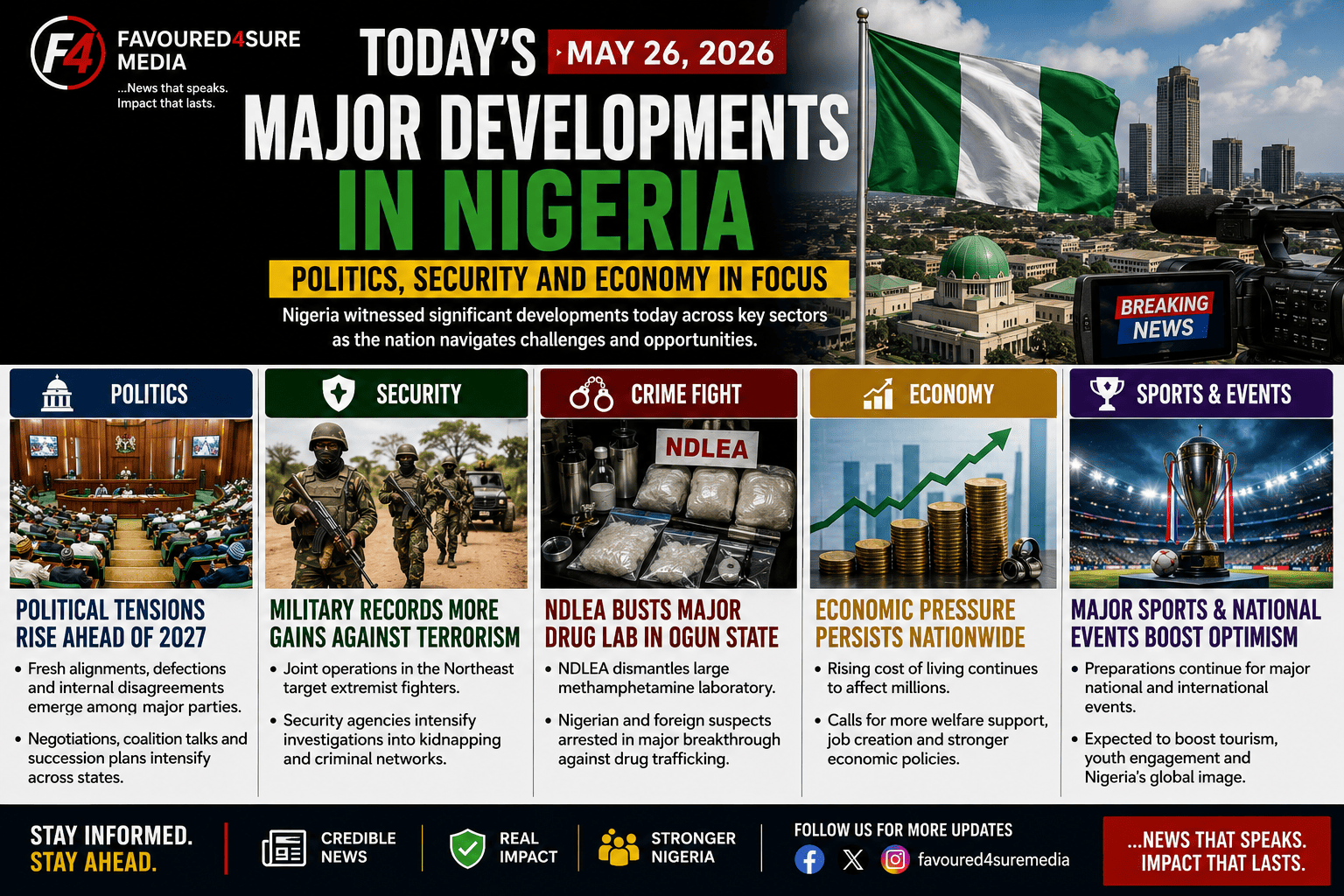
Nigeria is currently experiencing a difficult but important period. The country’s economic reforms have helped improve some aspects of macroeconomic stability, but millions of Nigerians are still struggling with high living costs, food prices, unemployment and insecurity. The IMF estimates Nigeria’s economy grew by about 4% in 2025 and projects around 4.1% growth for 2026, while warning that poverty and food insecurity remain serious concerns.
For the average Nigerian, however, economic statistics do not always tell the full story. The rising cost of food, transportation, electricity and other essentials continues to put pressure on households. The Central Bank has also maintained its monetary policy rate at 26.5%, reflecting the difficult balance between controlling inflation and supporting economic activity.
Security remains another major concern, with several parts of the country facing risks from banditry, kidnapping and violent attacks. Recent reports have highlighted emerging security hotspots that require urgent attention.

Yet, Nigeria is far from hopeless.
Across technology, entrepreneurship, agriculture, energy and education, young Nigerians continue to create solutions and build businesses despite the challenges. Government and development partners are also investing in skills development and youth employment, including programmes supporting thousands of young people and small businesses.
Nigeria’s current reality is therefore a mixture of pressure and possibility. The challenges are real, but so is the potential. What happens next will depend on how effectively leaders address insecurity and the cost of living, while creating opportunities for the country’s huge young population.
Nigeria is not without problems. But Nigeria is not without possibilities either. The future of the country will ultimately be shaped by the choices we make today.