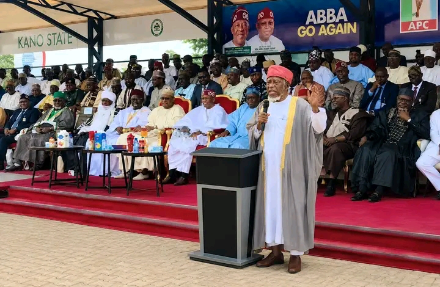
The reaction was immediate and devastating. Femi Fani-Kayode, Nigeria’s ambassador-designate to South Africa, described the comments as “highly provocative” and warned that such rhetoric could deepen Nigeria’s existing divisions and threaten the country’s unity. Activists and commentators across the religious divide condemned the cleric, accusing him of setting the nation on a dangerous path. But here is the critical question: how does this help President Tinubu? How does calling for religious war, alienating the Christian community, and inflaming religious tensions serve the interest of a president who is desperately trying to project an image of inclusive governance? The answer is simple: it does not. Jingir’s words have done more damage to Tinubu’s reputation in a single day than any opposition politician could achieve in a year.
The timing could not have been worse. Just weeks before Jingir’s outburst, the leadership of the Catholic Bishops Conference of Nigeria (CBCN), led by its president, Matthew Ndagoso, had visited President Tinubu at the Presidential Villa in Abuja. The bishops gave Tinubu a frank and honest assessment of the country’s situation, expressing concerns over the economy, insecurity, and the political climate. It was a moment of reckoning, an opportunity for the president to demonstrate that he is a leader for all Nigerians, regardless of faith. Then came Jingir, undoing all of that goodwill in a single speech. The Christian community, already on edge after the bishops’ confrontational visit, was now further alienated. Jingir had effectively poured petrol on a fire that Tinubu was desperately trying to extinguish.
But it is not just the Christians who are angry. The Muslim North, the very constituency Jingir claims to champion, has also turned against him. The Supreme Council for Shari’ah in Nigeria (SCSN), the mainstream authority representing the consensus of northern Islamic scholars, has been publicly at odds with the Tinubu administration. The Council has alleged that despite supporting the Muslim-Muslim ticket and mobilizing for Tinubu’s victory, the government has neglected and marginalized Muslims. They have expressed deep disappointment, citing the political marginalization of Muslims despite their numbers in the country. In Kaduna, the SCSN backed the Catholic Bishops’ concerns and urged Tinubu to address the realities facing Nigerians, particularly insecurity and economic difficulties.
Sheikh Jingir is a member of this Council, but he cannot override it. The SCSN represents the mainstream, and when Jingir praised Tinubu as his “political hero,” he stood in direct opposition to the Council’s position. This is not a man promoting the president; this is a factional leader, representing less than ten percent of the mainstream Izala movement, attempting to speak for all Muslims and failing spectacularly. His support is not a boon for Tinubu; it is a liability. It exposes the deep fractures within the northern Islamic establishment and highlights the administration’s failure to secure the support of the very scholars who once backed it.

Even within Jingir’s own Jos faction, there is open defiance. In March 2026, a prominent cleric, Sheikh Alkali Abubakar Salihu Zaria, delivered a fiery Ramadan sermon in Damaturu, Yobe State, in which he criticized President Tinubu and accused northern governors of fearing the president more than they fear Allah. He called Tinubu a “deceiver and cheat” and condemned the government’s failure to end banditry and kidnappings. The backlash was swift. Jingir, as the National Chairman of the JIBWIS Council of Ulama, convened a meeting and suspended Sheikh Alkali Zaria from delivering his Tafseer sessions. But the damage was done. A prominent scholar within Jingir’s own faction had publicly defied him and attacked the president. This is not unity; this is chaos. This is not promotion; this is self-destruction.
So why would Jingir do this? Why would a scholar who claims to support Tinubu engage in rhetoric and actions that so clearly undermine him? The answer lies in the art of deception. Tinubu, as we all know, is a master of political maneuvering, a man who has built his career on the currency of strategic ambiguity and calculated misdirection. But Jingir, it seems, has decided to treat Tinubu with the only currency the president truly understands: deception. By presenting himself as a supporter, Jingir has gained access to the corridors of power. He has made himself indispensable to a president desperate for northern religious legitimacy. And then, with surgical precision, he has used that access to inflict maximum damage.
Consider this: if Jingir truly wanted to help Tinubu, would he have called for religious war? Would he have alienated the Christian community, the very demographic Tinubu needs to pacify? Would he have highlighted the government’s failures and deepened the sense of marginalization among northern Muslims? No. A true supporter would have called for unity, for patience, for understanding. Jingir has done none of that. Instead, he has exposed Tinubu’s vulnerabilities, inflamed religious tensions, and handed the opposition a weapon to use against the president. This is the work of a saboteur, not a supporter.
And Jingir is not alone. Look around the North and ask yourself: where are the empowerment schemes? Where are the new appointments? Where is the serious grassroots mobilization? The northern governors, many of whom are key stakeholders in the All Progressives Congress (APC), have been conspicuously silent. There are no serious efforts to engage the masses, no visible programs to alleviate the suffering of the people. Why? Because the explosion that will destroy the APC is coming from within, not from without.
The northern governors are not stupid. They see the writing on the wall. They know that Tinubu’s policies have brought untold hardship to the North. They know that insecurity has spiraled out of control. They know that the president has failed to deliver on his promises. And they know that the Muslim-Muslim ticket, once hailed as a strategic masterstroke, has become a symbol of government failure. The governors are quietly positioning themselves, waiting for the right moment to strike. There have been appointments, yes, but they are token gestures, designed to placate rather than empower. There is no serious grassroots mobilization because the governors are saving their energy for the battle ahead—the battle to reclaim the North from a president who has betrayed their trust.
This is the reality that northern Muslims must understand. Sheikh Jingir is not Tinubu’s friend. He is Tinubu’s nemesis, dressed in the robes of a supporter. His rhetoric, his controversies, his open defiance of the mainstream Sharia Council—all of it is designed to weaken the president and expose his failures. Jingir is doing what the opposition cannot do: he is destroying Tinubu from within, using the very platform of religious endorsement to undermine the president’s legitimacy.
And this is good news for the North. The anger that many feel toward Jingir for supporting Tinubu is misplaced. Jingir is not helping Tinubu; he is destroying him. Every provocative statement, every inflammatory remark, every act of defiance against the mainstream scholars is a nail in the coffin of the Tinubu administration. The northern masses should calm their nerves and watch the spectacle unfold. The destruction of the APC is not coming from the opposition; it is coming from within. The governors are biding their time. The scholars are in open revolt. And Jingir, the supposed supporter, is actually the most effective weapon against the president.
In the end, Tinubu will be treated with the only currency he understands: deception. Jingir has given him the illusion of support while systematically dismantling his political base. The North will rise again, not because of Jingir, but because the forces arrayed against Tinubu are too powerful to contain. The explosion is coming, and when it does, it will be from within. The people should be patient. The reckoning is at hand. Is Sheikh Jingir promoting or destroying Tinubu? The answer is clear. He is destroying him knowingly or unknowingly, and for the sake of the North, that may be the best thing that could happen.
Mohammed Bello Doka can be reached via bellodoka82@gmail.com