By Ibrahim Bunu
Email: ibrahimbunu2520@gmail.com
Introduction
Does Nigeria need restructuring?

Few questions have generated as much political, constitutional, and public debate in Nigeria’s contemporary history. For some, restructuring offers a pathway to a more balanced federation founded on justice, equity, genuine federalism, and shared prosperity. For others, Nigeria’s greatest challenges stem not from the constitutional structure itself, but from weak institutions, poor leadership, corruption, and the inconsistent implementation of existing laws.
Whatever one’s position, one reality is undeniable: Nigeria stands at a defining moment in its national journey. The country’s ability to build lasting peace, strengthen democratic institutions, and foster inclusive development depends on an honest examination of how power is exercised, how national resources are distributed, and whether every citizen truly enjoys equal opportunities under the federation.
This analysis examines recurring patterns in Nigeria’s political, security, and economic institutions, asking whether the concentration of influence within key federal institutions reflects historical evolution, political incentives, or deeper structural imbalances that warrant reform. It explores the historical roots of these patterns, the constitutional principles designed to promote national inclusiveness, and the extent to which those principles have been consistently applied.
Beginning with the 1914 amalgamation and the constitutional arrangements that followed, through independence and the political upheavals surrounding the 1966 coups, the discussion considers how military, security, and economic institutions evolved. It also examines the influence of the Federal Character Principle, the Land Use Act, revenue allocation, electoral demographics, and the distribution of federal appointments in shaping Nigeria’s federal system.
Central to this discussion is a recurring observation made by many scholars, political commentators, and public affairs analysts: that key security institutions, strategic economic agencies, and influential federal offices have, over long periods, displayed patterns of regional concentration. Whether these patterns are products of historical circumstances, institutional continuity, political bargaining, or deliberate design remains one of the most important questions confronting the Nigerian federation.
At the same time, it is important to distinguish political elites from the ordinary citizens whose identities are often invoked in political debates. The principal beneficiaries of political patronage are frequently relatively small elite networks rather than entire ethnic or regional populations. While political narratives are often framed along ethnic lines, millions of ordinary Nigerians—north and south alike—continue to struggle with poverty, unemployment, insecurity, poor infrastructure, and limited economic opportunities.
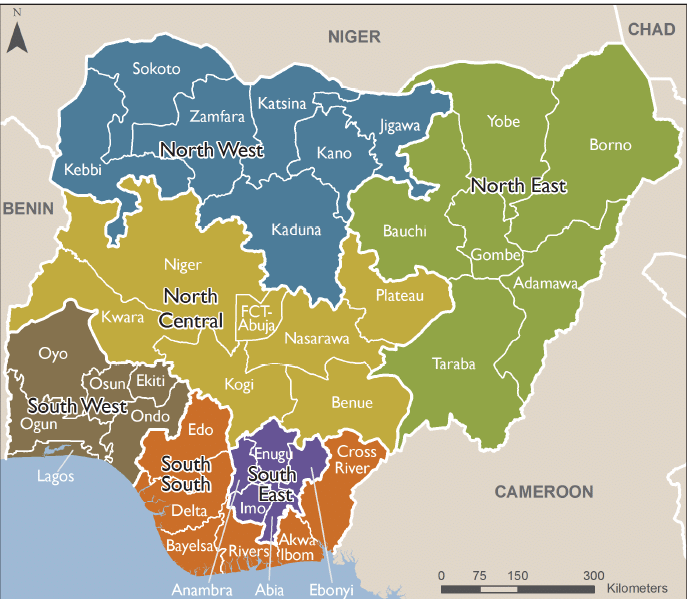
This distinction is particularly important when discussing insecurity and displacement. Large numbers of displaced Hausa communities are concentrated in Nigeria’s North-West as a consequence of banditry and armed violence. Likewise, many displaced communities across the North-Central consist of diverse ethnic nationalities affected by farmer-herder conflicts, banditry, terrorism, and communal violence. Across the federation, the overwhelming victims of insecurity are ordinary Nigerians, regardless of ethnicity, religion, or political affiliation.
The conversation about restructuring should therefore never be reduced to an attack on any ethnic group or region. Rather, it should focus on strengthening institutions, promoting fairness, ensuring constitutional compliance, and creating a federation where every Nigerian enjoys equal protection under the law and equal access to national opportunities.
Whether one advocates restructuring or prefers reforms within the existing constitutional framework, one fact remains difficult to dispute: sustainable national unity cannot flourish without justice, accountability, transparency, inclusive governance, and institutions that inspire confidence across every region of the country.
Ultimately, the question before Nigeria is larger than constitutional amendments or political slogans.
It is whether the nation’s current political and institutional arrangements genuinely provide every citizen with a sense of belonging, equal opportunity, and confidence that public institutions serve the interests of the entire federation rather than those of privileged networks.
The debate is not simply about redistributing power; it is about rebuilding trust. It is about creating a Nigeria where merit complements diversity, where constitutional principles are applied consistently, where federal institutions command national confidence, and where every citizen—regardless of birthplace, ethnicity, religion, or social status—can confidently say that the Nigerian state belongs equally to all.
Can Nigeria achieve these aspirations within its existing constitutional framework, or does the nation require a deeper political and constitutional restructuring?
The answer ultimately belongs to the Nigerian people—through informed dialogue, democratic engagement, constitutional reform where necessary, and a collective commitment to building a more just, peaceful, united, and prosperous federation for present and future generations.