By Okoi Obono-Obla
Constitutional Bar Against a Third Vice‑Presidential Tenure: A Jurisprudential Debate:
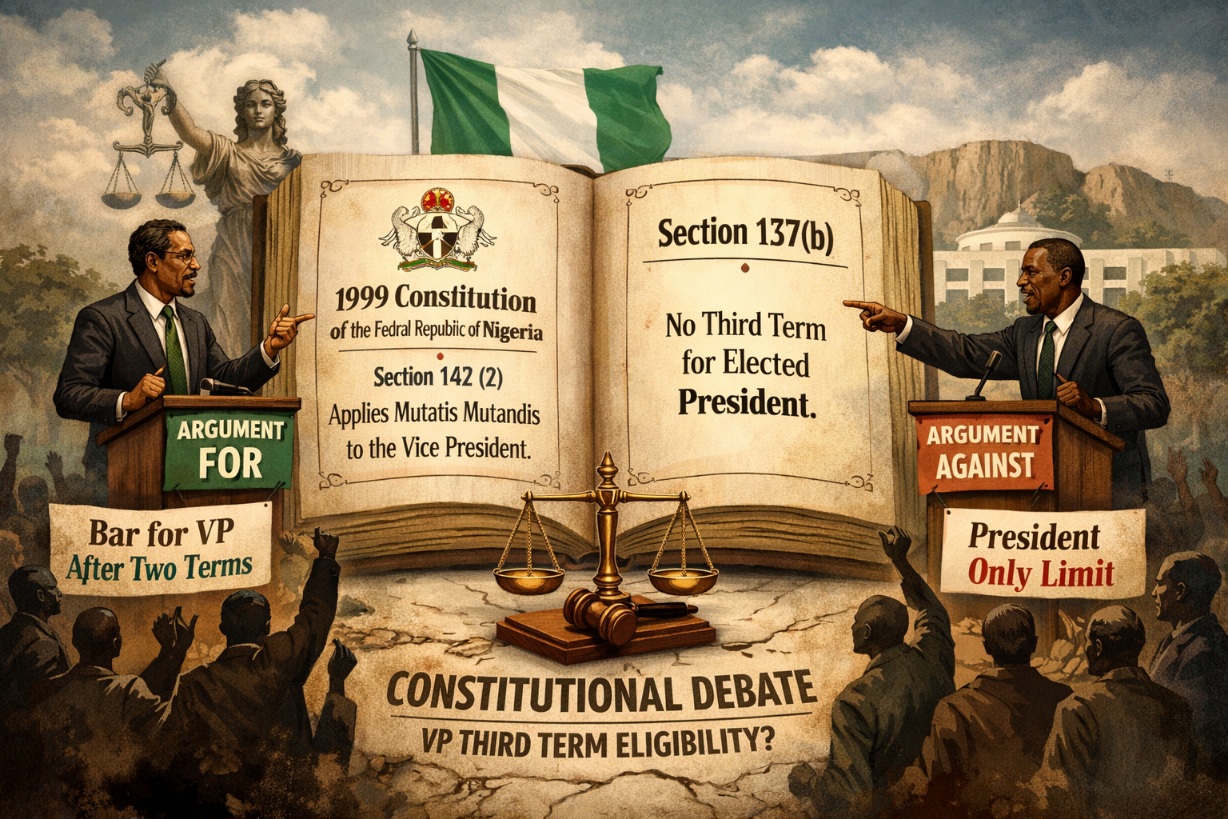
On 2nd June 2026, I wrote an article titled Constitutional Bar Against a Third Vice‑Presidential Tenure, which I shared on my Facebook page and on Chatafrik.com. The kernel of that essay was that, under Nigerian constitutional jurisprudence, someone who has previously served as Vice‑President for two terms is barred from contesting for a third term by virtue of Section 137(1)(b) of the 1999 Constitution. My reasoning was that Section 142(2), which applies mutatis mutandis to the Vice‑President, extends the bar placed on a President who has served two terms to the Vice‑President as well.
In the spirit of academic freedom and democratic exchange, Peter Bassey sharply reacted to my position and vehemently disagreed. He opined that Section 137(1)(b) stands alone and should be interpreted narrowly, applying only to someone who has been elected President twice, not someone elected Vice‑President twice. However, with due respect, it appears that Mr. Bassey did not advert his mind to Section 142(2) of the Constitution.

The 1999 Constitution establishes the framework for executive leadership, defining qualifications, tenure, and disqualifications for both the President and Vice‑President. Section 142(2) is particularly significant because it extends provisions relating to the President’s qualifications, tenure, disqualification, declaration of assets, and oath of office to the Vice‑President.
The Textual Purport of Section 142(2):
Section 142(2) ensures constitutional parity between the President and Vice‑President. It means that:
– The Vice‑President must meet the same qualifications as the President.
– The Vice‑President is bound by the same tenure rules.
– Grounds for disqualification apply equally.
– Both offices require asset declaration and adherence to the same oath.
This provision prevents the Vice‑President from being treated as a lesser officeholder and reinforces accountability at the highest levels of government.
The Tenure Limitation Debate:
Section 137(1)(b) states that a person is disqualified from contesting for President if he has been elected to that office at any two previous elections. The critical issue is whether serving two terms as Vice‑President counts as being “elected President.”
– Literal Interpretation: The Constitution only bars those elected as President twice. A Vice‑President, even if elected twice in that capacity, has not been elected President.
– Succession Scenario: If a Vice‑President succeeds a President mid‑term, the question arises whether that counts as a “term.” Nigerian courts have clarified that succession does not automatically count as a full elected term.
Historical Applications:
– Atiku Abubakar (1999–2007): Served two terms as Vice‑President under Obasanjo. Later contested for President multiple times. His eligibility was never questioned under Section 137(1)(b).
– Goodluck Jonathan (2007–2015): Became President after Yar’Adua’s death in 2010, completed the term, and won election in 2011. In 2015, opponents argued he was seeking a third term. The Supreme Court held that completing Yar’Adua’s tenure did not count as a full elected term, affirming his eligibility.
– Yemi Osinbajo (2015–2023): Served two terms as Vice‑President under Buhari. Contested for APC’s presidential ticket in 2022. His eligibility was unquestioned, since he had not been elected President twice.
Nigeria’s framers opted for a narrower bar, applying only to those elected President twice, not Vice‑Presidents or successors.
Conclusion:
Section 142(2) ensures that the Vice‑President is held to the same constitutional standards as the President, but it does not collapse the distinction between the two offices. Serving two terms as Vice‑President does not disqualify a candidate from contesting for President. Judicial precedent, political practice, and comparative constitutional analysis all affirm that the two‑term limit applies strictly to the Presidency.
This ongoing debate underscores the richness of constitutional interpretation in Nigeria. While my position emphasizes a broader reading that extends the bar to Vice‑Presidents, others, like Mr. Bassey, argue for a narrower interpretation. Ultimately, this exchange reflects the vitality of democratic discourse and the need for continued scholarly engagement with Nigeria’s constitutional text.