


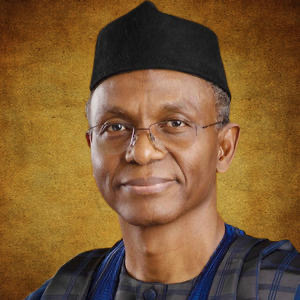
By Ibrahim Bunu
ibrahimbunu2520@gmail.com
History becomes dangerous when those who lived through it are told that what they saw never happened.
Across Nigeria, political reputations rise and fall. Leaders come and go. Governments change. Alliances shift. Former enemies become friends. Former friends become enemies.

But some chapters refuse to close.
The debate surrounding former Kaduna State Governor Nasir El-Rufai and Southern Kaduna remains one of those chapters.
Years after he left office, the arguments continue.
Some describe him as a bold reformer who confronted difficult problems.
Others remember him as the governor under whose watch some of the darkest moments in modern Southern Kaduna history occurred.
The truth is that no serious discussion can begin by pretending the anger in Southern Kaduna emerged from nowhere.
It did not.
THE RECORD OF PAIN CANNOT BE ERASED
Throughout El-Rufai’s eight years in office, numerous attacks occurred across communities in Southern Kaduna.
Villages were attacked.
Families were displaced.
Places of worship were destroyed.
Thousands of people passed through the internally displaced persons camps.
Civil society organizations, church groups, community associations, traditional institutions, and international observers repeatedly raised concerns about insecurity in the region.
The issue was never merely statistics.
The issue was trust.
Many citizens felt abandoned by the very government responsible for protecting them.
Whether one agrees with that perception or not, it became a political reality.
And in politics, trust once broken is extraordinarily difficult to rebuild.
THE TWEET THAT REFUSED TO DIE
Long before becoming governor, El-Rufai’s 2012 social media comments regarding Fulani reprisals became one of the most controversial statements attached to his public career.
His critics viewed the statement as evidence of ethnic partisanship.
His supporters argued it was a warning against injustice toward innocent people.
Years later, the controversy remained alive because it touched a deeper fear already present in Southern Kaduna.
Many citizens were asking a simple question:
When violence occurs, does the government see all victims equally?
That question was never fully answered to the satisfaction of many communities.
THE COMPENSATION CONTROVERSY
Perhaps no single issue generated more outrage than El-Rufai’s public explanation that his administration had engaged groups outside Nigeria and paid compensation as part of efforts to stop retaliatory attacks.
Supporters described the move as a practical strategy for resolving conflicts.
Critics viewed it differently.
They asked:
Why were negotiations extended to those associated with violence while victims continued to mourn their dead?
Why did many affected communities feel ignored?
Why did compensation become a national discussion while justice remained elusive?
The anger was not simply about money.
It was about symbolism.
Many citizens concluded that the government appeared more willing to negotiate with perpetrators than to comfort victims.
Whether that conclusion was fair or unfair, it became deeply rooted.
THE BATTLE OVER TRADITIONAL INSTITUTIONS
Another controversy involved restructuring traditional institutions across Kaduna State.
The government described the exercise as modernization and administrative reform.
Many Southern Kaduna leaders described it as something else entirely.
Traditional rulers are not merely ceremonial figures.
They embody history.
They represent identity.
They symbolize ancestral continuity.
When chiefdom boundaries change, titles change, or traditional structures are altered, communities often interpret those actions through the lens of history and power.
The result was predictable.
What the government called reform, many communities called humiliation.
What the government calls restructuring, others call cultural erosion.
The disagreement remains unresolved today.
THE LANGUAGE OF POWER
One recurring criticism of El-Rufai was not only his policies but his style.
Even some admirers acknowledged that he often communicated in ways many considered confrontational.
Leadership is not only about decisions.
It is also about empathy.
People enduring grief do not merely want security operations.
They want reassurance.
They want acknowledgment.
They want compassion.
When citizens feel their pain is dismissed, anger grows.
When communities believe their suffering is being minimized, distrust deepens.
In divided societies, words matter as much as policies.
THE BIGGER QUESTION NIGERIA MUST FACE
The Southern Kaduna story is larger than Nasir El-Rufai.
It raises uncomfortable national questions.
Can Nigeria build a state where every citizen feels equally protected regardless of ethnicity or religion?
Can communities trust security institutions to act impartially?
Can governments respond to violence without creating perceptions of favoritism?
Can historical grievances be addressed honestly rather than politically?
These questions existed before El-Rufai.
They remain after him.
And they will confront future leaders as well.
THE LESSON FOR FUTURE GOVERNORS
Power is temporary.
Memory is not.
Governors may leave office.
Policies may change.
Political alliances may shift.
But people remember how they were treated during their most vulnerable moments.
They remember who stood with them.
They remember who listened.
They remember who acted.
And they remember who did not.
This is why the debate over El-Rufai continues.
It is not merely about one man.
It is about a larger struggle over justice, identity, security, and belonging in a deeply divided society.
A FINAL WORD
History should neither be rewritten as propaganda nor reduced to political slogans.
The responsibility of serious writers is not to canonize leaders or demonize them.
It is to examine evidence honestly.
Supporters of Nasir El-Rufai have a right to defend his record.
His critics have a right to challenge it.
But no interpretation can erase the fact that many communities in Southern Kaduna experienced his years in power as a period of profound pain, fear, and alienation.
That reality alone guarantees that the argument will not disappear anytime soon.
The lesson for Nigeria is simple:
A government may survive criticism.
A politician may survive controversy.
But no society survives for long when large sections of its people lose faith that they matter equally under the law.
And that is the question history will continue to ask long after today’s political battles have ended.










In regards to your article, “Dump it it Africa” I would say it’s very unfortunate that so many Africans leaders still allows the west to treat Africa with such scone and disrespect either out of greediness, fear of their power, inferiority, or complete lack of wisdom and leadership skill. Not until Africans rise up together to speak as one voice, this unfortunately will continue.