By Mohammed Bello Doka
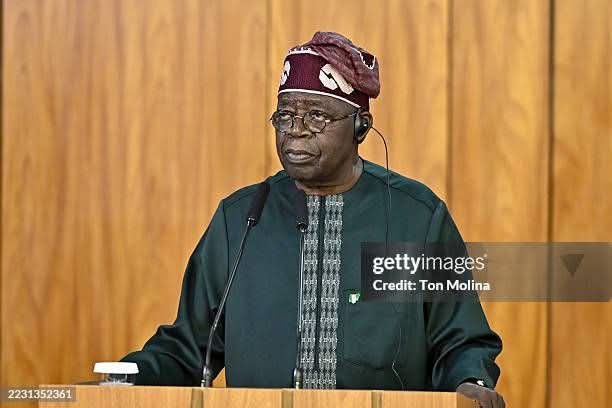
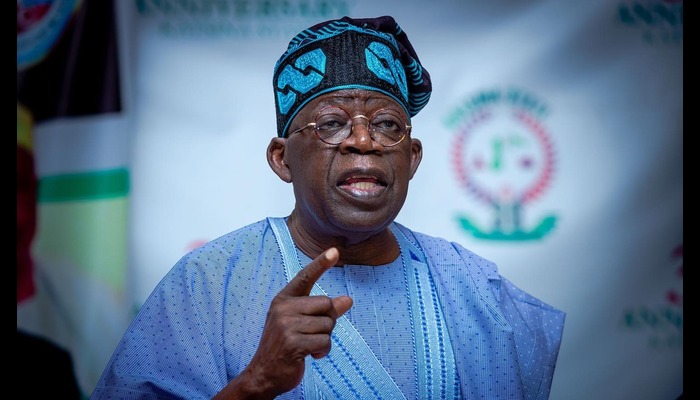
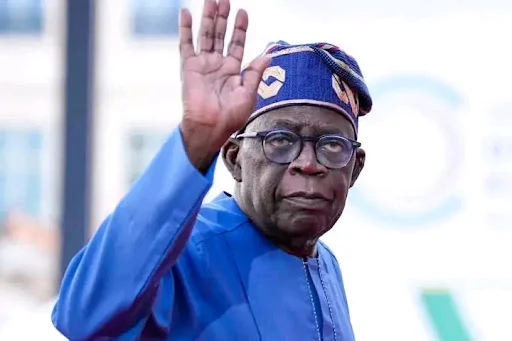
When President Bola Ahmed Tinubu stood before the 29th Nigerian Economic Summit and declared his ambition to transform Nigeria into a $1 trillion economy by 2026, with projections reaching $3 trillion by decade’s end, he set a marker for his administration’s legacy. On paper, the numbers have moved in the right direction since the Treasury Bills and currency reforms of 2023. As of the third quarter of 2025, Nigeria’s real GDP grew by 3.98 per cent, an improvement over the overall 2024 annual growth of 3.40 per cent. At first glance, the economy appears to be picking up speed. Yet a deeper look reveals a far more precarious reality. The $1 trillion target is not simply an exercise in national ambition; it is a bet placed on a fragile foundation, one that depends on sustained annual growth of between 10 and 12 percent for the next ten years. The question is whether Nigeria can sustain that pace before the social costs of its reforms trigger a political and humanitarian blowback.
The Tinubu administration has been anything but timid. Since taking office in May 2023, his first policy statement was the immediate removal of the fuel subsidy, a measure that had for decades drained public finances and distorted market signals. This watershed moment instantly altered the country’s economic landscape, yet it also sent inflation soaring to a 19‑year high. By early 2025, national inflation had climbed above 33 per cent, with food inflation exceeding 40 per cent. To compound the shock, Tinubu unified the nation’s multiple exchange rates, allowing the naira to float more freely. The immediate consequence was extreme volatility: the naira spiked above 1,600 to the dollar in early 2025, a crippling depreciation from approximately 460 naira to the dollar in 2023. For a country that imports a substantial portion of its refined petroleum, manufactured goods, and even basic foodstuffs, this created a cascade of price increases that hit ordinary Nigerians with brutal force.
In theory, shock therapy was necessary. The old subsidy regime was estimated to cost the government billions annually, distorting consumption and encouraging smuggling while doing little to alleviate structural poverty. By removing it, Tinubu freed up fiscal space and signaled to international creditors and investors that Nigeria was serious about reform. The results on the macroeconomic front have been startling. Nigeria’s net foreign exchange reserves rose 772 per cent in two years to $34.8 billion at the end of 2025, a figure that now exceeds the country’s total gross reserves recorded in 2023. By November 2025, gross external reserves reached $46.7 billion, providing 10.3 months of import cover in goods and services, the highest level in almost seven years. Foreign capital inflows into Nigeria reached $23.3 billion at the end of 2025, the strongest in six years, as a steadier naira, easing inflation, and elevated fixed-income yields pulled offshore investors back into Africa’s most populous economy.
The naira has since posted its first annual gain in 13 years, appreciating by 7.5 per cent in 2025 compared to a 41.4 per cent loss in 2024 and a 48.9 per cent loss in 2023. President Tinubu now projects that Nigeria will attract close to $20 billion in foreign direct investment in 2026 due to transparency, efficiency, and openness to business. These are not trivial achievements. They represent the most aggressive economic recalibration Nigeria has attempted since the transition to civilian rule in 1999.
Yet the distance between these headline indicators and the lived experience of Nigerians is cavernous. The same month that Nigeria announced its $46.7 billion reserve milestone, the World Bank revealed that poverty levels in the country had climbed to 63 per cent in 2025, with approximately 139 million Nigerians now living below the poverty line. ActionAid Nigeria noted that although headline unemployment dropped from 10.85 per cent in 2020 to 5.05 per cent in 2024, the improvement had not reflected in citizens’ quality of life, and more than 46 per cent of Nigerians still lived below the poverty line. A wave of unprecedented misery has been let loose, with four out of ten Nigerians now living below the World Bank’s $2.15 poverty line and the country leading in misery index among surveyed economies. The number of poor people in Nigeria rose from 81 million in 2019 to 139 million in October 2025, and most have no safety net or means of protection from unforeseen events like illness, natural disasters, or loss of jobs.
What makes this poverty paradox particularly acute is that the inflation victory is itself incomplete. While Nigeria’s overall inflation rate declined from 34.80 per cent in December 2024 to 15.15 per cent in December 2025, a drop of 19.65 percentage points, and food inflation fell sharply from 39.84 per cent to 10.84 per cent within the same period, these statistical improvements do not necessarily mean prices have fallen. As one economist put it: “If you look at January 2025, food inflation was about 29 per cent. In January 2026, it has come down to about 9 per cent. It’s not to say that the prices of food have come down”. Food inflation ticked back up to 12.12 per cent in February 2026, reversing the single-digit level recorded in the prior months. The core driver of hardship remains affordability, a function of wages that have not kept pace with the accumulated price increases of the past three years.
The political sustainability of this reform agenda is therefore in question. The government has insisted that it will not bring back the fuel subsidy, with the chairman of the Presidential Fiscal Policy and Tax Reforms Committee stating unequivocally that subsidy removal had significantly increased the cost of living for many Nigerians, raising concerns about affordability and economic hardship, but that price controls would not be introduced because the administration believes in the market. The administration’s midterm report acknowledges that subsidy removal and naira floatation have spurred revenue growth but deepened inflation and poverty. Polling conducted in March 2025 found that a majority of Nigerians believed the country was headed in the wrong direction and opposed the fuel-subsidy removal. In a country where popular discontent has historically translated into labor strikes, regional militancy, and electoral volatility, the gap between technocratic success and popular suffering is a political fault line.
Compounding this social fragility is the security environment. By early 2024, violence stemming from banditry had become more deadly and widespread than the Boko Haram insurgency that had long been regarded as the primary threat to the country’s stability. In 2025, Nigeria was ranked on the Global Terrorism Index as the sixth most terrorized country globally, jumping two points from its previous ranking. Farmers abandoned their fields, markets were shut, and the economy bled as bandits imposed their own taxes. The Nigerian government’s consistent prioritization of the security sector has seen it receive the largest share of the national budget in recent years, yet the results remain elusive. Without security, the agricultural productivity, supply-chain reliability, and investor confidence required to reach a $1 trillion economy are unattainable.
The trillion-dollar target itself is subject to intense debate. In early 2025, Nigeria completed a long-awaited rebasing of its GDP to a 2019 base year, an exercise that expanded the measured contribution of services, information technology, and the informal economy. According to the National Bureau of Statistics, the rebasing placed nominal GDP at approximately 372.8 trillion naira, equivalent to roughly $240 to $250 billion, giving policymakers a clearer picture of economic structure and scale. This is a far cry from the $510 billion figure recorded after the 2014 rebasing, which had briefly made Nigeria Africa’s largest economy. Between 2019 and 2024, Nigeria’s GDP fell sharply from $668 billion to $252 billion before recovering slightly to $285 billion in 2025, placing the country among Africa’s top six economies alongside Egypt, South Africa, Algeria, Morocco, and Ethiopia. To reach $1 trillion by 2031, Afrinvest West Africa has calculated that Nigeria would require a minimum annual growth rate of 21.9 per cent at an exchange rate of 1,500 naira to the dollar. The International Monetary Fund, by contrast, projects Nigeria’s growth at 4.1 per cent in 2026 and 4.3 per cent in 2027, downgrading its earlier forecast by 0.3 percentage points due to the impact of higher fuel and fertilizer prices and increased shipping costs on non-oil activity. The gap between political ambition and institutional forecast could hardly be wider.
To its credit, the administration has attempted to embed its vision in concrete policy architecture. In May 2025, the Federal Executive Council approved a “Nigeria First” economic policy mandating all federal ministries, departments, and agencies to prioritize locally made goods and services in public procurement. The policy is a deliberate, data-informed, and enforceable economic framework that places local industry at the center of government procurement while encouraging innovation, backward integration, and investor confidence. Finance Minister Wale Edun has emphasized that Nigeria’s ambition to build a $1 trillion economy would be powered by private capital, innovation, and technology, adding that the government must shift from reliance on public financing to attracting investments at scale. The capital market, Edun has argued repeatedly, plays a pivotal role in achieving this goal, with banks collectively raising over 2.5 trillion naira through rights issues, public offerings, and private placements. Meanwhile, the tax-to-GDP ratio has risen to 13.5 per cent from less than 10 per cent, though this still lags far behind the African average of roughly 16 per cent and the OECD’s 34 per cent.
Yet even these reforms carry embedded risks. Critics fear that an aggressive tax-first strategy could deter investors, slow domestic expansion, and reduce competitiveness. The 2025 budget expected revenue of 41.91 trillion naira against a budget size of 54.99 trillion naira, leaving a deficit of 13.08 trillion naira or 1.52 percent of GDP, a structural gap that persists despite being an oil-producing country. With a public debt-to-GDP ratio of 39.3 percent in 2024 and the IMF projecting the fiscal deficit to rise from 2.9 percent of GDP in 2025 to 3.7 percent in 2026, debt servicing is already crowding out spending on key development sectors. The World Bank Group accounts for $19.39 billion, or 41.3 per cent, of Nigeria’s external debt of $46.98 billion as of June 2025, and Nigeria’s borrowings from the World Bank between 2023 and 2025 are projected to reach $9.65 billion. Borrowing to fund consumption rather than capital investment is a recipe for perpetuation, not transformation.
Perhaps the deepest challenge lies in the real sector. As one analyst put it, a trillion-dollar economy cannot be decreed from monetary policy statements or achieved through banking reforms alone. For all the improvement in reserves and exchange-rate stability, the productive capacity of the Nigerian economy remains constrained by dilapidated infrastructure, unreliable power supply, and the ongoing crisis of crude oil theft. Senator Ned Nwoko has stated that Nigeria loses billions of dollars annually to crude oil theft, severely undermining the economy, weakening the naira, and depriving the nation of vital revenue needed for infrastructure, healthcare, education, and social development. Approximately 353 million barrels of crude oil, estimated at $25.7 billion, were lost to theft between 2002 and 2025. In September 2025, production dropped to 1.39 million barrels per day, some 110,000 barrels per day below the OPEC+ quota. The twin curses of theft and pipeline damage mean that even when global oil prices rise, Nigeria struggles to capture the full benefit.
The international dimension adds another layer of complexity. The IMF has warned that war-related higher fuel and fertilizer prices and higher shipping costs are going to weigh on non-oil activity in Nigeria. A Middle East conflict clouds the global outlook, and any disruption to energy markets could undo the stability the naira has recently enjoyed. At the same time, the United States and European powers are recalibrating their engagement with the Sahel and West Africa, and Nigeria must navigate a multipolar world in which it can no longer take Western support for granted.
So what is the verdict on Tinubu’s trillion-dollar gamble? The administration has made measurable progress where it matters most to international finance: reserves, exchange-rate stability, and investor inflows. It has tackled distortions—subsidies and multiple exchange rates—that had paralyzed fiscal policy for decades. It has articulated a clear if ambitious target and begun to align its procurement, tax, and industrial policies with that target. These are not small accomplishments for an administration barely three years into its term.
But the other side of the ledger is equally stark. One hundred thirty-nine million Nigerians live in poverty. Food inflation, though statistically lower, has not translated into cheaper meals. The security situation has deteriorated to the point that banditry now surpasses Boko Haram as the primary threat to stability. The gap between the growth rate required to reach a trillion dollars—10 to 12 per cent annually—and the growth rate the IMF projects—around 4 per cent—is vast enough to render the target aspirational rather than achievable. And the social costs of reform have been concentrated among precisely those Nigerians who can least afford them.
The gamble, therefore, is not merely economic. It is political. If the reforms succeed in translating macroeconomic stability into broad-based job creation, improved public services, and a tangible reduction in hardship, Tinubu will have pulled off one of the most remarkable turnarounds in modern African history. If they fail—if the poverty numbers continue to climb, if the naira stability proves fleeting, if the security crisis deepens—then the blowback could be severe. Nigerians have endured subsidy removal, currency depreciation, and inflation without widespread unrest, a testament to their resilience. But resilience has limits. The difference between a trillion-dollar economy and a trillion-dollar illusion will be measured not in foreign reserves or portfolio flows, but in the kitchens, clinics, and classrooms of the 139 million Nigerians who are still waiting for the reforms to reach them.
Mohammed Bello Doka can be reached via bellodoka82@gmail.com
Advertisement