by Akin Awofolaju, PhD – USA
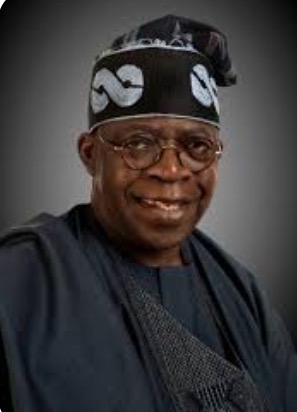
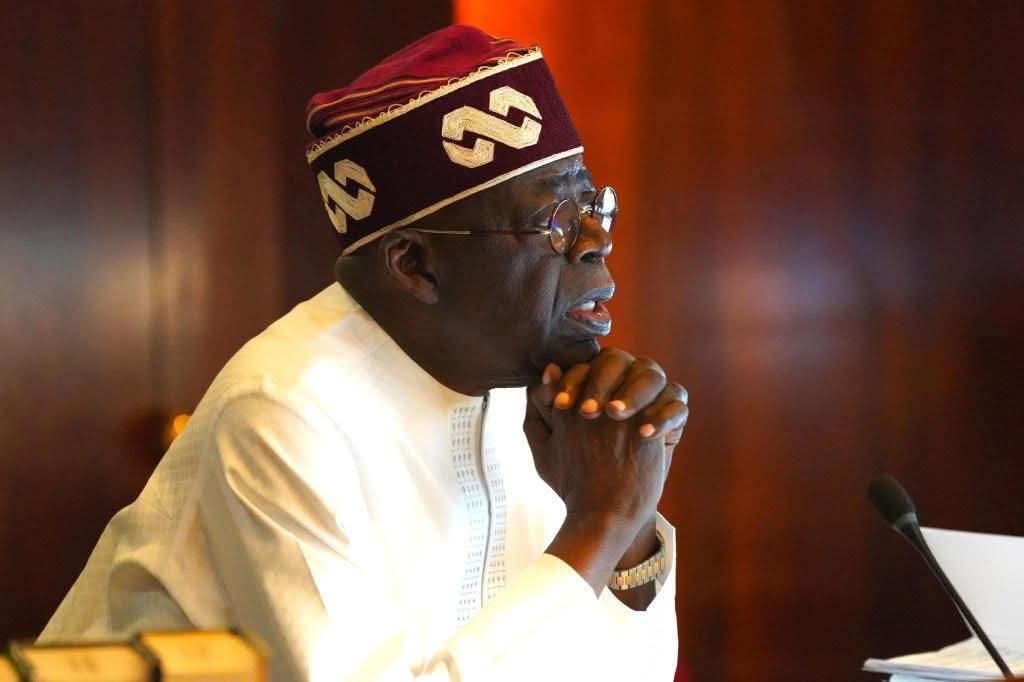
I’m with Tinubu and here is why?
Governance requires structure, direction, policy coherence, and strategic continuity. President deserves a second term not because politics is about blind loyalty, but because reforms, however difficult, need time to mature into measurable national gains.
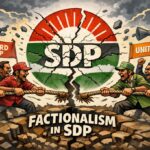
An opposition that seeks power must first present discipline, ideological clarity, alternative economic blueprints, and unified national purpose not just emotional rhetoric and fragmented alliances built mainly on dissatisfaction.
A coalition without coordination is like a ship whose captains are all fighting over the steering wheel while the storm is still raging.
Nigeria’s challenges are too complex for experimental politics driven by desperation rather than preparation. Constructive opposition strengthens democracy, but disorganized ambition weakens public confidence. The real debate should not merely be “remove Tinubu,” but “replace him with what structure, what strategy, and what superior vision?”

Power is not won sustainably through noise alone; it is earned through credible organization, competence, and national trust.
Politics is not a market quarrel where the loudest voice wins. It is chess played in darkness, where every move carries consequences beyond the visible board. In Nigeria today, many opposition coalitions speak as if power is simply waiting at the roadside for whoever shouts “change” the loudest. Yet the deeper currents of political history suggest otherwise.
A hunter who mistakes echoes for footsteps returns home with empty hands.
The recurring dilemma of Nigeria’s opposition movements is not merely lack of popularity; it is the persistent misunderstanding of the mechanics of power itself. Coalition politics is not the arithmetic of anger. It is the chemistry of interests, timing, structure, psychology, elite consensus, grassroots machinery, and strategic patience.
Too often, opposition actors gather under one umbrella believing that shared resentment against the ruling party automatically translates into electoral victory. But Nigerian politics has never operated on emotions alone. Power in Nigeria behaves more like a river system than a straight road. Many tributaries feed it: regional interests, institutional loyalties, economic networks, religious balancing, historical grievances, media influence, patronage systems, and survival instincts of political elites.
A man who studies only the surface of the ocean will never understand the tide beneath it.
The mistake many coalitions make is assuming that social media momentum equals political penetration. Trending hashtags are not polling units. Online outrage is not ward coordination. Television appearances are not electoral structures. Politics in Nigeria remains deeply local despite its national noise. Elections are won not merely in intellectual debates but through painstaking networks built over years community mobilizers, local alliances, polling agents, traditional relationships, voter transportation, legal preparedness, and institutional familiarity.
This is where the ruling establishment often understands the terrain better than its challengers.
The opposition sometimes behaves like travelers trying to uproot an ancient tree with bare hands while mocking the roots they do not see. They underestimate how power protects itself through systems, not personalities alone. Governments survive not simply because they are loved, but because institutions, interests, and fears often align around continuity.
In many cases, opposition coalitions spend more time negotiating who becomes presidential candidate than defining what national philosophy binds them together. Coalitions built purely on ambition eventually collapse under the weight of ambition. A bus filled with passengers heading in different directions will ultimately break down.
Nigeria’s political history repeatedly teaches this lesson.
The most successful political movements were never mere protest platforms; they were carefully engineered ecosystems. They understood coalition-building as a long-term architecture, not emergency shelter before elections. They mastered compromise without losing strategic direction. They cultivated both elite alliances and grassroots trust simultaneously.
An opposition that cannot govern itself internally will struggle to convince citizens it can govern a nation externally.
Another misunderstanding lies in the belief that public dissatisfaction automatically destroys incumbency advantage. History proves otherwise. Economic hardship alone does not remove governments. If it did, many administrations across the world would collapse overnight. Citizens may complain bitterly about leaders yet still fear instability more than continuity. Voters often choose what they consider the safer uncertainty over the dangerous unknown.
This is where strategic maturity becomes essential.
Constructive opposition is not perpetual outrage. It is the disciplined presentation of a credible alternative statecraft model. It requires demonstrating competence, internal coherence, national inclusiveness, economic realism, and institutional depth. The electorate must see not merely critics of the system, but potential custodians of the state.
The irony is that many opposition coalitions correctly identify Nigeria’s problems but incorrectly diagnose the pathway to power. They sometimes confuse moral righteousness with political effectiveness. Yet politics has never rewarded sincerity alone. It rewards organization, resilience, negotiation, timing, adaptability, and strategic intelligence.
The lion does not win the jungle debate because it roars the loudest. It wins because it understands the jungle.
For Nigeria’s opposition to evolve into a truly transformative force, it must move beyond reactive alliances and embrace strategic nation-building. It must stop treating elections as seasonal warfare and begin treating politics as permanent civic engagement. It must cultivate structures before slogans, ideology before opportunism, and national consensus before individual ambition.
Otherwise, coalitions may continue to repeat the same cycle: loud entrance, dramatic fragmentation, and eventual disappointment.
And each time it happens, politics quietly whispers the same message:
“You still do not understand the dynamics of power. Not to talk of politics ”
Ire o