

By Okoi Obono-Obla
The Shehu Musa Gabam faction of the Social Democratic Party (SDP) has picked Abimbola Akeem Atanda as its presidential candidate. The decision was made at the party’s National Convention and Presidential Primary, held at the Bola Tinubu Conference Centre in Abuja.
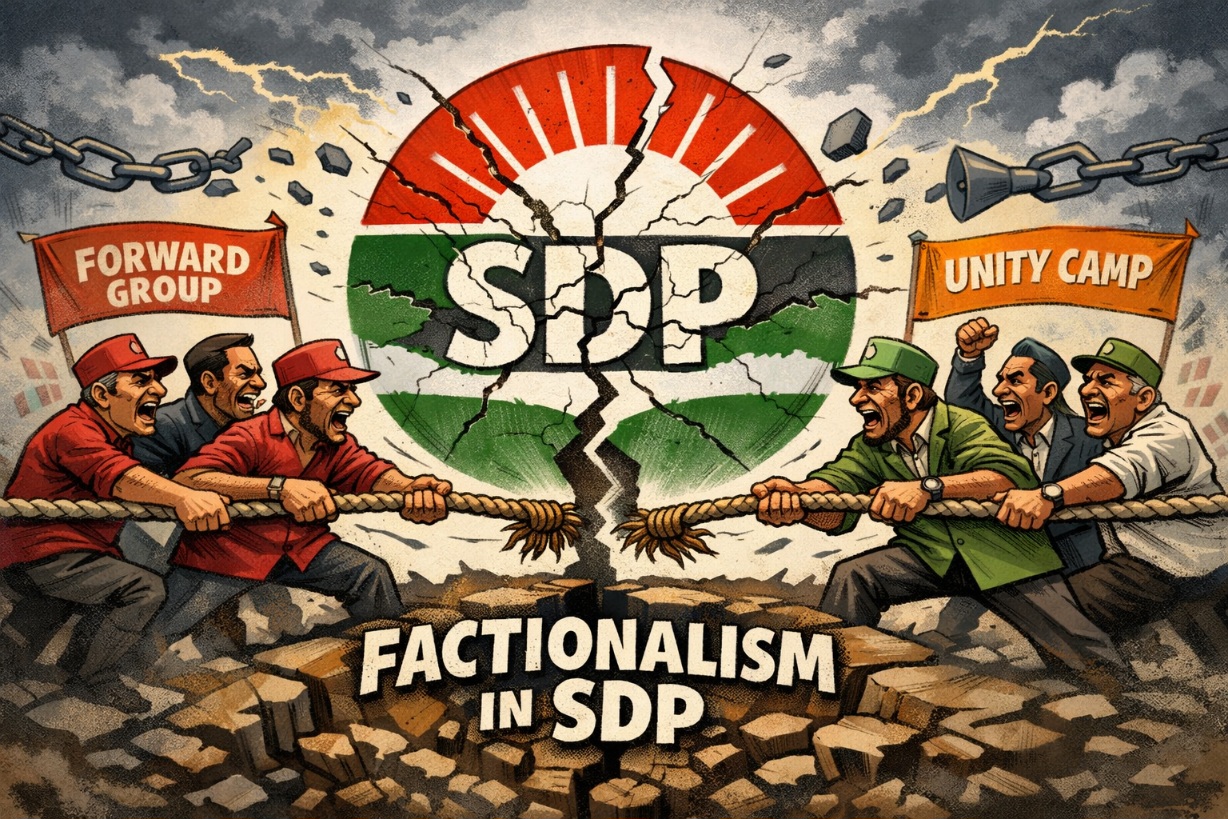
Delegates from all 36 states and the Federal Capital Territory voted by voice to elect Atanda. It remains uncertain whether the SDP’s 2023 presidential candidate, Prince Adewole Adebayo—who, along with factional National Chairman Prof. Abubakar Sadiq Gombe, National Secretary Olu Agunloye, and other members of the National Working Committee (NWC), has been expelled from the party—will still insist that he is the rightful presidential candidate for the 2027 general elections.
This crisis once again highlights the persistent factional divisions that plague opposition political parties in Nigeria. Rather than attributing these internal conflicts to external forces such as the APC or the President, it is imperative for opposition parties to confront and resolve their own internal challenges.

A legal conundrum is expected to arise when the Independent National Electoral Commission (INEC) opens its portal for political parties to upload the names of their candidates for the 2027 general elections, in line with Section 29 of the Electoral Act, 2026. The critical question is: which of the candidates submitted by the two factions of the SDP will be accepted by INEC? Could the party end up without any candidates at all? These posers will only be resolved at the close of the window given to political parties to forward the names of their candidates.
Legal Commentary: Section 29 of the Electoral Act places INEC in the delicate position of being the arbiter of legitimacy when factions within a party submit conflicting candidate lists. Historically, INEC has relied on judicial pronouncements to determine which faction is recognized as the authentic leadership of a party. If the SDP factions fail to resolve their dispute internally or through the courts before the submission deadline, INEC may reject both lists, leaving the party without candidates. This scenario underscores the importance of internal cohesion and lawful resolution of disputes within political parties, as electoral law is designed to prevent confusion and ensure clarity in the democratic process.
Conclusion: The SDP’s internal strife underscores a broader trend of factionalism within Nigeria’s opposition parties. Unless these divisions are addressed, they risk undermining their credibility, weakening their democratic role, and possibly leaving them sidelined in the 2027 elections. The looming INEC test will not only determine the fate of the SDP’s candidates but also serve as a litmus test for how Nigeria’s electoral laws handle factional disputes within political parties.