
By Boma West
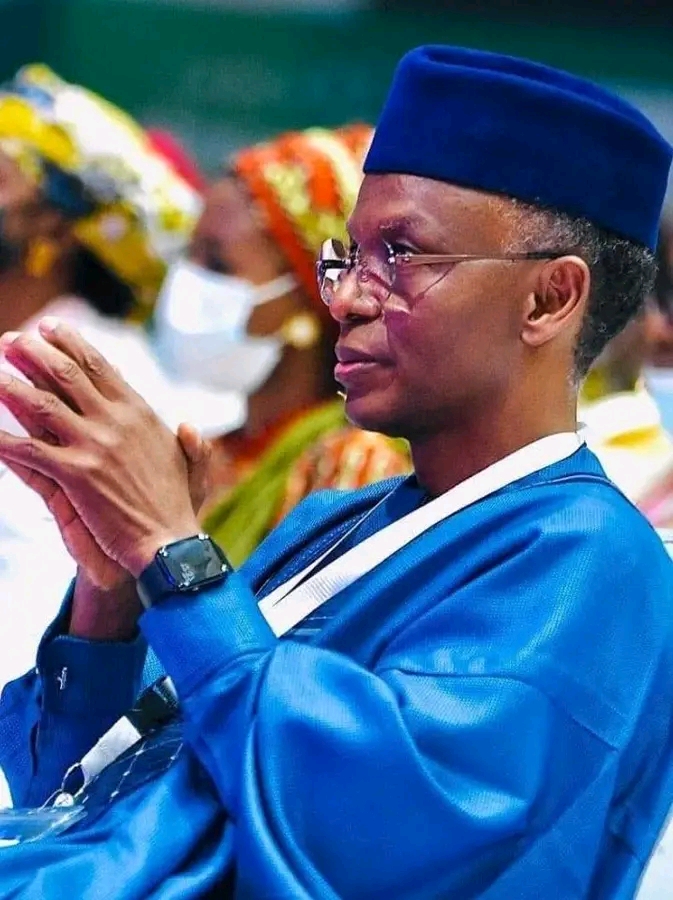
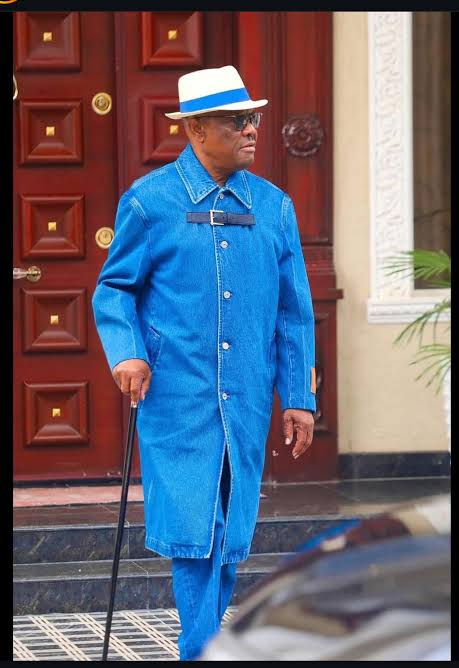
Nyesom Wike has spent the better part of a decade rewriting what political dominance looks like in Rivers State. He has governed with the grip of a man who believes the state was created specifically for him, and a disturbing number of people around him have encouraged that belief. As the Federal Capital Territory Minister, he continues to reach long arms back into Port Harcourt, steering affairs from Abuja as though geography is merely an inconvenience to his ambitions. The question worth asking now is not whether Wike is powerful. He clearly is. The real question is whether the kind of power he wields is the sort that endures, or the sort that collapses loudly and takes many things down with it.
To understand Wike, one must first understand the culture he has built around himself. He is not merely a politician in Rivers State. He is the architect, the landlord, and the enforcer of an entire political ecosystem. Governors are elected with his blessing or not elected at all. Lawmakers know where their loyalty must point. Local government chairmen understand that survival requires proximity to his good side. This is not governance in any meaningful democratic sense. It is a patronage empire dressed in the language of development, and Wike has perfected the art of making the empire look like public service.
His relationship with Governor Siminalayi Fubara since 2023 has been one of the most revealing chapters in recent Nigerian political theatre. Wike handpicked Fubara as his successor, which, in his logic, meant he was also handpicking someone to carry out his instructions from a distance. When Fubara showed signs of developing his own mind and his own constituency, the reaction was not the pride a mentor might feel watching a protégé grow. The reaction was fury. There were moves to destabilize the state assembly, allegations flew in multiple directions, and the tension between both men has occasionally made Rivers State look less like a functioning federation member and more like a contested territory. A man who treats his own chosen successor as a threat the moment that successor tries to govern independently is not a statesman. He is a controller, and controllers breed chaos when their grip begins to slip.

Wike’s political daring is well documented. He crossed party lines in 2022 when he openly worked against his own party’s presidential candidate, Atiku Abubakar, after losing the PDP primary. He cultivated a relationship with Bola Tinubu so close that many Nigerians struggled to explain what exactly he stood for beyond his own advancement. He became FCT Minister under an administration whose party he did not belong to, which he defended with the kind of confident self-justification that politicians in Nigeria have always been brilliant at. The audacity would be admirable if it were attached to any coherent ideology, any consistent set of values that he was fighting to protect. It is not. What it is attached to is Wike himself, his relevance, his grip on power, his name in the conversation.
This is the central danger in the Wike model of politics. A man who is the ideology, who is the party, who is the movement, leaves nothing behind when the tide turns except scorched relationships and confused loyalists. Rivers State has suffered this. The state is oil-rich and perpetually underdeveloped in ways that should embarrass everyone involved in its leadership. Roads are announced with more fanfare than they are completed. Healthcare remains inaccessible for ordinary people in communities far from the camera’s reach. Education funding exists largely as a talking point. Meanwhile, the images that circulate most widely from Rivers are of political confrontations, court injunctions, and men in flowing agbadas performing loyalty.
The physical construction projects Wike points to as his legacy deserve scrutiny beyond the ribbon-cutting ceremonies. Infrastructure commissioned under tremendous noise does not always translate into infrastructure that serves the people for whom it was ostensibly built. Port Harcourt has some new roads. It also has flooding that has not been seriously addressed, a waste management crisis, and urban poverty that coexists awkwardly with the political grandeur on display. A governor or minister who builds flyovers while the foundational needs of citizens remain unmet has made a political choice, not a developmental one. He has chosen what is visible over what is necessary, and that choice says everything about whom the governance is actually for.
What makes Wike particularly dangerous in Nigeria’s political landscape is that he has successfully normalized behavior that should alarm anyone who cares about institutions. He has shown that a politician can openly undermine his own party, face no serious consequences, emerge more powerful, and be rewarded with a ministerial appointment. He has shown that a man can govern a state for eight years, orchestrate the political environment to ensure his influence persists after his tenure, and face no meaningful accountability for how that state’s resources were used. He has demonstrated that in Nigeria, the man who shouts loudest, spends most freely during elections, and carries enough political weight to threaten results is untouchable. Every young politician watching him is learning a lesson, and it is not a good one.
The future, though, is rarely as predictable as powerful men imagine. Nigerian political history is littered with figures who seemed immovable until the moment they were not. The forces Wike has accumulated against himself through his political maneuvering are considerable. He has former allies who now regard him with hostility. He has created a situation in Rivers State that the courts, the Federal Government, and opposing political interests have all been drawn into. He carries the weight of a man who has made too many calculated enemies while believing that calculation alone is sufficient protection. The trouble with ruling through fear and financial power is that both have a shelf life. Fear fades when the feared man is no longer the one holding the relevant levers. Money circulates, and the recipients do not always remain grateful.
There is also the matter of Nigeria’s anti-corruption architecture, which, for all its weaknesses, has a way of becoming suddenly energetic when political protection is withdrawn. Many of the decisions taken during Wike’s years in Rivers State, the contracts awarded, the funds deployed, the manner in which state resources moved, exist in documents that do not disappear. A future political climate less favorable to him would not need to manufacture problems. It would only need to look at what already exists with serious eyes.
Wike is not a villain in a simple story. He is a product of a system that rewards exactly what he has done, and the system must answer for that as much as he must. Nigeria made Wike possible. Nigerian politics gave him the tools and the audience and the absence of consequences that allowed him to build what he has built. Pointing at him without pointing at the structure is only half the truth. The other half is that a democracy in genuine health would not allow a single individual to become so architecturally central to an entire state’s political life that the state trembles whenever that individual is displeased.
Rivers people deserve better than to be subjects in someone’s personal political kingdom. They deserve leadership that measures success by their wellbeing rather than by the longevity of one man’s relevance. The god of Rivers State, as some have taken to calling him, would do well to remember that in Nigerian political memory, gods have a tendency to become cautionary tales.