By Boma West
Nigeria has a tradition that should embarrass every citizen who has ever stood in a voting queue. A governor finishes his tenure, sometimes distinguished by unpaid salaries, collapsed infrastructure, looted pension funds, and state workers who spent months begging for what was already theirs. Then, almost without pause, that same governor emerges in a senatorial campaign, chest forward, convoy intact, smiling at the same people he spent eight years impoverishing.
This is the story of nearly every state in this country.
The suffering of ordinary Nigerians is not an accident of economics or a consequence of global forces beyond anyone’s control. It is the direct product of deliberate choices made by people in power. When a state government awards a road contract, collects the mobilisation fee on behalf of a contractor who is really a proxy, and the road remains a death trap for years, the passengers who have accidents on a bad road are not victims of fate. They are victims of corruption with a name and a face.

The faces often end up in the Senate.
There is a pattern in Nigerian politics so consistent it has stopped surprising people, which is itself the most dangerous thing about it. A man governs a state for two terms. During those years, civil servants protest in front of government houses. Pensioners collapse at verification queues. Hospital equipment that was budgeted for never arrives. The roads budgeted for exist only in committee reports. Contractors abandon sites. Schools decay. Meanwhile, the governor builds a private estate, his children study abroad, his associates acquire properties in Abuja and Lagos, and investigations, if they come at all, come after he has already negotiated his exit.
Then the tenure ends and instead of facing accountability, the man campaigns for Senate.
He does not campaign on a record because his record is a document of failure. He campaigns on money, on fear, on the infrastructure of patronage he built while he was supposed to be building hospitals. He hands out rice and cooking oil to the same families whose salaries he withheld. He reminds certain communities that he is one of them, as though shared ethnicity is a substitute for shared prosperity. In a country where hunger is so consistent it has become background noise, many people collect the rice and vote for the man because at least the rice was real and showed up when it was promised, which is more than the government ever did.
This is the bargain Nigerians are forced into when governance fails completely. When the state provides nothing, the politician becomes a distributor of survival. The transaction is not stupidity on the part of the voter. It is rational behaviour in a system designed to make citizens permanently dependent on the goodwill of the same people looting them. The looting creates the desperation. The desperation creates the loyalty. The loyalty protects the looter. The cycle is not broken by goodwill. It is broken by deliberate, organised, voter-driven rejection at the ballot.
Although, rejection requires information, courage and the willingness to prioritise long-term national interest over the short-term relief of a bag of rice.
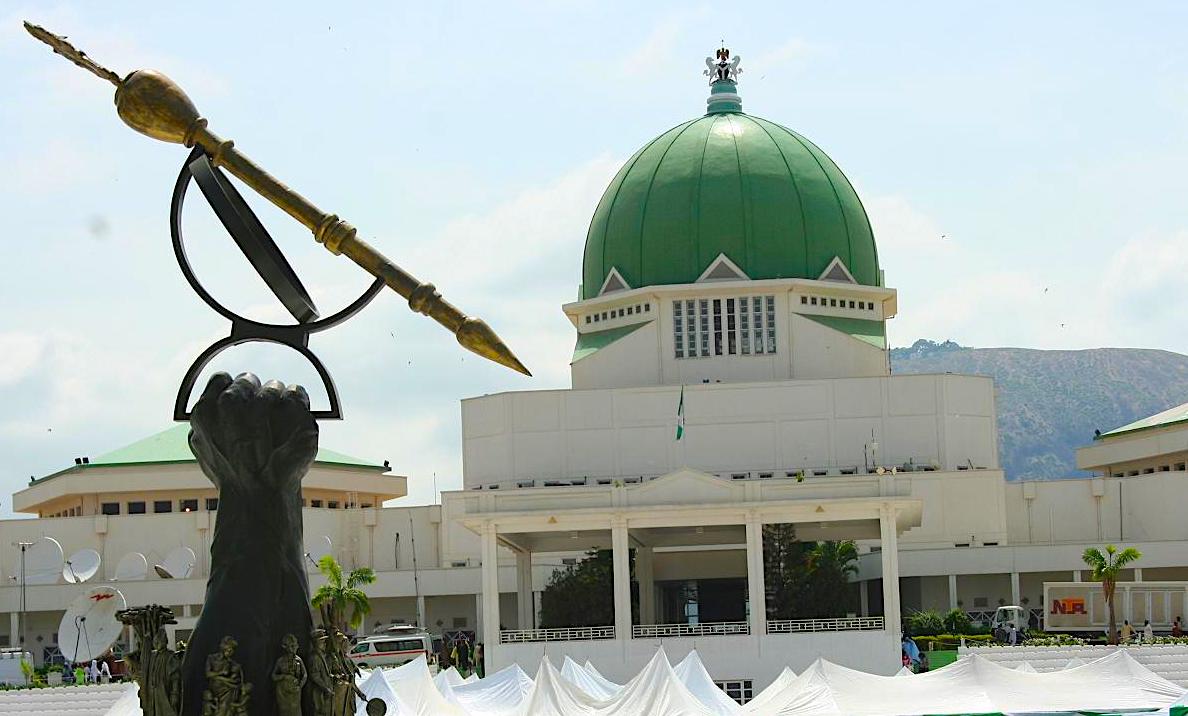
Consider what the Senate is supposed to be. It is the upper chamber of the National Assembly and the body charged with making laws that govern the lives of over two hundred million people. It oversees agencies, confirms appointments and controls appropriations. It is, in theory, the highest concentration of legislative wisdom in the country. In practice, it has become a waiting room for former governors who need somewhere comfortable to sit while EFCC investigations idle and statutes of limitation quietly expire.
The question of why former governors specifically chase Senate seats is not mysterious. The Senate comes with a salary, a security detail, constituency funds that are notoriously difficult to audit, immunity from certain prosecutions during tenure, and perhaps most importantly, proximity to the machinery of the federal government. A former governor in the Senate can slow-walk investigations into his own tenure. He can lobby appointments. He can influence the agencies that are supposed to hold him accountable. The Senate seat, for many of these men, is not a new chapter of public service. It is an insurance policy.
The National Assembly has made no serious effort to close this door. There is no law barring a former governor from contesting a Senate seat immediately after his tenure. A man who has already held executive authority over millions of people, who has already had access to allocations, contracts, and appointments, who has already demonstrated through his conduct in office whether he deserves public trust, should not be permitted to skip accountability and step directly into a position of fresh national power.
The National Assembly should enact this law. It should be a matter of principle, not politics. Any senator or representative who argues against it is almost certainly arguing in defence of the retirement plan they themselves intend to use.